Pycnodonte (Pycnodonte)

Stichting Observation International · CC BY-NC 4.0 · via GBIF. May be a photograph of a specimen, or an artist’s reconstruction — an interpretation of a skeleton, since colour and soft tissue are almost never preserved.
On record
Recorded, not inferred- Sits inside
- PycnodontePBDB
- Diet
- suspension feederPBDB, for Pycnodonte
- Life habit
- epifaunalPBDB, for Pycnodonte
- Motility
- stationary, attachedPBDB, for Pycnodonte
- Vision
- blindPBDB, for Bivalvia
- Environment
- marine,brackishPBDB, for Ostreida
Time the record covers
At least 54 million years on record.
The record covers at least 66 Mya to 11.63 Mya. No occurrence read is dated outside 72.2 Mya to 7.246 Mya.
54 occurrences of Pycnodonte (Pycnodonte) on record, most of them in the Miocene. The Paleobiology Database records this as a living group, and the chart stops with its fossils rather than at the present. Bar height is expected occurrences, not a count: each fossil is spread across the span it is dated to, so a tall narrow bar means tight dating and a low wide one means loose.
When
54 occurrences- Late Cretaceous17%
- Eocene11%
- Oligocene31%
- Miocene41%
These are dates about fossils, not the animal: the record can only begin after it arose and end before it died out, so either end may reach further. Shares are expected occurrences: a fossil dated to a span is counted partly in each period it straddles. More on what this infers.
Found in
12 formations
- Vaqueros Formation20
- Moreno Formation · Great Valley Group8
- Temblor Formation3
- Monterey Formation2
- Brejning Clay Formation1
- Hempstead Formation1
Loading coastlines…
The named rock units Pycnodonte (Pycnodonte) has been recovered from, largest first. Drawn where the rock is now, not where it formed. 13 occurrences have no formation on record, which is common for older literature.
Pycnodonte (Pycnodonte) and its relatives
MioceneWhere Pycnodonte (Pycnodonte) and its relatives were recorded in the Miocene.
Found in the same rock
653 taxa- Balanus16 sites
- Chlamys sespeensis13 sites
- Anomia vaquerosensis11 sites
- Lucinoma acutilineata11 sites
- Dallocardia vaquerosense10 sites
- Turritella inezana10 sites
- Clementia conradiana9 sites
- Macrochlamis magnolia9 sites
- Miltha (Miltha) sanctaecrucis9 sites
- Modiolus (Modiolus) ynezianus9 sites
- Califrapana vaquerosensis8 sites
- Crenomytilus expansus8 sites
- Crenostrea eldridgei8 sites
- Dosinia (Dosinidia) margaritana projecta8 sites
- Hybolophus granti8 sites
- Macoma nasuta8 sites
- Mammalia8 sites
- Macoma (Psammacoma) arctata7 sites
- Panopea generosa7 sites
- Polinices7 sites
- Polinices (Neverita) reclusianus andersoni7 sites
- Calyptraea costellata6 sites
- Chione (Chionopsis) temblorensis6 sites
- Crassostrea vaquerosensis6 sites
The Paleobiology Database records 49 sites for Pycnodonte (Pycnodonte), and this reads all of them. The number is how many of those sites it was catalogued from too. The 24 sharing the most are listed.
This is not a list of everything alive at the time. It is only what has come out of the same ground as this animal and been written down.
Entered from
17 references- The Vaqueros Formation, Lower Miocene of California. I. Paleontology16
- Karagyuleva, 196410
- Map and checklists of Jurassic and Cretaceous macrofossil localities within the San Jose 1:100,000 Quadrangle, California, and discussion of paleontological results9
- Oligocene molluscan biostratigraphy and paleontology of the Lower Part of the type Temblor Formation, California3
- Paleontology and stratigraphy of the Miocene Saddleback Valley Limestone, Orange County, Southern California2
- The molluscan fauna of the late Oligocene Branden Clay, Denmark2
- Over de fauna van het bartonien in oostelijk Nederland2
- Die Alzey-Formation der klassichen Lokalitat Wlschberg bei Waldbockelheim (Rupelium, Oligozan, Mainzer Becken) - Ergebnisse neuer Grabungen1
- Tertiary Marine Pelycypods of California and Baja California: Plicatulidae to Ostreidae1
- A late Oligocene (Chattian B) mollusc fauna from the clay-pit of Galten Brickworks at Norre Vissing, Jylland, Denmark1
- Biostratigraphie et paleoecologie des gisements types du Stampian de la region d''Etampes (Essonne)1
- Geology and paleontology of canal zone and adjoing parts of Panama: Description of Tertiary mollusks (Pelecypods: Propeamussiidae to Cuspidariidae).1
Each of the 54 occurrences read was entered from one of these publications, ordered by how many each accounts for. This is not a search for papers mentioning the name. 5 further references are not listed. Entries link to doi.org where the Paleobiology Database holds an identifier, and to its own record where it does not. Relayed as the Paleobiology Database holds them, not checked against what they resolve to.
Media and terms
Media content2
Picture of Pycnodonte (Pycnodonte)
- Source
- GBIF
- Credit
- Stichting Observation International
- Licence
- CC BY-NC 4.0
- Commercial use
- the licence does not allow it
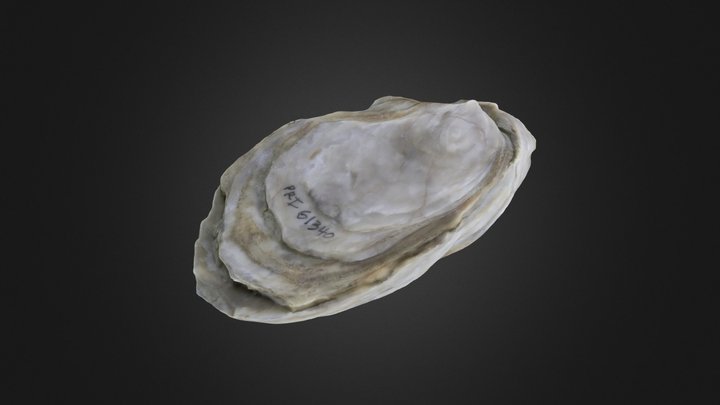
3D model
- Source
- Sketchfab
- Licence
- CC0 Public Domain
- Commercial use
- the licence allows it
This is what the site found, which is not the same as what exists.
Keep going
What may have been alongside itPycnodonte through timeFormations of the MioceneThe world it lived on
Occurrence data from the Paleobiology Database, CC BY 4.0. Fischer von Waldheim 1835