Pycnodus toliapicus
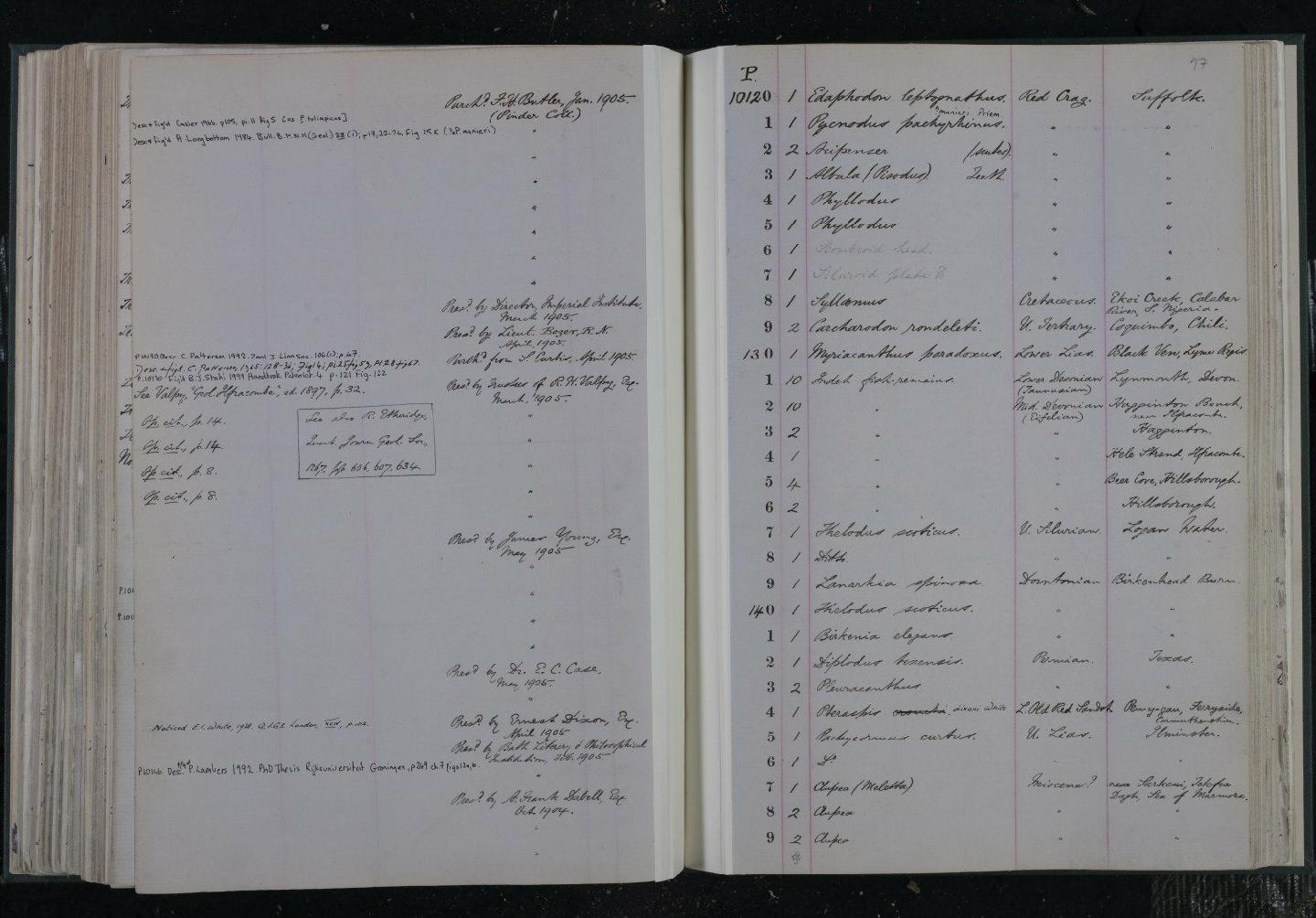
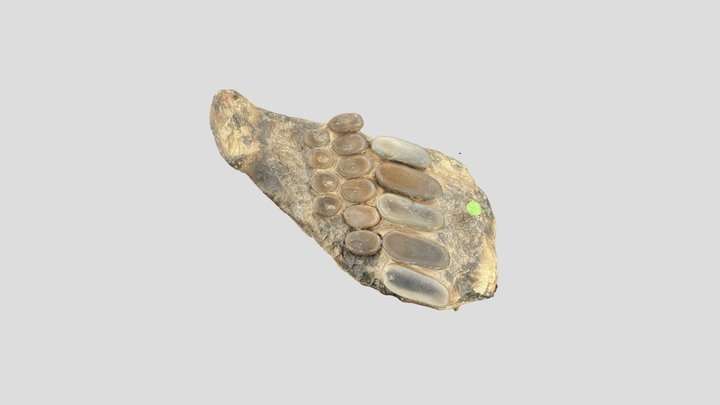
via GBIF · CC0 · via GBIF. May be a photograph of a specimen, or an artist’s reconstruction — an interpretation of a skeleton, since colour and soft tissue are almost never preserved.
On record
Recorded, not inferred- Sits inside
- PycnodusPBDB
- Diet
- durophage, carnivorePBDB, for Pycnodontiformes
- Life habit
- nektonicPBDB, for Pycnodontiformes
- Motility
- actively mobilePBDB, for Pycnodontiformes
Time the record covers
At most 19 million years on record.
Every occurrence read is dated to somewhere between 56 Mya and 37.71 Mya, and nothing in the dating separates them, so that window is what the record shows rather than a span.
8 occurrences of Pycnodus toliapicus on record, most of them in the Eocene. Bar height is expected occurrences, not a count: each fossil is spread across the span it is dated to, so a tall narrow bar means tight dating and a low wide one means loose.
When
8 occurrences- Eocene100%
These are dates about fossils, not the animal: the record can only begin after it arose and end before it died out, so either end may reach further. Shares are expected occurrences: a fossil dated to a span is counted partly in each period it straddles. More on what this infers.
Found in
5 formations
- Subathu Formation3
- London Clay Formation · Thames Group2
- Selsey Formation · Bracklesham Group1
- Elmore Formation · Bracklesham Group1
- Dammam Formation1
Loading coastlines…
The named rock units Pycnodus toliapicus has been recovered from, largest first. Drawn where the rock is now, not where it formed.
Pycnodus toliapicus and its relatives
EoceneWhere Pycnodus toliapicus and its relatives were recorded in the Eocene.
Found in the same rock
313 taxa- Acipenser toliapicus4 sites
- Cylindracanthus rectus4 sites
- Galeocerdo latidens4 sites
- Palaeocybium proosti4 sites
- Aetobatus irregularis3 sites
- Aetomylaeus dixoni3 sites
- Albula oweni3 sites
- Brachycarcharias lerichei3 sites
- Edaphodon eurygnathus3 sites
- Eotrigonodon serratus3 sites
- Heterodontus3 sites
- Hypotodus verticalis3 sites
- Isistius trituratus3 sites
- Jaekelotodus trigonalis3 sites
- Myliobatis latidens3 sites
- Myliobatis toliapicus3 sites
- Odontaspis winkleri3 sites
- Ostrea3 sites
- Premontreia (Oxyscyllium) gilberti3 sites
- Pseudosphaerodon antiquus3 sites
- Scyliorhinus3 sites
- Sphyraenodus3 sites
- Squalus minor3 sites
- Squatina prima3 sites
The Paleobiology Database records 8 sites for Pycnodus toliapicus, and this reads all of them. The number is how many of those sites it was catalogued from too. The 24 sharing the most are listed.
This is not a list of everything alive at the time. It is only what has come out of the same ground as this animal and been written down.
Entered from
5 references- Eocene ichthyofauna from the Subathu Formation, Northwestern Himalaya, India3
- The Selsey Division (Bracklesham Group) at Lee-on-the-Solent, Gosport, (Hants)2
- The English Chalk and London Clay: two remarkable British bony fish Lagerstatten1
- Sur un materiel ichthyologique des "Midra (and Saila) shales" du Qatar (Golfe Persique)1
- Casier, 19661
Each of the 8 occurrences read was entered from one of these publications, ordered by how many each accounts for. This is not a search for papers mentioning the name. Entries link to doi.org where the Paleobiology Database holds an identifier, and to its own record where it does not. Relayed as the Paleobiology Database holds them, not checked against what they resolve to.
Media and terms
Keep going
What may have been alongside itPycnodus through timeFormations of the EoceneThe world it lived on
Occurrence data from the Paleobiology Database, CC BY 4.0. Agassiz 1839