Pygurus
Pygurus is an extinct genus of sea urchins.

Hectonichus · CC BY-SA 4.0 · via Wikipedia/Commons. May be a photograph of a specimen, or an artist’s reconstruction — an interpretation of a skeleton, since colour and soft tissue are almost never preserved.
On record
Recorded, not inferred- Sits inside
- ClypeidaePBDB
- Diet
- grazer, deposit feederPBDB, for Echinoidea
- Life habit
- epifaunalPBDB, for Echinoidea
- Motility
- actively mobilePBDB, for Echinoidea
- Vision
- limitedPBDB, for Echinoidea
- Environment
- marinePBDB, for Echinodermata
Time the record covers
At least 64 million years on record.
The record covers at least 165.3 Mya to 100.5 Mya. No occurrence read is dated outside 170.9 Mya to 93.9 Mya.
93 occurrences of Pygurus on record, most of them in the Early Cretaceous. Bar height is expected occurrences, not a count: each fossil is spread across the span it is dated to, so a tall narrow bar means tight dating and a low wide one means loose.
When
93 occurrencesThese are dates about fossils, not the animal: the record can only begin after it arose and end before it died out, so either end may reach further. Shares are expected occurrences: a fossil dated to a span is counted partly in each period it straddles. More on what this infers.
Found in
18 formations
- Calcaires à spatangues Formation25
- Dhruma Formation · Shaqra Group4
- Mt. Lysa Formation · Holy Cross Mountains Group3
- Mauddud Formation2
- Tataouine Formation2
- Hanifa Formation · Shaqra Group2
Loading coastlines…
The named rock units Pygurus has been recovered from, largest first. Drawn where the rock is now, not where it formed. 39 occurrences have no formation on record, which is common for older literature.
Pygurus and its relatives
Early CretaceousWhere Pygurus and its relatives were recorded in the Early Cretaceous.
Found in the same rock
583 taxa- Holaster29 sites
- Phyllobrissus gresslyi25 sites
- Toxaster retusus25 sites
- Coenholectypus macropygus20 sites
- Echinoidea15 sites
- Holectypus15 sites
- Astarte11 sites
- Lima11 sites
- Natica11 sites
- Nerinea11 sites
- Terebratula11 sites
- Acrosalenia10 sites
- Plagiochasma olfersii10 sites
- Pleurotomaria10 sites
- Rhabdocidaris10 sites
- Toxaster10 sites
- Cardium9 sites
- Pholadomya9 sites
- Aporrhais8 sites
- Diplopodia (Pseudodiadema)8 sites
- Mytilus8 sites
- Ostrea8 sites
- Pholadomya elongata8 sites
- Pygorhynchus obovatus8 sites
The Paleobiology Database records 79 sites for Pygurus, and this reads all of them. The number is how many of those sites it was catalogued from too. The 24 sharing the most are listed.
This is not a list of everything alive at the time. It is only what has come out of the same ground as this animal and been written down.
Entered from
22 references- La variation chez les échinides irréguliers. Dimensions ontogénétiques, écologiques, évolutives25
- Jura Vaudois et Neuchatelois17
- Lower Kimmeridgian echinoids of Poland8
- Geologie de Madagascar I. Les Terrains Sedimentaires8
- The Cretaceous echinoids from central Saudi Arabia6
- Le Jurassique D`Arabie Centrale6
- Recherches géologiques sur le Crétacé inférieur de l'Estremadura (Portugal)4
- Die Typus-Profile des Valanginien und Hauterivien3
- Palökologie benthischer Faunengemeinschaften und Taxonomie der Bivalven im Jura von Südtunesien2
- Cenomanian Echinoids from Ras al Khaimah, United Arab Emirates2
- Aptian-Cenomanian echinoids from northern Sinai, Egypt1
- Palaeoecology and environmental significance of benthic associations from the Cenomanian-Turonian of eastern Sinai, Egypt1
Each of the 93 occurrences read was entered from one of these publications, ordered by how many each accounts for. This is not a search for papers mentioning the name. 10 further references are not listed. Entries link to doi.org where the Paleobiology Database holds an identifier, and to its own record where it does not. Relayed as the Paleobiology Database holds them, not checked against what they resolve to.
Media and terms
Media content2

Picture of Pygurus
- Source
- Wikipedia/Commons
- Credit
- Hectonichus
- Licence
- CC BY-SA 4.0
- Commercial use
- the licence allows it
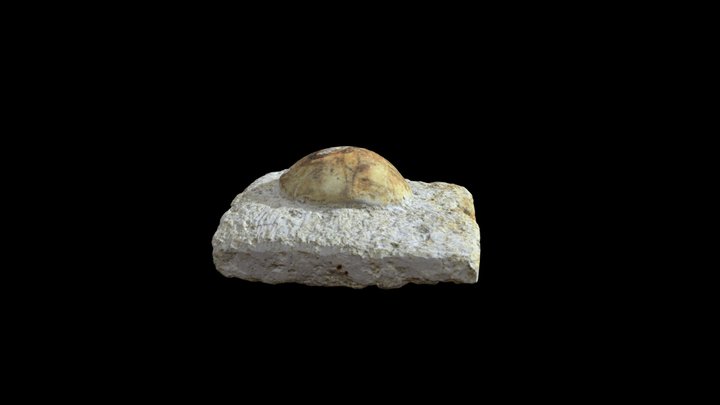
3D model
- Source
- Sketchfab
- Licence
- CC Attribution
- Commercial use
- cannot be read from the licence given — check the record
Smithsonian Open Access was not reached for this taxon, so this list is what the others held rather than everything there is.
The description on this site
- Source
- Wikipedia, “Pygurus”
- Licence
- CC BY-SA 4.0
This is what the site found, which is not the same as what exists.
Keep going
What may have been alongside itClypeidae through timeFormations of the Early CretaceousThe world it lived on
Occurrence data from the Paleobiology Database, CC BY 4.0. Agassiz 1839