Rastellum diluvianum
No picture of Rastellum diluvianum was found. Wikipedia, Wikidata and iDigBio were searched and had none. Smithsonian Open Access did not answer, so this is what the others held rather than everything there is. GBIF was asked, and what came back is not recorded: nothing, or a picture this site could not tie to Rastellum diluvianum, or no answer at all. This entry cannot say which.
On record
Recorded, not inferred- Sits inside
- RastellumPBDB
- Diet
- suspension feederPBDB, for Ostreida
- Life habit
- epifaunalPBDB, for Ostreida
- Motility
- stationary, attachedPBDB, for Ostreida
- Vision
- blindPBDB, for Bivalvia
- Environment
- marine,brackishPBDB, for Ostreida
Time the record covers
At least 41 million years on record.
The record covers at least 113.2 Mya to 72.2 Mya. No occurrence read is dated outside 121.4 Mya to 66 Mya.
19 occurrences of Rastellum diluvianum on record, most of them in the Early Cretaceous. Bar height is expected occurrences, not a count: each fossil is spread across the span it is dated to, so a tall narrow bar means tight dating and a low wide one means loose.
When
19 occurrencesThese are dates about fossils, not the animal: the record can only begin after it arose and end before it died out, so either end may reach further. Shares are expected occurrences: a fossil dated to a span is counted partly in each period it straddles. More on what this infers.
Found in
7 formations
- Folkestone Formation · Lower Greensand Group4
- Peruc-Korycany Formation3
- Sandgate Formation · Lower Greensand Group2
- Ferruginous Sands Formation · Lower Greensand Group1
- Glauconie de Lonzée Formation1
- Neuburger Weiß Formation1
Loading coastlines…
The named rock units Rastellum diluvianum has been recovered from, largest first. Drawn where the rock is now, not where it formed. 6 occurrences have no formation on record, which is common for older literature.
Rastellum diluvianum and its relatives
Early CretaceousWhere Rastellum diluvianum and its relatives were recorded in the Early Cretaceous.
Found in the same rock
396 taxa- Camptonectes virgatus5 sites
- Neithea quinquecostata5 sites
- Pseudolimea5 sites
- Exogyra4 sites
- Panopea4 sites
- Pycnodonte (Phygraea) proteus4 sites
- Serpula4 sites
- Aphrodina3 sites
- Barbatia3 sites
- Cucullaea3 sites
- Cucullaea glabra3 sites
- Dhondtichlamys3 sites
- Entolium membranaceum3 sites
- Entolium orbiculare3 sites
- Eurotrigonia mantelli3 sites
- Gryphaeostrea canaliculata3 sites
- Inoceramus (Endocostea)3 sites
- Limatula3 sites
- Lyriochlamys3 sites
- Neithea regularis3 sites
- Nuculana3 sites
- Ornithella3 sites
- Parahoplites3 sites
- Parahoplites nutfieldiensis3 sites
The Paleobiology Database records 18 sites for Rastellum diluvianum, and this reads all of them. The number is how many of those sites it was catalogued from too. The 24 sharing the most are listed.
This is not a list of everything alive at the time. It is only what has come out of the same ground as this animal and been written down.
Entered from
9 references- The stratigraphical palaeontology of the Lower Greensand7
- Late Cretaceous environments and communities as recorded at Chrtníky (Bohemian Cretaceous Basin, Czech Republic)3
- Unpublished data on Cretaceous-Paleocene molluscan assemblages3
- Silicified sea life – Macrofauna and palaeoecology of the Neuburg Kieselerde Member (Cenomanian to Lower Turonian Wellheim Formation, Bavaria, southern Germany)1
- An ‘Elvis’ echinoid, Nucleopygus (Jolyclypus) jolyi, from the Cenomanian of France: phylogenetic analysis, sexual dimorphism and neotype designation1
- Cenomanian oysters from the Sergipe Basin, Brazil1
- Upper Cretaceous bivalves from the Glauconie de Lonzee near Gembloux (SE Belgium)1
- Die geologische Entwicklung von Süd-Mozambique seit der Unterkreide und die Ammoniten-Fauna von Unterkreide und Cenoman1
- Die Mollusken und Brachiopoden der Kreide bei Tormarp in Schweden.1
Each of the 19 occurrences read was entered from one of these publications, ordered by how many each accounts for. This is not a search for papers mentioning the name. Entries link to doi.org where the Paleobiology Database holds an identifier, and to its own record where it does not. Relayed as the Paleobiology Database holds them, not checked against what they resolve to.
Media and terms
Media content1
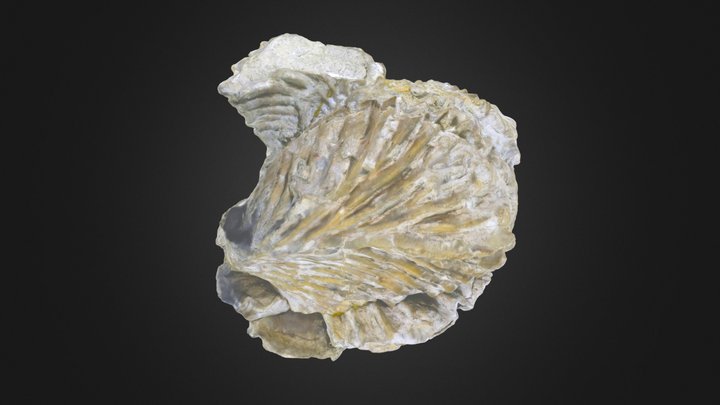
3D model
- Source
- Sketchfab
- Licence
- CC0 Public Domain
- Commercial use
- the licence allows it
No picture of Rastellum diluvianum was found. Wikipedia, Wikidata and iDigBio were searched and had none.
Smithsonian Open Access did not answer, so this is what the others held rather than everything there is.
GBIF was asked, and what came back is not recorded: nothing, or a picture this site could not tie to Rastellum diluvianum, or no answer at all. This entry cannot say which.
Smithsonian Open Access and MorphoSource were not reached for this taxon, so this list is what the others held rather than everything there is.
This is what the site found, which is not the same as what exists.
Keep going
What may have been alongside itRastellum through timeFormations of the Early CretaceousThe world it lived on
Occurrence data from the Paleobiology Database, CC BY 4.0. (Linnaeus 1767)