Rhomaleosauridae
Rhomaleosauridae is a family of plesiosaurs from the Earliest Jurassic to the latest Middle Jurassic of Europe, North America, South America and possibly Asia. Most rhomaleosaurids are known from England, many specifically from lower Blue Lias deposits that date back to the earliest Jurassic, just at the boundary with the Triassic. In fact, to date only two undisputed rhomaleosaurids were named from outside Europe - the closely related Borealonectes russelli and Maresaurus coccai from Canada and Argentina, respectively. These two species are also the only Middle Jurassic representatives of the family. Rhomaleosauridae was formally named by Kuhn in 1961, originally proposed to include Rhomaleosaurus cramptoni and its relatives, which have short necks and large heads relatively to plesiosauroids like Elasmosaurus and Plesiosaurus, but longer necks and smaller heads relatively to advanced pliosaurids like Pliosaurus and Kronosaurus.

MEHJones · CC BY-SA 4.0 · via Wikipedia/Commons. May be a photograph of a specimen, or an artist’s reconstruction — an interpretation of a skeleton, since colour and soft tissue are almost never preserved.
On record
Recorded, not inferred- Sits inside
- PlesiosauriaPBDB
- Diet
- carnivorePBDB, for Plesiosauria
- Life habit
- aquatic, depth=surfacePBDB, for Plesiosauria
- Motility
- actively mobilePBDB, for Plesiosauria
- Environment
- marinePBDB, for Plesiosauria
Time the record covers
At least 34 million years on record.
The record covers at least 199.5 Mya to 165.3 Mya. No occurrence read is dated outside 201.4 Mya to 154.8 Mya.
33 occurrences of Rhomaleosauridae on record, most of them in the Early Jurassic. Bar height is expected occurrences, not a count: each fossil is spread across the span it is dated to, so a tall narrow bar means tight dating and a low wide one means loose.
When
33 occurrencesThese are dates about fossils, not the animal: the record can only begin after it arose and end before it died out, so either end may reach further. Shares are expected occurrences: a fossil dated to a span is counted partly in each period it straddles. More on what this infers.
Found in
12 formations
- Blue Lias Formation · Lias Group6
- Whitby Mudstone Formation4
- Alum Shale Formation3
- Shaximiao Formation · Chongqing Group3
- Hasle Formation1
- Westbury Formation · Penarth Group1
Loading coastlines…
The named rock units Rhomaleosauridae has been recovered from, largest first. Drawn where the rock is now, not where it formed. 9 occurrences have no formation on record, which is common for older literature.
Rhomaleosauridae and its relatives
Early JurassicWhere Rhomaleosauridae and its relatives were recorded in the Early Jurassic.
Found in the same rock
146 taxa- Rhomaleosaurus zetlandicus5 sites
- Eurycleidus arcuatus4 sites
- Rhomaleosaurus cramptoni4 sites
- Rhomaleosaurus megacephalus4 sites
- Ichthyosaurus acutirostris3 sites
- Bishanopliosaurus youngi2 sites
- Hybodus2 sites
- Hybodus delabechei2 sites
- Hybodus reticulatus2 sites
- Mystriosaurus laurillardi2 sites
- Plesiosauria2 sites
- Plesiosaurus macrocephalus2 sites
- Rhomaleosaurus2 sites
- Thalassiodracon hawkinsii2 sites
- Abrosaurus dongpoensis1 site
- Acrodus anningiae1 site
- Acrodus nobilis1 site
- Aeger laevis1 site
- Agaleus dorsetensis1 site
- Agilisaurus louderbacki1 site
- Angustinaripterus longicephalus1 site
- Anningasaura lymense1 site
- Avalonnectes arturi1 site
- Bashuchelys1 site
The Paleobiology Database records 26 sites for Rhomaleosauridae, and this reads all of them. The number is how many of those sites it was catalogued from too. The 24 sharing the most are listed.
This is not a list of everything alive at the time. It is only what has come out of the same ground as this animal and been written down.
Entered from
25 references- Lydekker, 18896
- Marine reptiles from the Upper Lias (Lower Toarcian, Lower Jurassic) of the Yorkshire coast3
- Cranial anatomy of the Lower Jurassic pliosaur Rhomaleosaurus megacephalus (Stutchbury) (Reptilia: Plesiosauria)2
- Thaumatodracon wiedenrothi, a morphometrically and stratigraphically intermediate new rhomaleosaurid plesiosaurian from the Lower Jurassic (Sinemurian) of Lyme Regis1
- A new leptocleidid (Sauropterygia, Plesiosauria) from the Vectis Formation (Early Barremian–early Aptian; Early Cretaceous) of the Isle of Wight and the evolution of Leptocleididae, a controversial clade1
- High diversity, low disparity and small body size in plesiosaurs (Reptilia, Sauropterygia) from the Triassic–Jurassic boundary1
- Anningasaura, a basal plesiosaurian (Reptilia, Plesiosauria) from the Lower Jurassic of Lyme Regis, United Kingdom1
- The anatomy and taxonomy of Macroplata tenuiceps (Sauropterygia, Plesiosauria) from the Hettangian (Lower Jurassic) of Warwickshire, United Kingdom1
- A new Jurassic pliosaur from Melville Island, Canadian Arctic Archipelago1
- Plesiosaurs from the Pliensbachian (Lower Jurassic) of Bornholm, Denmark1
- The skull of the giant predatory pliosaur Rhomaleosaurus cramptoni: implications for plesiosaur phylogenetics1
- Zìgòng dìqū zhū luó jì kǒnglóng dòngwù qún [Jurassic Dinosaur Faunas in Zigong]1
Each of the 33 occurrences read was entered from one of these publications, ordered by how many each accounts for. This is not a search for papers mentioning the name. 13 further references are not listed. Entries link to doi.org where the Paleobiology Database holds an identifier, and to its own record where it does not. Relayed as the Paleobiology Database holds them, not checked against what they resolve to.
Media and terms
Media content2

Picture of Rhomaleosauridae
- Source
- Wikipedia/Commons
- Credit
- MEHJones
- Licence
- CC BY-SA 4.0
- Commercial use
- the licence allows it
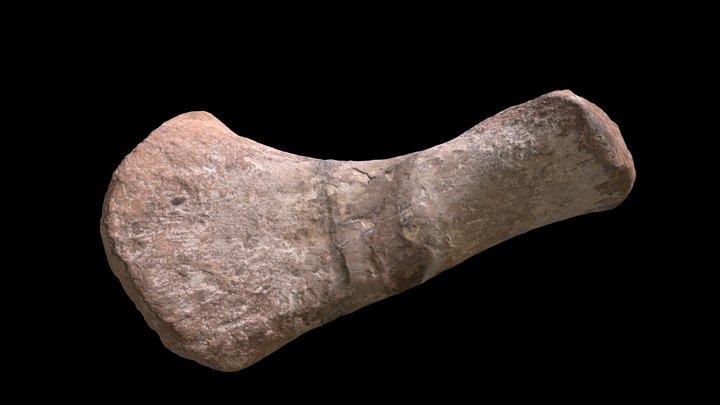
3D model
- Source
- Sketchfab
- Licence
- CC Attribution
- Commercial use
- cannot be read from the licence given — check the record
The description on this site
- Licence
- CC BY-SA 4.0
This is what the site found, which is not the same as what exists.
Keep going
What may have been alongside itPlesiosauria through timeFormations of the Early JurassicThe world it lived on
Occurrence data from the Paleobiology Database, CC BY 4.0. Nopcsa 1928