Rodentia
Rodents are a group of mammals belonging to the order Rodentia characterized by a single pair of continuously growing incisors in each of the upper and lower jaws. Rodents make up about 40% of all mammal species. Rodents are native to all major landmasses except Antarctica and a handful of isolated oceanic islands — though humans have since introduced them to nearly all of these places too. Most rodents are small animals with robust bodies, short limbs, and long tails. They use their sharp incisors to gnaw food, excavate burrows, and defend themselves. Most eat plant material, but some have more varied diets.

Wilfredor · CC0 · via Wikipedia/Commons. May be a photograph of a specimen, or an artist’s reconstruction — an interpretation of a skeleton, since colour and soft tissue are almost never preserved.
On record
Recorded, not inferred- Also called
- rodentPBDB
- Sits inside
- SimplicidentataPBDB
- Diet
- herbivorePBDB
- Life habit
- ground dwellingPBDB
- Motility
- actively mobilePBDB, for Osteichthyes
- Environment
- terrestrialPBDB, for Eutheria
Time the record covers
At least 55 million years on record.
The record covers at least 56 Mya to 11.7 ka. No occurrence read is dated outside 57.5 Mya to 0 Mya.
12,000+ occurrences of Rodentia on record. The Paleobiology Database records this as a living group. Bar height is expected occurrences, not a count: each fossil is spread across the span it is dated to, so a tall narrow bar means tight dating and a low wide one means loose.
When
12,000 occurrences readThese are dates about fossils, not the animal: the record can only begin after it arose and end before it died out, so either end may reach further. Shares are expected occurrences: a fossil dated to a span is counted partly in each period it straddles. The read hit its cap, so every figure above is a floor and the shares are of the occurrences read. More on what this infers.
Found in
at least 368 formations
- Brule Formation · White River Group286
- "unnamed sandstone" Formation232
- Palm Spring Formation225
- Barstow Formation218
- Bridger Formation200
- Alfambra Formation185
Loading coastlines…
The named rock units Rodentia has been recovered from, largest first. Drawn where the rock is now, not where it formed. The read hit its cap, so each count is a floor. 344 further formations hold fewer occurrences each and are not listed. 5,478 occurrences have no formation on record, which is common for older literature.
Found in the same rock
1,183 taxa- Hyopsodus100 sites
- Coryphodon93 sites
- Paramys copei68 sites
- Paramys excavatus68 sites
- Haplomylus speirianus59 sites
- Ectocion osbornianus58 sites
- Phenacodus vortmani56 sites
- Diacodexis55 sites
- Phenacodus48 sites
- Phenacolemurinae48 sites
- Sifrhippus grangeri46 sites
- Didymictis44 sites
- Apheliscus37 sites
- Prototomus37 sites
- Esthonyx bisulcatus36 sites
- Hyracotherium36 sites
- Phenacodus intermedius36 sites
- Prodiacodon tauricinerei35 sites
- Microsyopidae34 sites
- Viverravus33 sites
- Thryptacodon antiquus32 sites
- Cantius30 sites
- Esthonyx spatularius28 sites
- Cantius mckennai27 sites
The Paleobiology Database records at least 715 sites for Rodentia, and this reads 240 of them. The number is how many of those sites it was catalogued from too. The 24 sharing the most are listed.
This is not a list of everything alive at the time. It is only what has come out of the same ground as this animal and been written down.
Entered from
at least 1,151 references- Synonymies and reidentifications of North American fossil mammals1,321
- Pleistocene vertebrate faunas of Hungary376
- I giacimenti Quaternari di vertebrati fossili nell'Italia Nord-Orientale247
- Biochronology of the Pleistocene deposits at Betfia (Bihor, Romania)223
- A review of the biostratigraphy of Pliocene and Pleistocene sediments in the Elsinore Fault Zone, Riverside County, California198
- Vertebrate biostratigraphy of the Ogallala Group in Nebraska174
- Rodent faunas of the Mio-Pliocene continental sediments of the Teruel-Alfambra region, Spain174
- Decouvertes de faunes de micromammiferes dans les Pyrenees-Orientales (France) de l'Oligocene superieur au Miocene superieur; especes nouvelles et reflexion sur l'etalonnage des echelles continentale et marine. [New upper Oligocene to upper Miocene faunas of micromammals found in the Pyrenees-Orientales (France); new species of rodents and remarks about the calibration of marine and continental biochronological scales.]149
- Mittelpleistozane Saugetierfaunen aus Mitteleuropa - der Versuch einer biostratigraphischen Zuordnung139
- The Villafranchian mammalian faunas and biochronology of Greece116
- Biostratigraphy of Blancan and Irvingtonian mammals in the Fish Creek-Vallecito Creek section, southern California, and a review of the Blancan-Irvingtonian boundary114
- Small mammal fossils from the Barstow Formation, California102
Each of the 12,000 occurrences read was entered from one of these publications, ordered by how many each accounts for. This is not a search for papers mentioning the name. That read hit its cap, so each count is a floor. 1,139 further references are not listed. Entries link to doi.org where the Paleobiology Database holds an identifier, and to its own record where it does not. Relayed as the Paleobiology Database holds them, not checked against what they resolve to.
Media and terms
Media content2

Picture of Rodentia
- Source
- Wikipedia/Commons
- Credit
- Wilfredor
- Licence
- CC0
- Commercial use
- the licence allows it
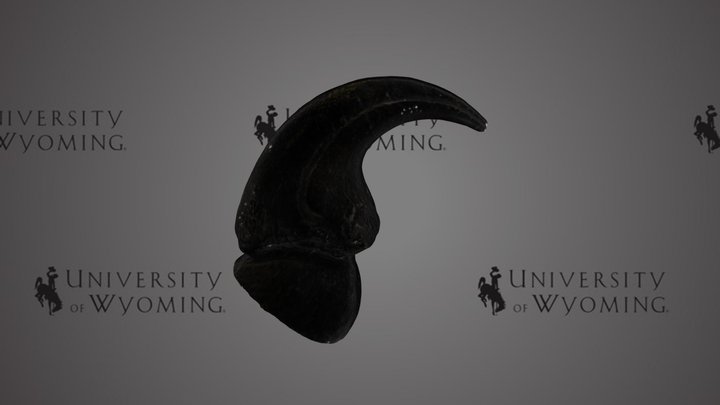
3D model
- Source
- Sketchfab
- Licence
- CC Attribution-NonCommercial
- Commercial use
- the licence does not allow it
Smithsonian Open Access and MorphoSource were not reached for this taxon, so this list is what the others held rather than everything there is.
The description on this site
- Source
- Wikipedia, “Rodent”
- Licence
- CC BY-SA 4.0
This is what the site found, which is not the same as what exists.
Keep going
What may have been alongside itSimplicidentata through timeThe world it lived on
Occurrence data from the Paleobiology Database, CC BY 4.0. (Bowdich 1821)