Septa
Septa is a genus of small to large predatory sea snails, marine gastropod mollusks in the family Cymatiidae.

Jan Delsing · Public Domain · via Wikipedia/Commons. May be a photograph of a specimen, or an artist’s reconstruction — an interpretation of a skeleton, since colour and soft tissue are almost never preserved.
On record
Recorded, not inferred- Sits inside
- RanellinaePBDB
- Diet
- carnivorePBDB, for Ranellidae
- Life habit
- epifaunalPBDB, for Ranellidae
- Motility
- actively mobilePBDB, for Ranellidae
- Vision
- limitedPBDB, for Gastropoda
Time the record covers
At least 40 million years on record.
The record covers at least 41.03 Mya to 129 ka. No occurrence read is dated outside 56 Mya to 11.7 ka.
17 occurrences of Septa on record, most of them in the Eocene. The Paleobiology Database records this as a living group. Bar height is expected occurrences, not a count: each fossil is spread across the span it is dated to, so a tall narrow bar means tight dating and a low wide one means loose.
When
17 occurrences- Eocene41%
- Oligocene6%
- Miocene21%
- Pliocene9%
- Pleistocene24%
These are dates about fossils, not the animal: the record can only begin after it arose and end before it died out, so either end may reach further. Shares are expected occurrences: a fossil dated to a span is counted partly in each period it straddles. More on what this infers.
Found in
6 formations
- Llajas Formation7
- Baitoa Formation2
- Caimito Formation1
- Bundera Calcarenite Formation1
- Moin Formation1
- Gurabo Formation1
Loading coastlines…
The named rock units Septa has been recovered from, largest first. Drawn where the rock is now, not where it formed. 4 occurrences have no formation on record, which is common for older literature.
Septa and its relatives
EoceneWhere Septa and its relatives were recorded in the Eocene.
Found in the same rock
242 taxa- Cymatium (Septa) janetae5 sites
- Ectinochilus (Macilentos) macilentus5 sites
- Eocernina hannibali5 sites
- Fusiturricula (Crenaturricula) crenatospira domenginica5 sites
- Surculites mathewsonii5 sites
- Clavilithes4 sites
- Dentalium stentor4 sites
- Pachycrommium clarki4 sites
- Phalium (Semicassis) tuberculiformis4 sites
- Architectonica (Stellaxis) cognata3 sites
- Conus3 sites
- Conus hornii umpquaensis3 sites
- Crassatella uvasana3 sites
- Cylichnina tantilla3 sites
- Galeodea californica3 sites
- Glycymeris (Glycymerita) sagittata3 sites
- Lyrischapa lajollaensis3 sites
- Megacardita3 sites
- Nemocardium (Nemocardium) linteum3 sites
- Ranella domenginica3 sites
- Rhinoclavis fasciata3 sites
- Rotularia (Rotularia) tejonense3 sites
- Solena (Eosolen) novacularis3 sites
- Tectus pyramis3 sites
The Paleobiology Database records 10 sites for Septa, and this reads all of them. The number is how many of those sites it was catalogued from too. The 24 sharing the most are listed.
This is not a list of everything alive at the time. It is only what has come out of the same ground as this animal and been written down.
Entered from
7 references- New Mollusks from the Lower Middle Eocene Llajas Formation, Southern California5
- Neogene Tonnoidean Gastropods of Tropical and South America; contributions to the Dominican Republic and Panama Paleontology Projects and Uplift of the Central American Isthmus4
- Cenozoic Molluscs and Echinoids of Barrow Island, Western Australia2
- Megapaleontology of the Eocene Llajas Formation, Simi Valley, California2
- Cenozoic fossil mollusks from Western Pacific Islands; Gastropods (Eratoidae through Harpidae)2
- Pliocene-Pleistocene coastal events and history along the western margin of Australia1
- Geology and paleontology of Canal Zone and adjoining parts of Panama: Description of Tertiary mollusks (gastropods: Vermetidae to Thaididae)1
Each of the 17 occurrences read was entered from one of these publications, ordered by how many each accounts for. This is not a search for papers mentioning the name. Entries link to doi.org where the Paleobiology Database holds an identifier, and to its own record where it does not. Relayed as the Paleobiology Database holds them, not checked against what they resolve to.
Media and terms
Media content2

Picture of Septa
- Source
- Wikipedia/Commons
- Credit
- Jan Delsing
- Licence
- Public Domain
- Commercial use
- the licence allows it
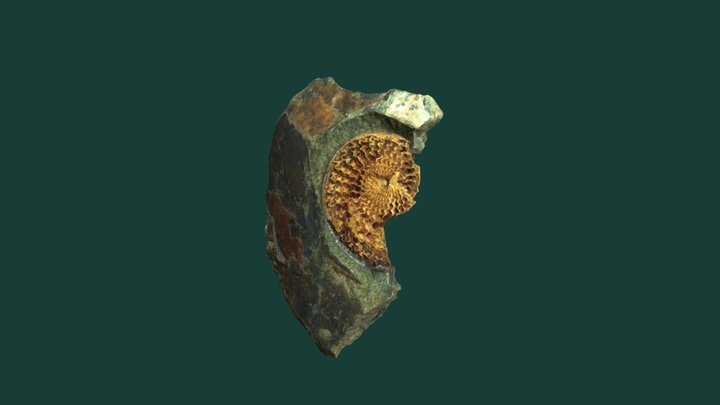
3D model
- Source
- Sketchfab
- Credit
- Shellie Luallin
- Licence
- CC Attribution
- Commercial use
- cannot be read from the licence given — check the record
Smithsonian Open Access was not reached for this taxon, so this list is what the others held rather than everything there is.
The description on this site
- Licence
- CC BY-SA 4.0
This is what the site found, which is not the same as what exists.
Keep going
What may have been alongside itRanellinae through timeFormations of the EoceneThe world it lived on
Occurrence data from the Paleobiology Database, CC BY 4.0. (Perry 1810)