Shonisaurus
Shonisaurus is a genus of very large ichthyosaurs. At least 37 incomplete fossil specimens of the type species, Shonisaurus popularis, have been found in the Luning Formation of Nevada, United States. This formation dates to the late Carnian-early Norian age of the Late Triassic, around 227 million years ago. Other possible species of Shonisaurus have been discovered from the middle Norian deposits of Canada and Alaska.

★Kumiko★ from Tokyo, Japan · CC BY-SA 2.0 · via Wikipedia/Commons. May be a photograph of a specimen, or an artist’s reconstruction — an interpretation of a skeleton, since colour and soft tissue are almost never preserved.
On record
Recorded, not inferred- Sits inside
- ShastasauridaePBDB
- Diet
- carnivorePBDB, for Ichthyosauria
- Life habit
- nektonicPBDB, for Ichthyopterygia
- Motility
- actively mobilePBDB, for Ichthyosauria
- Environment
- marinePBDB, for Ichthyosauria
Time the record covers
At least 21 million years on record.
The record covers at least 227.3 Mya to 205.7 Mya. No occurrence read is dated outside 233.6 Mya to 201.4 Mya.
5 occurrences of Shonisaurus on record, most of them in the Late Triassic. Bar height is expected occurrences, not a count: each fossil is spread across the span it is dated to, so a tall narrow bar means tight dating and a low wide one means loose.
When
5 occurrences- Late Triassic100%
These are dates about fossils, not the animal: the record can only begin after it arose and end before it died out, so either end may reach further. Shares are expected occurrences: a fossil dated to a span is counted partly in each period it straddles. More on what this infers.
Found in
3 formations
Loading coastlines…
The named rock units Shonisaurus has been recovered from, largest first. Drawn where the rock is now, not where it formed.
Shonisaurus and its relatives
Late TriassicWhere Shonisaurus and its relatives were recorded in the Late Triassic.
Found in the same rock
13 taxa- Ceratodus latissimus1 site
- Cyclotosaurus1 site
- Hybodontiformes1 site
- Lepagia gaumensis1 site
- Lissodus minimus1 site
- Nemacanthus monilifer1 site
- Pachystropheus rhaeticus1 site
- Plectodiscus berlinensis1 site
- Plesiosauria1 site
- Polyacrodus cloacinus1 site
- Sargodon tomicus1 site
- Saurichthys1 site
- Temnospondyli1 site
The Paleobiology Database records 3 sites for Shonisaurus, and this reads all of them. The number is how many of those sites it was catalogued from too.
This is not a list of everything alive at the time. It is only what has come out of the same ground as this animal and been written down.
Entered from
4 references- Palaeobiogeography of the Early and Late Triassic ichthyopterygia2
- A large temnospondyl humerus from the Rhaetian (Late Triassic) of Bonenburg (Westphalia, Germany) and its implications for temnospondyl extinction1
- New findings of isolated remains of Triassic reptiles from Northeastern Italy1
- A new condrophorine (Hydrozoa, Velellidae) from the Upper Triassic of Nevada1
Each of the 5 occurrences read was entered from one of these publications, ordered by how many each accounts for. This is not a search for papers mentioning the name. Entries link to doi.org where the Paleobiology Database holds an identifier, and to its own record where it does not. Relayed as the Paleobiology Database holds them, not checked against what they resolve to.
Media and terms
Media content3

Picture of Shonisaurus
- Source
- Wikipedia/Commons
- Credit
- ★Kumiko★ from Tokyo, Japan
- Licence
- CC BY-SA 2.0
- Commercial use
- the licence allows it
Laser scan
- Source
- MorphoSource
- Licence
- not stated by the source
- Commercial use
- cannot be read from the licence given — check the record
- Specimen
- Shonisaurus silberlingi · NVSMLV:VM:2014-057-FS-006-001
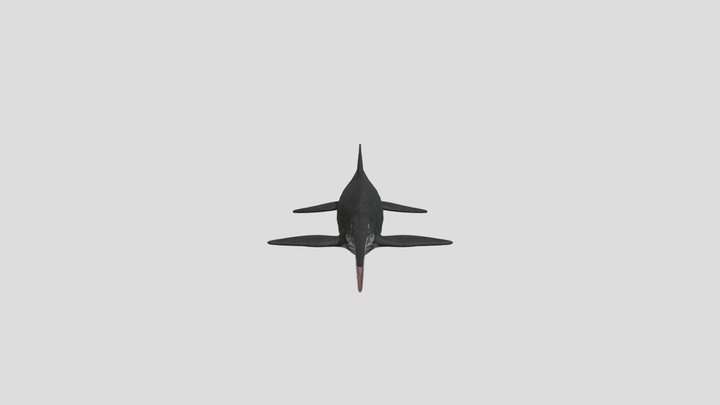
3D model
- Source
- Sketchfab
- Credit
- Sammy the Citipati
- Licence
- CC Attribution
- Commercial use
- cannot be read from the licence given — check the record
The description on this site
- Source
- Wikipedia, “Shonisaurus”
- Licence
- CC BY-SA 4.0
This is what the site found, which is not the same as what exists.
Keep going
What may have been alongside itShastasauridae through timeFormations of the Late TriassicThe world it lived on
Occurrence data from the Paleobiology Database, CC BY 4.0. Camp 1976