Siphonophora
Siphonophora is a genus of millipedes belonging to the family Siphonophoridae.
No picture of Siphonophora was found. Wikipedia, Wikidata and iDigBio were searched and had none. Smithsonian Open Access did not answer, so this is what the others held rather than everything there is. GBIF was asked, and what came back is not recorded: nothing, or a picture this site could not tie to Siphonophora, or no answer at all. This entry cannot say which.
On record
Recorded, not inferred- Sits inside
- SiphonophoridaePBDB
- Motility
- actively mobilePBDB, for Arthropoda
Time the record covers
At least 73 million years on record.
The record covers at least 93.9 Mya to 20.45 Mya. No occurrence read is dated outside 100.5 Mya to 13.82 Mya.
9 occurrences of Siphonophora on record, most of them in the Miocene. The Paleobiology Database records this as a living group, and the chart stops with its fossils rather than at the present. Bar height is expected occurrences, not a count: each fossil is spread across the span it is dated to, so a tall narrow bar means tight dating and a low wide one means loose.
When
9 occurrences- Late Cretaceous22%
- Miocene78%
These are dates about fossils, not the animal: the record can only begin after it arose and end before it died out, so either end may reach further. Shares are expected occurrences: a fossil dated to a span is counted partly in each period it straddles. More on what this infers.
Siphonophora and its relatives
MioceneWhere Siphonophora and its relatives were recorded in the Miocene.
Found in the same rock
1,148 taxa- Chalcosicya2 sites
- Docodesmus2 sites
- Inodesmus2 sites
- Lophoproctus2 sites
- Metachroma2 sites
- Salticinae2 sites
- Stemmiulidae2 sites
- Acallepitrix1 site
- Acalyptomerus thayerae1 site
- Acalyptopygus astriatus1 site
- Acalyptopygus brevicornis1 site
- Acalyptopygus elongatus1 site
- Acalyptopygus lingziae1 site
- Acanthochrysa langae1 site
- Acanthocorona1 site
- Acanthocorona skalskii1 site
- Acanthocorona spinifera1 site
- Acanthocorona wichardi1 site
- Acanthognathus poinari1 site
- Acanthomantispa grandis1 site
- Acaricoris robertae1 site
- Achlyoconis heptatrichia1 site
- Agaricales1 site
- Agathiphagama perdita1 site
The Paleobiology Database records 6 sites for Siphonophora, and this reads all of them. The number is how many of those sites it was catalogued from too. The 24 sharing the most are listed.
This is not a list of everything alive at the time. It is only what has come out of the same ground as this animal and been written down.
Entered from
4 references- Millipeds from Dominican amber, with the description of two new species (Diplopoda: Siphonophoridae) of Siphonophora5
- The millipedes and centipedes of Chiapas amber2
- Morphological revision of Siphonophora hui (Myriapoda: Diplopoda: Siphonophoridae) from the mid-Cretaceous Burmese amber1
- One hundred million years of stasis: Siphonophora hui sp. nov., the first Mesozoic sucking millipede (Diplopoda: Siphonophorida) from mid-Cretaceous Burmese amber1
Each of the 9 occurrences read was entered from one of these publications, ordered by how many each accounts for. This is not a search for papers mentioning the name. Each entry links to doi.org. Relayed as the Paleobiology Database holds them, not checked against what they resolve to.
Media and terms
Media content1
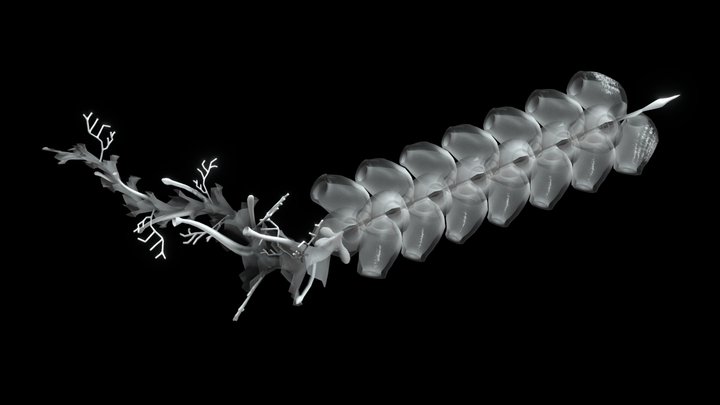
No picture of Siphonophora was found. Wikipedia, Wikidata and iDigBio were searched and had none.
Smithsonian Open Access did not answer, so this is what the others held rather than everything there is.
GBIF was asked, and what came back is not recorded: nothing, or a picture this site could not tie to Siphonophora, or no answer at all. This entry cannot say which.
Smithsonian Open Access and MorphoSource were not reached for this taxon, so this list is what the others held rather than everything there is.
The description on this site
- Licence
- CC BY-SA 4.0
This is what the site found, which is not the same as what exists.
Keep going
What may have been alongside itSiphonophoridae through timeFormations of the MioceneThe world it lived on
Occurrence data from the Paleobiology Database, CC BY 4.0. Brandt 1837