Somasteroidea
The Somasteroidea, or Stomasteroidea, is an extinct order of asterozoan echinoderms first defined in 1951 by W. K. Spencer. Their first appearance in the fossil record was in the Early Ordovician (Tremadocian) and they had become extinct by the Late Devonian (Famennian). They are similar to the asteroids in that their bodies are flattened dorsoventrally and they have five petaloid arms with broad bases. The ambulacral plates in somasteroids are simple and unspecialized, and the arms were thought to be not flexible and were unable to assist in feeding, but the oral mouth parts were more complex.

Peter MASSICARD · CC BY 4.0 · via Wikipedia/Commons. May be a photograph of a specimen, or an artist’s reconstruction — an interpretation of a skeleton, since colour and soft tissue are almost never preserved.
On record
Recorded, not inferred- Sits inside
- AsterozoaPBDB
- Diet
- suspension feederPBDB
- Life habit
- epifaunalPBDB
- Motility
- actively mobilePBDB
- Environment
- marinePBDB, for Echinodermata
Time the record covers
At least 18 million years on record.
The record covers at least 477.1 Mya to 458.2 Mya. No occurrence read is dated outside 488.9 Mya to 449.6 Mya.
13 occurrences of Somasteroidea on record, most of them in the Ordovician. Bar height is expected occurrences, not a count: each fossil is spread across the span it is dated to, so a tall narrow bar means tight dating and a low wide one means loose.
When
13 occurrences- Cambrianunder 1%
- Ordovician99%
These are dates about fossils, not the animal: the record can only begin after it arose and end before it died out, so either end may reach further. Shares are expected occurrences: a fossil dated to a span is counted partly in each period it straddles. More on what this infers.
Found in
8 formations
- Saint-Chinian Formation4
- Schistes de Saint-Chinian Formation2
- Fezouata Formation2
- Sarka Formation1
- Landeyran Formation1
- Fillmore Formation · Lower Pogonip Group1
Loading coastlines…
The named rock units Somasteroidea has been recovered from, largest first. Drawn where the rock is now, not where it formed.
Somasteroidea and its relatives
OrdovicianWhere Somasteroidea and its relatives were recorded in the Ordovician.
Found in the same rock
297 taxa- Asaphellus5 sites
- Anatifopsis4 sites
- Balantiocystis4 sites
- Coxiconchia4 sites
- Euloma4 sites
- Prionocheilus4 sites
- Redonia4 sites
- Ampyx3 sites
- Babinka3 sites
- Ceraurinella3 sites
- Chinianaster levyi3 sites
- Colpocoryphe3 sites
- Ekaterodonta3 sites
- Ekeraspis3 sites
- Geragnostus3 sites
- Lesueurilla prima3 sites
- Orthambonites3 sites
- Paramegalaspis3 sites
- Peelerophon oehlerti3 sites
- Sinuites sowerbyi3 sites
- Spondyglossella3 sites
- Synek3 sites
- Tetragraptus3 sites
- Ampyx priscus2 sites
The Paleobiology Database records 10 sites for Somasteroidea, and this reads all of them. The number is how many of those sites it was catalogued from too. The 24 sharing the most are listed.
This is not a list of everything alive at the time. It is only what has come out of the same ground as this animal and been written down.
Entered from
10 references- Solutan echinoderms from the Fezouata Shale Lagerstätte (Lower Ordovician, Morocco): diversity, exceptional preservation, and palaeoecological implications2
- Early Palaeozoic starfish2
- Contribution à l'étude paléontologique de l'Ordovicien inférieur de la Montagne Noire et révision sommaire de la faune cambrienne de la Montagne Noire2
- A new somasteroid from the Fezouata Lagerstätte in Morocco and the Early Ordovician origin of Asterozoa1
- Skeletal homologies, phylogeny and classification of the earliest asterozoan echinoderms1
- An Archegonaster-like somasteroid (Echinodermata) from Pomeroy, co. Tyrone, Northern Ireland1
- New Lower Ordovician stelleroids (Echinodermata) and their bearing on the origins and early history of the stelleroid echinoderms1
- Babin et al., 19821
- Contribution à l'étude de l'Ordovicien inférieur de la Montagne Noire : biostratigraphie et révision des Agnostida1
- The biostratigraphy of the Ordovician of Bohemia1
Each of the 13 occurrences read was entered from one of these publications, ordered by how many each accounts for. This is not a search for papers mentioning the name. Entries link to doi.org where the Paleobiology Database holds an identifier, and to its own record where it does not. Relayed as the Paleobiology Database holds them, not checked against what they resolve to.
Media and terms
Media content2
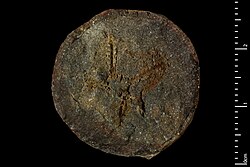
Picture of Somasteroidea
- Source
- Wikipedia/Commons
- Credit
- Peter MASSICARD
- Licence
- CC BY 4.0
- Commercial use
- the licence allows it
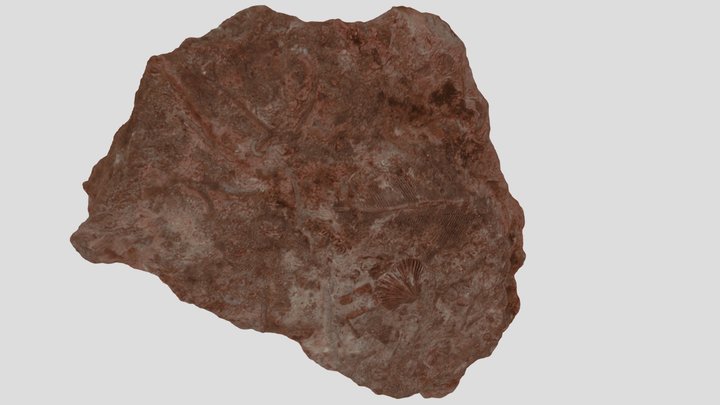
3D model
- Source
- Sketchfab
- Credit
- John Merck
- Licence
- CC Attribution
- Commercial use
- cannot be read from the licence given — check the record
Smithsonian Open Access and MorphoSource were not reached for this taxon, so this list is what the others held rather than everything there is.
The description on this site
- Licence
- CC BY-SA 4.0
This is what the site found, which is not the same as what exists.
Keep going
What may have been alongside itAsterozoa through timeFormations of the OrdovicianThe world it lived on
Occurrence data from the Paleobiology Database, CC BY 4.0. (Spencer 1951)