Tarbosaurus
Tarbosaurus is a genus of large tyrannosaurid dinosaur that lived in Asia during the Maastrichtian age of the Late Cretaceous period. It contains the type and single species Tarbosaurus bataar, which is known from the Nemegt Formation of Mongolia, with more fragmentary remains found further afield in the Subashi Formation of China. Tarbosaurus is represented by dozens of fossil specimens, including several complete skulls and skeletons. These remains have allowed studies focusing on its phylogeny, skull mechanics, and brain structure. Further fossil remains have been reported from other geologic formations of Asia, however, these remains are fragmentary and cannot be confidently assigned to Tarbosaurus or the type species.

Lwilcoxson · CC BY-SA 4.0 · via Wikipedia/Commons. May be a photograph of a specimen, or an artist’s reconstruction — an interpretation of a skeleton, since colour and soft tissue are almost never preserved.
On record
Recorded, not inferred- Sits inside
- TyrannosauriniPBDB
- Diet
- carnivorePBDB, for Coelurosauria
- Life habit
- ground dwelling, solitaryPBDB, for Theropoda
- Motility
- actively mobilePBDB, for Theropoda
- Environment
- terrestrialPBDB, for Theropoda
- Length
- 10 mWikidata
Time the record covers
At least 11 million years on record.
The record covers at least 83.6 Mya to 72.2 Mya. No occurrence read is dated outside 89.8 Mya to 66 Mya.
56 occurrences of Tarbosaurus on record, most of them in the Late Cretaceous. Bar height is expected occurrences, not a count: each fossil is spread across the span it is dated to, so a tall narrow bar means tight dating and a low wide one means loose.
When
56 occurrences- Late Cretaceous100%
These are dates about fossils, not the animal: the record can only begin after it arose and end before it died out, so either end may reach further. Shares are expected occurrences: a fossil dated to a span is counted partly in each period it straddles. More on what this infers.
Found in
7 formations
- Nemegt Formation49
- Udurchukan Formation · Tsagayan Group2
- Yuliangzi Formation · Jiayin Group1
- Qiupa Formation · Tantou Group1
- Subashi Formation1
- Beds of Nogon Tsav Formation1
Loading coastlines…
The named rock units Tarbosaurus has been recovered from, largest first. Drawn where the rock is now, not where it formed.
Tarbosaurus and its relatives
Late CretaceousWhere Tarbosaurus and its relatives were recorded in the Late Cretaceous.
Found in the same rock
101 taxa- Mongolemys10 sites
- Saurolophus10 sites
- Sauropoda10 sites
- Gallimimus9 sites
- Testudinata9 sites
- Dinosauria8 sites
- Theropoda8 sites
- Trionychidae8 sites
- Crocodylia7 sites
- Mongolochelys efremovi7 sites
- Saurolophus angustirostris7 sites
- Ankylosauridae5 sites
- Elongatoolithidae5 sites
- Hadrosauridae5 sites
- Ornithomimidae5 sites
- Testudines5 sites
- Ankylosauria4 sites
- Deinocheirus mirificus4 sites
- Dendroolithidae4 sites
- Oviraptorosauria4 sites
- Trionyx4 sites
- Coralloidoolithus verrucarius3 sites
- Kuhnemys breviplastra3 sites
- Mollusca3 sites
The Paleobiology Database records 53 sites for Tarbosaurus, and this reads all of them. The number is how many of those sites it was catalogued from too. The 24 sharing the most are listed.
This is not a list of everything alive at the time. It is only what has come out of the same ground as this animal and been written down.
Entered from
24 references- Narrative of the Korea-Mongolian International Dinosaur expeditions (KID) 2006–2010 with scientific results7
- Geographical and geological data from the Polish-Mongolian Palaeontological Expeditions7
- Dinosaurs of the Gobi: Following in the footsteps of the Polish-Mongolian Expeditions6
- Report on the Japan–Mongolia Joint Paleontological Expedition to the Gobi desert, 19935
- Additional geographical and geological data from the Polish-Mongolian Palaeontological Expeditions4
- [New carnivorous dinosaurs from the Upper Cretaceous of Mongolia]3
- Dinosaur footprints from the Upper Cretaceous of Mongolia2
- Stratigraphy, sedimentology and palaeoecology of the dinosaur-bearing Kundur section (Zeya-Bureya Basin, Amur region, far eastern Russia)2
- Giant theropod dinosaurs from Asia and North America: skulls of Tarbosaurus bataar and Tyrannosaurus rex compared2
- Report on the Japan–Mongolia Joint Paleontological Expedition to the Gobi desert, 19942
- Report on the Japan–Mongolia Joint Paleontological Expedition to the Gobi desert, 19972
- Skeletal morphology of Mononykus olecranus (Theropoda: Avialae) from the Late Cretaceous of Mongolia2
Each of the 56 occurrences read was entered from one of these publications, ordered by how many each accounts for. This is not a search for papers mentioning the name. 12 further references are not listed. Entries link to doi.org where the Paleobiology Database holds an identifier, and to its own record where it does not. Relayed as the Paleobiology Database holds them, not checked against what they resolve to.
Media and terms
Media content2

Picture of Tarbosaurus
- Source
- Wikipedia/Commons
- Credit
- Lwilcoxson
- Licence
- CC BY-SA 4.0
- Commercial use
- the licence allows it
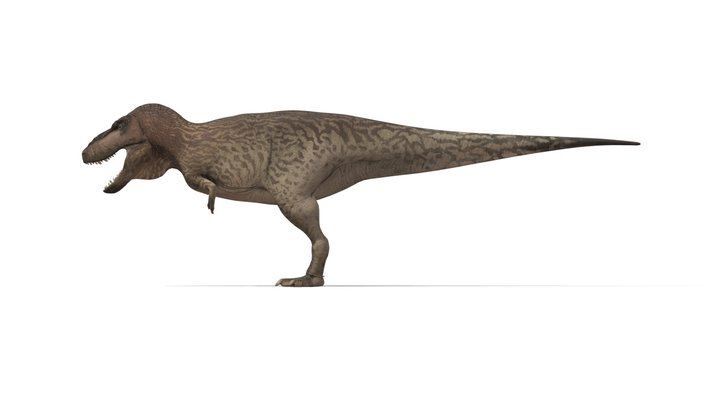
3D model
- Source
- Sketchfab
- Credit
- Nobilis the Palaeovespa
- Licence
- CC Attribution
- Commercial use
- cannot be read from the licence given — check the record
The description on this site
- Source
- Wikipedia, “Tarbosaurus”
- Licence
- CC BY-SA 4.0
This is what the site found, which is not the same as what exists.
Keep going
What may have been alongside itTyrannosaurini through timeFormations of the Late CretaceousThe world it lived on
Occurrence data from the Paleobiology Database, CC BY 4.0. Maleev 1955