Trapa
No picture of Trapa was found. iDigBio was searched and had none. Wikipedia and Wikidata have a picture filed under this name, but nothing tied it to Trapa itself, so it was not used. Smithsonian Open Access did not answer, so this is what the others held rather than everything there is. GBIF was asked, and what came back is not recorded: nothing, or a picture this site could not tie to Trapa, or no answer at all. This entry cannot say which.
On record
Recorded, not inferred- Also called
- water caltropPBDB
- Sits inside
- TrapaceaePBDB
- Diet
- "photoautotroph"PBDB, for Angiospermae
Time the record covers
At least 63 million years on record.
The record covers at least 66 Mya to 2.58 Mya. No occurrence read is dated outside 72.2 Mya to 11.7 ka.
74 occurrences of Trapa on record, most of them in the Miocene. The Paleobiology Database records this as a living group. Bar height is expected occurrences, not a count: each fossil is spread across the span it is dated to, so a tall narrow bar means tight dating and a low wide one means loose.
When
74 occurrences- Late Cretaceous9%
- Paleocene17%
- Eocene5%
- Oligocene5%
- Miocene36%
- Pliocene7%
- Pleistocene20%
These are dates about fossils, not the animal: the record can only begin after it arose and end before it died out, so either end may reach further. Shares are expected occurrences: a fossil dated to a span is counted partly in each period it straddles. More on what this infers.
Found in
20 formations
- Fort Union Formation9
- Lance Formation5
- Akima Formation3
- Tokoname Formation2
- Bangmai Formation2
- Golden Valley Formation1
Loading coastlines…
The named rock units Trapa has been recovered from, largest first. Drawn where the rock is now, not where it formed. 38 occurrences have no formation on record, which is common for older literature.
Trapa and its relatives
MioceneWhere Trapa and its relatives were recorded in the Miocene.
Found in the same rock
677 taxa- Typha7 sites
- Cercidiphyllum6 sites
- Eucommia6 sites
- Picea6 sites
- Poaceae6 sites
- Quercus6 sites
- Salix6 sites
- Abies5 sites
- Alnus5 sites
- Betula5 sites
- Equisetum5 sites
- Phyllites5 sites
- Rhus5 sites
- Acer4 sites
- Ampelopsis acerifolia4 sites
- Corylus4 sites
- Cyperaceae4 sites
- Fraxinus4 sites
- Laurophyllum4 sites
- Pinus4 sites
- Populus4 sites
- Ulmus4 sites
- Asteraceae3 sites
- Beringiaphyllum cupanioides3 sites
The Paleobiology Database records 38 sites for Trapa, and this reads all of them. The number is how many of those sites it was catalogued from too. The 24 sharing the most are listed.
This is not a list of everything alive at the time. It is only what has come out of the same ground as this animal and been written down.
Entered from
19 references- Tretichnye Flory Zapadnoi Sibiri17
- A catalogue of Cenozoic megafossil plants in China10
- A Catalogue of Indian Fossil Plants10
- Paleocene flora of the Rocky Mountains and Great Plains10
- Late Miocene and Pliocene Floras in Central Honshu, Japan5
- Upper Cretaceous floras of the Rocky Mountain region; Flora of the Lance Formation at its type locality, Niobrara County, Wyoming5
- Miocene floras in the lower Rhenish basin and their ecological interpretation3
- Die pliozaenen Floren von Thueringen, Deutsche Demokratische Republik2
- Fossil macrospores and massulae of Salvinia natans from the Pliocene and the Quaternary sediments in the Kinki and Tokai districts, Japan2
- Quantitative reconstruction of the Late Miocene monsoon climates of southwest China: A case study of the Lincang flora from Yunnan Province1
- A fossilized aroid infructescence, Albertarum pueri geno. nov. et sp. nov., of Late Cretaceous (late Campanian) age from the Horseshoe Canyon Formation of southern Alberta, Canada1
- New evidence on the earliest human presence at high northern latitudes in northeast Asia.1
Each of the 74 occurrences read was entered from one of these publications, ordered by how many each accounts for. This is not a search for papers mentioning the name. 7 further references are not listed. Entries link to doi.org where the Paleobiology Database holds an identifier, and to its own record where it does not. Relayed as the Paleobiology Database holds them, not checked against what they resolve to.
Media and terms
Media content1
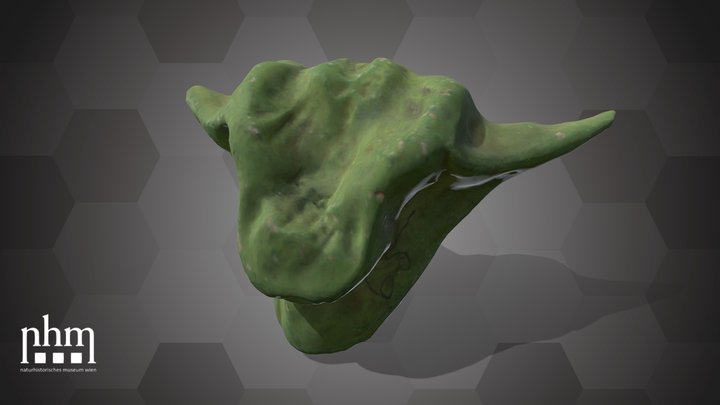
3D model
- Source
- Sketchfab
- Licence
- CC Attribution-NonCommercial
- Commercial use
- the licence does not allow it
No picture of Trapa was found. iDigBio was searched and had none.
Wikipedia and Wikidata have a picture filed under this name, but nothing tied it to Trapa itself, so it was not used.
Smithsonian Open Access did not answer, so this is what the others held rather than everything there is.
GBIF was asked, and what came back is not recorded: nothing, or a picture this site could not tie to Trapa, or no answer at all. This entry cannot say which.
Smithsonian Open Access was not reached for this taxon, so this list is what the others held rather than everything there is.
This is what the site found, which is not the same as what exists.
Keep going
What may have been alongside itTrapaceae through timeFormations of the MioceneThe world it lived on
Occurrence data from the Paleobiology Database, CC BY 4.0. Linnaeus 1753