Trapezium

via iDigBio · via iDigBio. May be a photograph of a specimen, or an artist’s reconstruction — an interpretation of a skeleton, since colour and soft tissue are almost never preserved.
On record
Recorded, not inferred- Sits inside
- TrapezidaePBDB
- Diet
- suspension feederPBDB, for Venerida
- Life habit
- infaunalPBDB, for Venerida
- Motility
- facultatively mobilePBDB, for Venerida
- Vision
- blindPBDB, for Bivalvia
Time the record covers
At least 241 million years on record.
The record covers at least 241.464 Mya to 129 ka. No occurrence read is dated outside 250.8 Mya to 11.7 ka.
53 occurrences of Trapezium on record, most of them in the Pleistocene. The Paleobiology Database records this as a living group. Bar height is expected occurrences, not a count: each fossil is spread across the span it is dated to, so a tall narrow bar means tight dating and a low wide one means loose.
When
53 occurrences- Early Triassicunder 1%
- Middle Triassic1%
- Early Jurassic4%
- Early Cretaceous8%
- Late Cretaceous11%
- Paleocene2%
- Eocene26%
- Miocene15%
- Pliocene2%
- Pleistocene30%
These are dates about fossils, not the animal: the record can only begin after it arose and end before it died out, so either end may reach further. Shares are expected occurrences: a fossil dated to a span is counted partly in each period it straddles. More on what this infers.
Found in
17 formations
- Kunugidaira Formation6
- Tainohata Formation · Kobe Group6
- Matilija Formation5
- opoka Formation3
- Waimanalo Formation3
- Carbonera Formation2
Loading coastlines…
The named rock units Trapezium has been recovered from, largest first. Drawn where the rock is now, not where it formed. 16 occurrences have no formation on record, which is common for older literature.
Trapezium and its relatives
PleistoceneWhere Trapezium and its relatives were recorded in the Pleistocene.
Found in the same rock
794 taxa- Ostrea9 sites
- Modiolus7 sites
- Cucullaea6 sites
- Cyclina nodai6 sites
- Pitar ozakii6 sites
- Potamides6 sites
- Acutostrea idriaensis5 sites
- Chlamys5 sites
- Crepidula tainohataensis5 sites
- Neotrapezium californicum5 sites
- Potamides (Potamidopsis) californica5 sites
- Tellina (Angulus) joaquinensis5 sites
- Anadara4 sites
- Aporrhais4 sites
- Callista4 sites
- Cercomya4 sites
- Cryptomya4 sites
- Haustator4 sites
- Loxotrema turritum4 sites
- Meretrix4 sites
- Nuculana4 sites
- Panopea4 sites
- Pelecyora aequilateralis4 sites
- Pholadomya4 sites
The Paleobiology Database records 31 sites for Trapezium, and this reads all of them. The number is how many of those sites it was catalogued from too. The 24 sharing the most are listed.
This is not a list of everything alive at the time. It is only what has come out of the same ground as this animal and been written down.
Entered from
26 references- Eocene Mollusca from the Tainohata Formation in Kobe City, southwest Japan6
- Plant and molluscan fossil assemblages rom the Lower Miocene Kunugidaira Formation in the southern part of the Joban coal-field6
- Middle Eocene brackish-marine mollusks from the Matilija Sandstone at Matilija Hot Springs, Ventura County, Southern California5
- Maastrichtian non-cephalopod mollusks: Scaphopoda, Gastropoda and Bivalvia of the Middle Vistula Valley, central Poland5
- Fossil mollusks of Oahu, Hawaii Islands3
- Pleistocene Coral Reef Terraces on the Saudi Arabian Side of the Gulf of Aqaba, Red Sea2
- Early Pleistocene fossil Mollusca from the sea of Japan off Yamaguchi Prefecture2
- Faunal response to the instability of reef habitats: Pleistocene molluscan assemblages of Aldabra Atoll2
- Summary of the geology and paleontology of the Atsumi Peninsula, Aichi Prefecture, Japan2
- Neocomian Faunas of Northern Mexico2
- Recent and fossil marine Mollusca of Tongatabu2
- Etude géologique et paléontologique des environs de St-Ambroix (Gard). Première partie (Houiller, Trias, Infralias)2
Each of the 53 occurrences read was entered from one of these publications, ordered by how many each accounts for. This is not a search for papers mentioning the name. 14 further references are not listed. Entries link to doi.org where the Paleobiology Database holds an identifier, and to its own record where it does not. Relayed as the Paleobiology Database holds them, not checked against what they resolve to.
Media and terms
Media content2
Picture of Trapezium
- Source
- iDigBio
- Credit
- via iDigBio
- Licence
- not stated by the source
- Commercial use
- cannot be read from the licence given — check the record
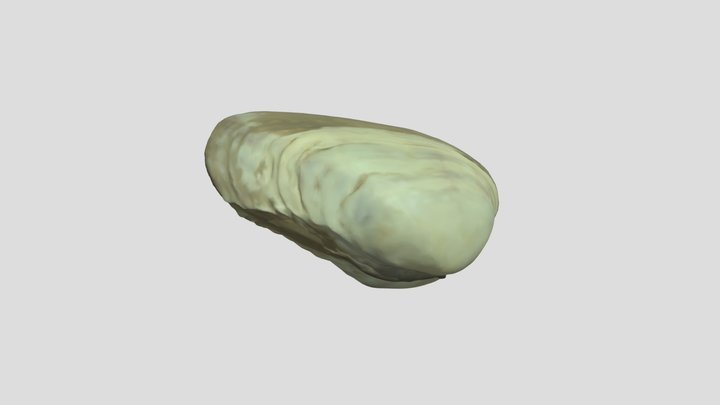
3D model
- Source
- Sketchfab
- Licence
- CC Attribution-NonCommercial
- Commercial use
- the licence does not allow it
This is what the site found, which is not the same as what exists.
Keep going
What may have been alongside itTrapezidae through timeFormations of the PleistoceneThe world it lived on
Occurrence data from the Paleobiology Database, CC BY 4.0. Mühlfeld 1811