Tupaia
Tupaia is a treeshrew genus in the family Tupaiidae that was first described by Thomas Stamford Raffles in 1821.

Paul J. Morris · CC BY-SA 2.0 · via Wikipedia/Commons. May be a photograph of a specimen, or an artist’s reconstruction — an interpretation of a skeleton, since colour and soft tissue are almost never preserved.
On record
Recorded, not inferred- Sits inside
- TupaiinaePBDB
- Diet
- insectivore, frugivorePBDB, for Tupaiidae
- Life habit
- scansorialPBDB, for Tupaiidae
- Motility
- actively mobilePBDB, for Osteichthyes
- Environment
- terrestrialPBDB, for Eutheria
Time the record covers
At least 11 million years on record.
The record covers at least 13.82 Mya to 2.58 Mya. No occurrence read is dated outside 20.45 Mya to 774 ka.
4 occurrences of Tupaia on record, most of them in the Miocene. The Paleobiology Database records this as a living group, and the chart stops with its fossils rather than at the present. Bar height is expected occurrences, not a count: each fossil is spread across the span it is dated to, so a tall narrow bar means tight dating and a low wide one means loose.
When
4 occurrences- Miocene49%
- Pliocene26%
- Pleistocene25%
These are dates about fossils, not the animal: the record can only begin after it arose and end before it died out, so either end may reach further. Shares are expected occurrences: a fossil dated to a span is counted partly in each period it straddles. More on what this infers.
Found in
2 formations
- Xiaohe Formation1
- Tatrot Formation · Siwalik Group1
Loading coastlines…
The named rock units Tupaia has been recovered from, largest first. Drawn where the rock is now, not where it formed. 2 occurrences have no formation on record, which is common for older literature.
Tupaia and its relatives
MioceneWhere Tupaia and its relatives were recorded in the Miocene.
Found in the same rock
122 taxa- Ia2 sites
- Martes2 sites
- ? Homiodorcas sp.1 site
- Acrochordus1 site
- Ailuropoda wulingshanensis1 site
- Anatidae1 site
- Anourosorex1 site
- Apodemus1 site
- Arctonyx collaris1 site
- Aselliscus1 site
- Atherurus1 site
- Atlantoxerus1 site
- Belomys1 site
- Blarinella1 site
- Bos (Bibos)1 site
- Brachipposideros1 site
- Caprinae1 site
- Cervavitus fenqii1 site
- Chiropodomys1 site
- Chiroptera1 site
- Colubridae1 site
- Conohyus sindiensis1 site
- Copemys1 site
- Crocidura1 site
The Paleobiology Database records 4 sites for Tupaia, and this reads all of them. The number is how many of those sites it was catalogued from too. The 24 sharing the most are listed.
This is not a list of everything alive at the time. It is only what has come out of the same ground as this animal and been written down.
Entered from
4 references- Tupaiine tree shrews (Sandentia, Mammalia) from the Yuanmou Lufengpithecus locality of Yunnan, China1
- A newly discovered Gigantopithecus fauna from Sanhe Cave, Chongzuo, Guangxi, South China1
- Les mammiferes du gisement miocene inferieure de Li Mae Long, Thailande; Systematique biostratigraphie et paleoenvironment1
- Micromammals from Siwaliks1
Each of the 4 occurrences read was entered from one of these publications, ordered by how many each accounts for. This is not a search for papers mentioning the name. Entries link to doi.org where the Paleobiology Database holds an identifier, and to its own record where it does not. Relayed as the Paleobiology Database holds them, not checked against what they resolve to.
Media and terms
Media content3

Picture of Tupaia
- Source
- Wikipedia/Commons
- Credit
- Paul J. Morris
- Licence
- CC BY-SA 2.0
- Commercial use
- the licence allows it
CT scan
- Source
- MorphoSource
- Credit
- AMNH Mammal Collections
- Licence
- not stated by the source
- Commercial use
- cannot be read from the licence given — check the record
- Specimen
- Tupaia gracilis gracilis · AMNH:Mammals:M-103620
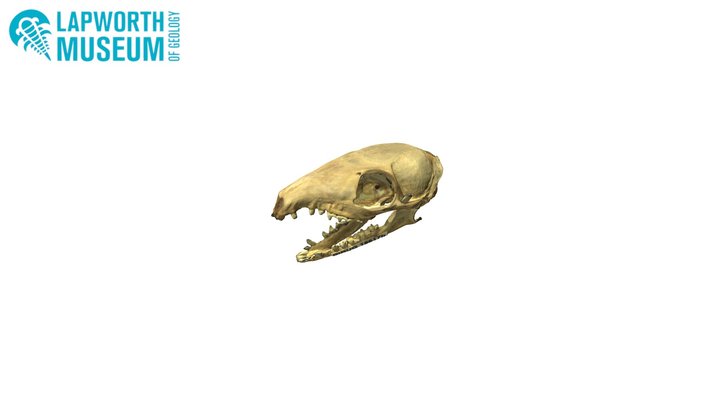
3D model
- Source
- Sketchfab
- Licence
- CC Attribution-NonCommercial
- Commercial use
- the licence does not allow it
Smithsonian Open Access was not reached for this taxon, so this list is what the others held rather than everything there is.
The description on this site
- Licence
- CC BY-SA 4.0
This is what the site found, which is not the same as what exists.
Keep going
What may have been alongside itTupaiinae through timeFormations of the MioceneThe world it lived on
Occurrence data from the Paleobiology Database, CC BY 4.0. Raffles 1821