Vertebrata
Searched as Vertebrata indet.. The Paleobiology Database treats Vertebrata as the accepted name.
Vertebrates, also called craniates, are animals with a vertebral column and a cranium. The vertebral column surrounds and protects the spinal cord, while the cranium protects the brain.

User:Follix User:Jamez42 User:Albert kok User:Tiithunt · CC BY-SA 4.0 · via Wikipedia/Commons. May be a photograph of a specimen, or an artist’s reconstruction — an interpretation of a skeleton, since colour and soft tissue are almost never preserved.
On record
Recorded, not inferred- Also called
- vertebratePBDB
- Sits inside
- ChordataPBDB
- Motility
- actively mobilePBDB, for Chordata
Time the record covers
At least 514 million years on record.
The record covers at least 514.5 Mya to 129 ka. No occurrence read is dated outside 521 Mya to 0 Mya.
711 occurrences of Vertebrata on record, most of them in the Late Cretaceous. The Paleobiology Database records this as a living group. Bar height is expected occurrences, not a count: each fossil is spread across the span it is dated to, so a tall narrow bar means tight dating and a low wide one means loose.
When
711 occurrences- Cambrianunder 1%
- Ordovicianunder 1%
- Silurianunder 1%
- Devonian3%
- Carboniferous13%
- Permian2%
- Early Triassicunder 1%
- Middle Triassicunder 1%
- Late Triassic2%
- Early Jurassic2%
- Middle Jurassicunder 1%
- Late Jurassic1%
- Early Cretaceous2%
- Late Cretaceous46%
- Paleocene11%
- Eocene8%
- Oligocene1%
- Miocene2%
- Pliocene1%
- Pleistocene3%
- Holoceneunder 1%
These are dates about fossils, not the animal: the record can only begin after it arose and end before it died out, so either end may reach further. Shares are expected occurrences: a fossil dated to a span is counted partly in each period it straddles. More on what this infers.
Found in
174 formations
- Denver Formation71
- Prairie Bluff Formation70
- Providence Formation61
- Corsicana Marl Formation61
- Moodys Branch Formation · Jackson Group31
- Escondido Formation28
Loading coastlines…
The named rock units Vertebrata has been recovered from, largest first. Drawn where the rock is now, not where it formed. 150 further formations hold fewer occurrences each and are not listed. 34 occurrences have no formation on record, which is common for older literature.
Vertebrata and its relatives
Late CretaceousWhere Vertebrata and its relatives were recorded in the Late Cretaceous.
Found in the same rock
2,247 taxa- Anomia argentaria80 sites
- Turritella69 sites
- Bryozoa66 sites
- Nuculana65 sites
- Serpula62 sites
- Exogyra (Exogyra) costata60 sites
- Crassatella vadosa58 sites
- Syncyclonema57 sites
- Cubitostrea tecticosta56 sites
- Cymbophora52 sites
- Veniella conradi51 sites
- Crenella serica50 sites
- Ostrea49 sites
- Cliona47 sites
- Corbula47 sites
- Turritella vertebroides46 sites
- Cyprimeria44 sites
- Hamulus onyx44 sites
- Cardium43 sites
- Turritella trilira43 sites
- Camptonectes bubonis42 sites
- Striarca42 sites
- Idonearca capax40 sites
- Caestocorbula (Caestocorbula) crassaplica38 sites
The Paleobiology Database records at least 851 sites for Vertebrata, and this reads 240 of them. Of that, one read hit the database's own return limit, so every count below is a floor rather than a total. The number is how many of those sites it was catalogued from too. The 24 sharing the most are listed.
This is not a list of everything alive at the time. It is only what has come out of the same ground as this animal and been written down.
Entered from
169 references- Upper Cretaceous (Maestrichtian) Mollusca from the Haustator bilira Assemblage Zone in the East Gulf Coastal Plain102
- Upper Cretaceous (Maestrichtian) larger invertebrate Fossils from the Haustator bilira Assemblage Zone in the west gulf Coastal Plain93
- Exceptional continental record of biotic recovery after the Cretaceous–Paleogene mass extinction71
- Upper Cretaceous (Maestrichtian) larger invertebrates from the Haustator bilira Assemblage Zone in the Atlantic Coastal Plain with further data for the East Gulf60
- Stratigraphic Distribution of Paleocene and Eocene Fossils in the Eastern Gulf Coast Region40
- Paleoecology and taphonomy of faunal assemblages in gray "core" (offshore) shales in Midcontinent Pennsylvanian cyclothems21
- The paleoecology of a Lower Carboniferous marine transgression21
- Changes in Late Cretaceous - early Tertiary benthic marine assemblages: analyses from the North American coastal plain shallow-shelf12
- Marine Communities of a Portion of the Wewoka Formation (Pennsylvanian) in Hughes County, Oklahoma12
- The bone assemblages from the excavated sites11
- Fossil assemblages of a marine transgressive sand, Moody''s Branch Formation (Upper Eocene), Louisiana and Mississippi10
- The end of the dinosaur era in Patagonia (NatGeo Project)8
Each of the 711 occurrences read was entered from one of these publications, ordered by how many each accounts for. This is not a search for papers mentioning the name. 157 further references are not listed. Entries link to doi.org where the Paleobiology Database holds an identifier, and to its own record where it does not. Relayed as the Paleobiology Database holds them, not checked against what they resolve to.
Media and terms
Media content2

Picture of Vertebrata
- Source
- Wikipedia/Commons
- Credit
- User:Follix User:Jamez42 User:Albert kok User:Tiithunt
- Licence
- CC BY-SA 4.0
- Commercial use
- the licence allows it
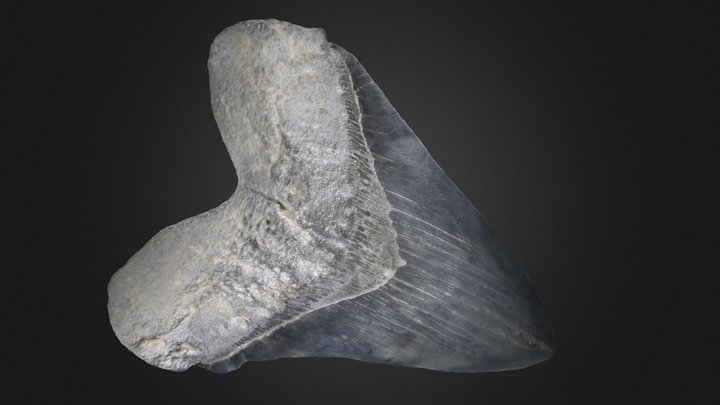
3D model
- Source
- Sketchfab
- Licence
- CC0 Public Domain
- Commercial use
- the licence allows it
The description on this site
- Source
- Wikipedia, “Vertebrate”
- Licence
- CC BY-SA 4.0
This is what the site found, which is not the same as what exists.
Keep going
What may have been alongside itChordata through timeFormations of the Late CretaceousThe world it lived on
Occurrence data from the Paleobiology Database, CC BY 4.0. (Lamarck 1801)