Actinopterygii
Actinopterygii, members of which are known as ray-finned fish or actinopterygians, is a class of bony fish that constitutes nearly 99% of the over 30,000 living species of fish. The vast majority of extant actinopterygian species are teleosts, and by species count they dominate the subphylum Vertebrata, comprising over 50% of all living vertebrates. They are the most abundant nektonic aquatic animals and are ubiquitous throughout freshwater, brackish and marine environments from the deep sea to subterranean waters to the highest mountain streams. Extant species can range in size from Paedocypris, at 8 mm (0.3 in), to the giant sunfish, at 2,700 kg (6,000 lb), and the giant oarfish, at 8 m (26 ft). The largest ever known ray-finned fish, the extinct Leedsichthys from the Jurassic, is estimated to have grown to 16.5 m (54 ft).

Stevenj NOAA Photo Library Pedro Lastra Gregory Moine Chmehl Jik jik Debra Becker WenOficial Springcold Hectonichus A… · CC BY-SA 4.0 · via Wikipedia/Commons. May be a photograph of a specimen, or an artist’s reconstruction — an interpretation of a skeleton, since colour and soft tissue are almost never preserved.
On record
Recorded, not inferred- Also called
- ray-finned fishPBDB
- Sits inside
- OsteichthyesPBDB
- Motility
- actively mobilePBDB, for Osteichthyes
Time the record covers
At least 413 million years on record.
The record covers at least 413.02 Mya to 11.7 ka. No occurrence read is dated outside 419.62 Mya to 0 Mya.
12,000+ occurrences of Actinopterygii on record. The Paleobiology Database records this as a living group. Bar height is expected occurrences, not a count: each fossil is spread across the span it is dated to, so a tall narrow bar means tight dating and a low wide one means loose.
When
12,000 occurrences read- Devonianunder 1%
- Carboniferous1%
- Permian3%
- Early Triassic3%
- Middle Triassic6%
- Late Triassic6%
- Early Jurassic3%
- Middle Jurassicunder 1%
- Late Jurassic3%
- Early Cretaceous5%
- Late Cretaceous19%
- Paleocene2%
- Eocene13%
- Oligocene6%
- Miocene18%
- Pliocene5%
- Pleistocene7%
- Holoceneunder 1%
These are dates about fossils, not the animal: the record can only begin after it arose and end before it died out, so either end may reach further. Shares are expected occurrences: a fossil dated to a span is counted partly in each period it straddles. The read hit its cap, so every figure above is a floor and the shares are of the occurrences read. More on what this infers.
Found in
at least 959 formations
- Dinosaur Park Formation · Belly River Group461
- Hell Creek Formation · Montana Group280
- Oldman Formation · Belly River Group176
- Koobi Fora Formation · Omo Group172
- Besano Formation147
- Selsey Formation · Bracklesham Group140
Loading coastlines…
The named rock units Actinopterygii has been recovered from, largest first. Drawn where the rock is now, not where it formed. The read hit its cap, so each count is a floor. 935 further formations hold fewer occurrences each and are not listed. 3,723 occurrences have no formation on record, which is common for older literature.
Found in the same rock
2,041 taxa- Clarias69 sites
- Hydrocynus48 sites
- Synodontis41 sites
- Lates niloticus37 sites
- Polypterus31 sites
- Hippopotamus amphibius30 sites
- Sindacharax sp.30 sites
- Alcelaphus buselaphus29 sites
- Hipparion29 sites
- Crocodylus27 sites
- Bivalvia25 sites
- Eburneopecten scintillatus24 sites
- Gymnarchus24 sites
- Hominidae24 sites
- Myrtaea (Myrtaea) curta24 sites
- Barbus23 sites
- Caestocorbula wailesiana23 sites
- Corbula densata23 sites
- Kolpochoerus limnetes23 sites
- Tellinidae23 sites
- Venericardia (Rotundicardia) diversidentata23 sites
- Alcelaphini22 sites
- Euthecodon brumpti22 sites
- Gastropoda22 sites
The Paleobiology Database records at least 629 sites for Actinopterygii, and this reads 240 of them. The number is how many of those sites it was catalogued from too. The 24 sharing the most are listed.
This is not a list of everything alive at the time. It is only what has come out of the same ground as this animal and been written down.
Entered from
at least 1,884 references- Paleoecology of an estuarine, incised-valley fill in the Dinosaur Park Formation (Judith River Group, Upper Cretaceous) of southern Alberta, Canada290
- Tortonian teleost otoliths from northern Italy: taxonomic synthesis and stratigraphic significance288
- Catalogue of the Fossil Fishes in the British Museum (Natural History), Part III274
- Pleistocene fish otoliths from the Mediterranean Basin: a synthesis186
- The Selsey Division (Bracklesham Group) at Lee-on-the-Solent, Gosport, (Hants)185
- Vertebrate microsite assemblages (exclusive of mammals) from the Foremost and Oldman Formations of the Judith River Group (Campanian) of southeastern Alberta: an illustrated guide162
- Messinian marine fish communities of the Mediterranean Sea159
- The systematic composition of the Eocene actinopterygian fish fauna from Monte Bolca, northern Italy, as known to date157
- Paleontology of the Judith River Formation (Campanian) of Dinosaur National Park, Alberta, Canada: evidence from vertebrate microfossil locality157
- Vertebrate biostratigraphy of the Hell Creek Formation in southwestern North Dakota and northwestern South Dakota105
- Fauna Fosila din Oligocenul de la Piatra Neamt101
- Basal ray-finned fishes (Osteichthyes; Actinopterygii) from the Middle Triassic of Monte San Giorgio (Canton Tessin, Switzerland)100
Each of the 12,000 occurrences read was entered from one of these publications, ordered by how many each accounts for. This is not a search for papers mentioning the name. That read hit its cap, so each count is a floor. 1,872 further references are not listed. Entries link to doi.org where the Paleobiology Database holds an identifier, and to its own record where it does not. Relayed as the Paleobiology Database holds them, not checked against what they resolve to.
Media and terms
Media content3

Picture of Actinopterygii
- Source
- Wikipedia/Commons
- Credit
- Stevenj NOAA Photo Library Pedro Lastra Gregory Moine Chmehl Jik jik Debra Becker WenOficial Springcold Hectonichus A…
- Licence
- CC BY-SA 4.0
- Commercial use
- the licence allows it

CT scan
- Source
- MorphoSource
- Licence
- not stated by the source
- Commercial use
- cannot be read from the licence given — check the record
- Specimen
- Actinopterygii indet. · ZPAL:v.39:P.22/Om/9
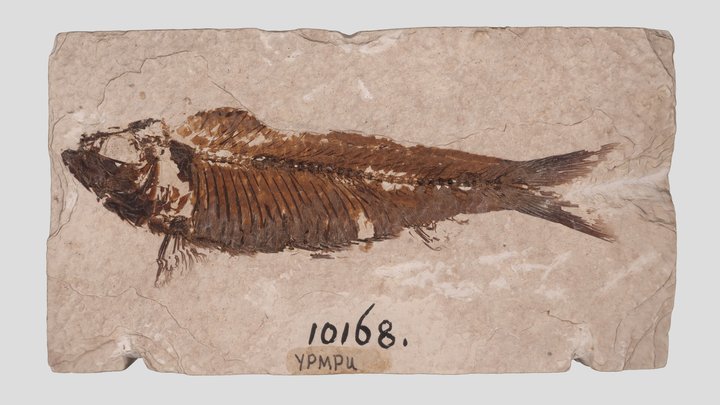
3D model
- Source
- Sketchfab
- Credit
- Yale Peabody Museum
- Licence
- CC Attribution
- Commercial use
- cannot be read from the licence given — check the record
The description on this site
- Licence
- CC BY-SA 4.0
This is what the site found, which is not the same as what exists.
Keep going
What may have been alongside itOsteichthyes through timeThe world it lived on
Occurrence data from the Paleobiology Database, CC BY 4.0. (Cope 1887)