Anataphrus
Anataphrus is an extinct genus of trilobites in the family Asaphidae.
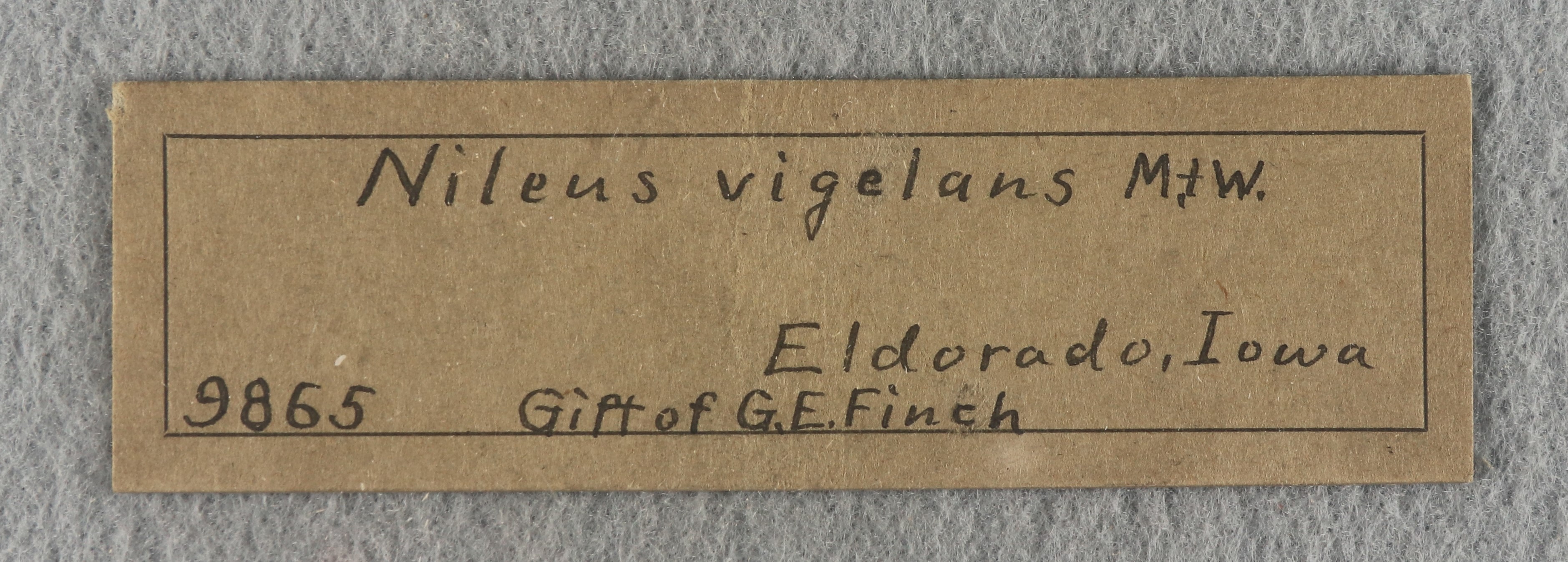
via iDigBio · via iDigBio. May be a photograph of a specimen, or an artist’s reconstruction — an interpretation of a skeleton, since colour and soft tissue are almost never preserved.
On record
Recorded, not inferred- Sits inside
- AsaphidaePBDB
- Diet
- carnivorePBDB, for Trilobita
- Life habit
- low-level epifaunalPBDB, for Asaphida
- Motility
- fast-movingPBDB, for Asaphida
- Vision
- well-developedPBDB, for Asaphidae
- Environment
- marinePBDB, for Trilobita
Time the record covers
At least 8.7 million years on record.
The record covers at least 458.2 Mya to 449.5 Mya. No occurrence read is dated outside 471.3 Mya to 443.1 Mya.
42 occurrences of Anataphrus on record, most of them in the Ordovician. Bar height is expected occurrences, not a count: each fossil is spread across the span it is dated to, so a tall narrow bar means tight dating and a low wide one means loose.
When
42 occurrences- Ordovician100%
These are dates about fossils, not the animal: the record can only begin after it arose and end before it died out, so either end may reach further. Shares are expected occurrences: a fossil dated to a span is counted partly in each period it straddles. More on what this infers.
Found in
12 formations
- Copenhagen Formation11
- Whittaker Formation8
- Barrel Spring Formation6
- Hanson Creek Formation5
- Road River Formation3
- Viola Springs Formation · Viola Group2
Loading coastlines…
The named rock units Anataphrus has been recovered from, largest first. Drawn where the rock is now, not where it formed. 1 occurrence has no formation on record, which is common for older literature.
Anataphrus and its relatives
OrdovicianWhere Anataphrus and its relatives were recorded in the Ordovician.
Found in the same rock
247 taxa- Calyptaulax18 sites
- Ceraurus14 sites
- Hypodicranotus13 sites
- Strophomena13 sites
- Cybeloides10 sites
- Ceraurinella9 sites
- Ceraurinus9 sites
- Cryptolithoides9 sites
- Krausella9 sites
- Sowerbyella9 sites
- Sphaerocoryphe9 sites
- Tetradella9 sites
- Diceromyonia8 sites
- Dimeropyge8 sites
- Hemiarges8 sites
- Isotelus8 sites
- Lepidocyclus8 sites
- Catenipora7 sites
- Ceratopsis7 sites
- Dicranella7 sites
- Hesperorthis7 sites
- Acanthoparypha6 sites
- Borealaspis numitor6 sites
- Ceraurinus daedalus6 sites
The Paleobiology Database records 41 sites for Anataphrus, and this reads all of them. The number is how many of those sites it was catalogued from too. The 24 sharing the most are listed.
This is not a list of everything alive at the time. It is only what has come out of the same ground as this animal and been written down.
Entered from
16 references- Ordovician formations and faunas, southern Mackenzie Mountains9
- Distribution of the Middle Ordovician Copenhagen Formation and its trilobites in Nevada9
- The Upper Ordovician and Silurian Hanson Creek Formation of central Nevada4
- A trilobite zonation of Middle Ordovician rocks, southwestern District of Mackenzie3
- Ordovician Brachiopods, Trilobites, and Stratigraphy in Eastern and Central Nevada3
- Isoteline trilobites of the Viola Group (Ordovician: Oklahoma): systematics and stratigraphic occurrence2
- Stratigraphy of some Paleozoic formations in the Independence quadrangle, Inyo County, California2
- Middle and Lower Ordovician Formations in Southernmost Nevada and Adjacent California2
- Caradocian-Gedinnian echinoderm associations of Central and Eastern North America1
- Stratigraphy of the Ordovician of the Lac Saint-Jean and Chicoutimi outliers, Quebec1
- Upper Ordovician conodonts, brachiopods, and chronostratigraphy of the Whittaker Formation, southwestern District of Mackenzie, N. W. T., Canada1
- Biostratigraphy significance of Middle Ordovician trilobites from the Road River Formation, northern Cordillera1
Each of the 42 occurrences read was entered from one of these publications, ordered by how many each accounts for. This is not a search for papers mentioning the name. 4 further references are not listed. Entries link to doi.org where the Paleobiology Database holds an identifier, and to its own record where it does not. Relayed as the Paleobiology Database holds them, not checked against what they resolve to.
Media and terms
Media content2
Picture of Anataphrus
- Source
- iDigBio
- Credit
- via iDigBio
- Licence
- not stated by the source
- Commercial use
- cannot be read from the licence given — check the record
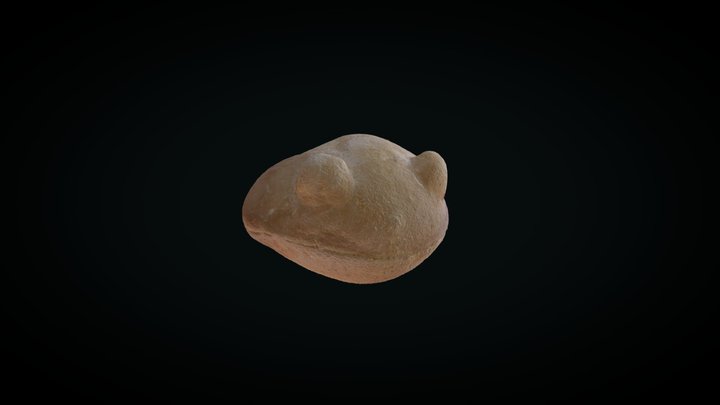
3D model
- Source
- Sketchfab
- Credit
- Shellie Luallin
- Licence
- CC Attribution
- Commercial use
- cannot be read from the licence given — check the record
The description on this site
- Source
- Wikipedia, “Anataphrus”
- Licence
- CC BY-SA 4.0
This is what the site found, which is not the same as what exists.
Keep going
What may have been alongside itAsaphidae through timeFormations of the OrdovicianThe world it lived on
Occurrence data from the Paleobiology Database, CC BY 4.0. Whittington 1954