Archaeaspis
Archaeaspis is an extinct genus of redlichiid trilobites. It lived during the late Atdabanian stage, which lasted from 521 to 514 million years ago during the early part of the Cambrian Period. The first specimens were first found in Siberia, where they were originally thought to have been endemic. Later, though, more specimen were found in the Inyo Mountains in Southern California. An Ediacarian proarticulatan was given the same name, Archaeaspis Ivantsov, 2001. This is however a junior homonym. The name Archaeaspis Repina in Khomentovskii and Repina, 1965, for the trilobite has priority. The new valid name for the proarticulate is Archaeaspinus Ivantsov, 2007.

Uncredited · via Wikipedia/Commons. May be a photograph of a specimen, or an artist’s reconstruction — an interpretation of a skeleton, since colour and soft tissue are almost never preserved.
On record
Recorded, not inferred- Sits inside
- ArchaeaspididaePBDB
- Diet
- deposit feederPBDB, for Redlichiida
- Life habit
- low-level epifaunalPBDB, for Redlichiida
- Motility
- fast-movingPBDB, for Redlichiida
- Vision
- well-developedPBDB, for Archaeaspididae
- Environment
- marinePBDB, for Trilobita
Time the record covers
At least 18 million years on record.
The record covers at least 538.8 Mya to 520 Mya. No occurrence read is dated outside 635 Mya to 515.3 Mya.
12 occurrences of Archaeaspis on record, most of them in the Cambrian. Bar height is expected occurrences, not a count: each fossil is spread across the span it is dated to, so a tall narrow bar means tight dating and a low wide one means loose.
When
12 occurrences- Cambrian67%
These are dates about fossils, not the animal: the record can only begin after it arose and end before it died out, so either end may reach further. Shares are expected occurrences: a fossil dated to a span is counted partly in each period it straddles. More on what this infers.
Found in
6 formations
- Campito Formation7
- Rawnsley Quartzite Formation · Wilpena Group1
- Zimnegory Formation · Valdai Group1
- Erkhelnur Formation1
- Verkhovka Formation · Ust-Pinega Group1
- Yorga Formation1
Loading coastlines…
The named rock units Archaeaspis has been recovered from, largest first. Drawn where the rock is now, not where it formed.
Archaeaspis and its relatives
CambrianWhere Archaeaspis and its relatives were recorded in the Cambrian.
Found in the same rock
48 taxa- Cambroinyoella wallacei3 sites
- Dickinsonia costata3 sites
- Kimberella quadrata3 sites
- Andiva ivantsovi2 sites
- Cirquella nelsoni2 sites
- Cyanorus singularis2 sites
- Nevadia2 sites
- Parvancorina minchami2 sites
- Temnoxa molliuscula2 sites
- Tribrachidium heraldicum2 sites
- Vendia janae2 sites
- Yorgia waggoneri2 sites
- <Disc>1 site
- <Frond>1 site
- Anfesta stankovskii1 site
- Animalia1 site
- Archaeaspinus1 site
- Archaeaspinus fedonkini1 site
- Archaeolynthus1 site
- Arkarua1 site
- Arkarua adami1 site
- Armilifera parva1 site
- Armillifera parva1 site
- Cephalonega stepanovi1 site
The Paleobiology Database records 10 sites for Archaeaspis, and this reads all of them. The number is how many of those sites it was catalogued from too. The 24 sharing the most are listed.
This is not a list of everything alive at the time. It is only what has come out of the same ground as this animal and been written down.
Entered from
6 references- Phylogenetic analysis of some basal Early Cambrian trilobites, the biogeographic origins of the Eutrilobita, and the timing of the Cambrian radiation7
- Small Vendian Transversely Articulated Fossils1
- Assemblage palaeoecology of the Ediacara biota: The unabridged edition?1
- New proarticulata from the Vendian of the Arkhangel'sk region1
- Age of Phosphorites from the Khubsugul Basin1
- Vendia and Other Precambrian "Arthropods"1
Each of the 12 occurrences read was entered from one of these publications, ordered by how many each accounts for. This is not a search for papers mentioning the name. Entries link to doi.org where the Paleobiology Database holds an identifier, and to its own record where it does not. Relayed as the Paleobiology Database holds them, not checked against what they resolve to.
Media and terms
Media content2

Picture of Archaeaspis
- Source
- Wikipedia/Commons
- Credit
- nobody named on the record
- Licence
- not stated by the source
- Commercial use
- cannot be read from the licence given — check the record
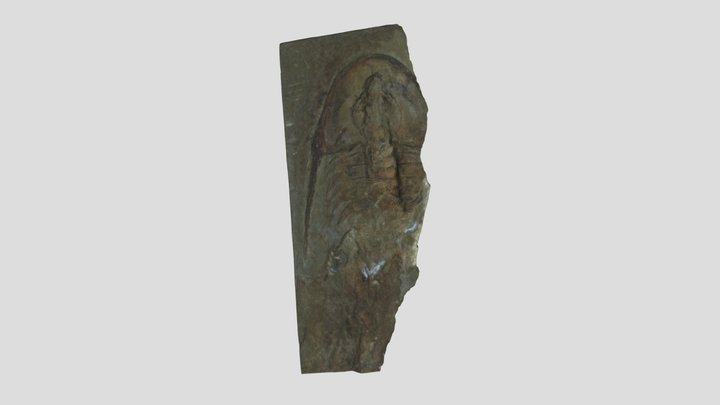
3D model
- Source
- Sketchfab
- Licence
- CC Attribution-NonCommercial
- Commercial use
- the licence does not allow it
Smithsonian Open Access and MorphoSource were not reached for this taxon, so this list is what the others held rather than everything there is.
The description on this site
- Source
- Wikipedia, “Archaeaspis”
- Licence
- CC BY-SA 4.0
This is what the site found, which is not the same as what exists.
Keep going
What may have been alongside itArchaeaspididae through timeFormations of the CambrianThe world it lived on
Occurrence data from the Paleobiology Database, CC BY 4.0. Repina 1965