Argopecten anteamplicostata

Natural History Museum Rotterdam · CC BY 4.0 · via GBIF. May be a photograph of a specimen, or an artist’s reconstruction — an interpretation of a skeleton, since colour and soft tissue are almost never preserved.
On record
Recorded, not inferred- Sits inside
- ArgopectenPBDB
- Diet
- suspension feederPBDB, for Argopecten
- Life habit
- epifaunalPBDB, for Argopecten
- Motility
- facultatively mobilePBDB, for Argopecten
- Vision
- limitedPBDB, for Pectinidae
- Environment
- marinePBDB, for Pectinida
Time the record covers
At least 780 thousand years on record.
The record covers at least 2.58 Mya to 1.8 Mya. No occurrence read is dated outside 11.63 Mya to 774 ka.
12 occurrences of Argopecten anteamplicostata on record, most of them in the Pleistocene. The Paleobiology Database records this as a living group, and the chart stops with its fossils rather than at the present. Bar height is expected occurrences, not a count: each fossil is spread across the span it is dated to, so a tall narrow bar means tight dating and a low wide one means loose.
When
12 occurrences- Miocene29%
- Pliocene13%
- Pleistocene58%
These are dates about fossils, not the animal: the record can only begin after it arose and end before it died out, so either end may reach further. Shares are expected occurrences: a fossil dated to a span is counted partly in each period it straddles. More on what this infers.
Found in
4 formations
Loading coastlines…
The named rock units Argopecten anteamplicostata has been recovered from, largest first. Drawn where the rock is now, not where it formed.
Argopecten anteamplicostata and its relatives
PleistoceneWhere Argopecten anteamplicostata and its relatives were recorded in the Pleistocene.
Found in the same rock
562 taxa- Lindapecten muscosus7 sites
- Cerithium6 sites
- Conus jaspideus6 sites
- Spondylus rotundatus6 sites
- Tellidora lunulata6 sites
- Atilia5 sites
- Carditamera arata5 sites
- Chione cancellata5 sites
- Conradostrea sculpturata5 sites
- Corbula (Varicorbula)5 sites
- Dendostrea frons5 sites
- Marginella5 sites
- Nuculana acuta5 sites
- Pleuromeris tridentata5 sites
- Radiolucina waccamawensis5 sites
- Tellina5 sites
- Timoclea grus5 sites
- Turritella5 sites
- Anadara4 sites
- Anadara (Rasia) lienosa4 sites
- Anomalocardia4 sites
- Archierato maugeriae4 sites
- Arcopsis adamsi4 sites
- Bostrycapulus aculeatus4 sites
The Paleobiology Database records 12 sites for Argopecten anteamplicostata, and this reads all of them. The number is how many of those sites it was catalogued from too. The 24 sharing the most are listed.
This is not a list of everything alive at the time. It is only what has come out of the same ground as this animal and been written down.
Entered from
4 references- Neogene and Quaternary geology of Aruba, Curaçao and Bonaire5
- Neogene Biostratigraphy of the Charlotte Harbor Area in Southwestern Florida3
- Pliocene Mollusca of Southern Florida3
- Stratigraphy and paleontology of the Late Neogene strata of the Caloosahatchee River area of southern Florida1
Each of the 12 occurrences read was entered from one of these publications, ordered by how many each accounts for. This is not a search for papers mentioning the name. Each entry links to the Paleobiology Database's own record for the work.
Media and terms
Media content2
Picture of Argopecten anteamplicostata
- Source
- GBIF
- Credit
- Natural History Museum Rotterdam
- Licence
- CC BY 4.0
- Commercial use
- the licence allows it
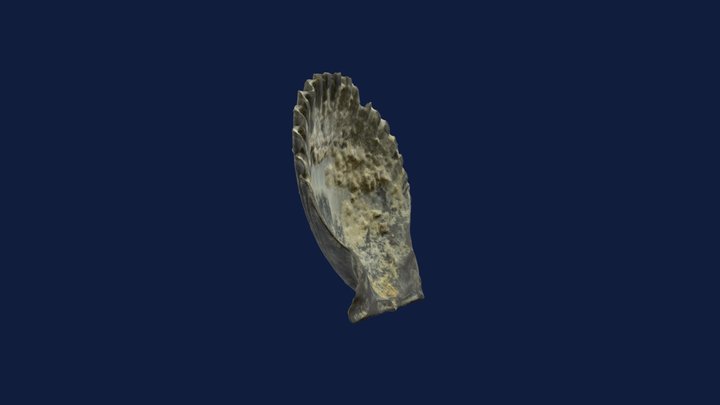
3D model
- Source
- Sketchfab
- Credit
- Shellie Luallin
- Licence
- CC Attribution
- Commercial use
- cannot be read from the licence given — check the record
Smithsonian Open Access was not reached for this taxon, so this list is what the others held rather than everything there is.
This is what the site found, which is not the same as what exists.
Keep going
What may have been alongside itArgopecten through timeFormations of the PleistoceneThe world it lived on
Occurrence data from the Paleobiology Database, CC BY 4.0. (Mansfield 1936)