Basilosauridae
Basilosauridae is a family of extinct cetaceans that lived during the middle to late Eocene. Basilosaurids are known from all continents including Antarctica, and are probably the first fully aquatic cetaceans. The group is noted to be a paraphyletic assemblage of stem group whales from which the monophyletic Neoceti are derived.

Emőke Dénes · CC BY-SA 4.0 · via Wikipedia/Commons. May be a photograph of a specimen, or an artist’s reconstruction — an interpretation of a skeleton, since colour and soft tissue are almost never preserved.
On record
Recorded, not inferred- Sits inside
- PelagicetiPBDB
- Diet
- carnivorePBDB, for Cetacea
- Life habit
- aquatic, depth=surfacePBDB, for Cetacea
- Motility
- actively mobilePBDB, for Cetacea
- Environment
- marinePBDB, for Cetacea
Time the record covers
At least 3.3 million years on record.
The record covers at least 41.03 Mya to 37.71 Mya. No occurrence read is dated outside 66 Mya to 2.58 Mya.
324 occurrences of Basilosauridae on record, most of them in the Eocene. The Paleobiology Database records this as a living group, and the chart stops with its fossils rather than at the present. Bar height is expected occurrences, not a count: each fossil is spread across the span it is dated to, so a tall narrow bar means tight dating and a low wide one means loose.
When
324 occurrencesThese are dates about fossils, not the animal: the record can only begin after it arose and end before it died out, so either end may reach further. Shares are expected occurrences: a fossil dated to a span is counted partly in each period it straddles. More on what this infers.
Found in
47 formations
- Yazoo Formation · Jackson Group46
- Birket Qarun Formation30
- Gehannam Formation23
- Samlat Formation20
- Gehlberg Formation13
- Qasr el-Sagha Formation13
Loading coastlines…
The named rock units Basilosauridae has been recovered from, largest first. Drawn where the rock is now, not where it formed. 23 further formations hold fewer occurrences each and are not listed. 55 occurrences have no formation on record, which is common for older literature.
Basilosauridae and its relatives
EoceneWhere Basilosauridae and its relatives were recorded in the Eocene.
Found in the same rock
893 taxa- Dorudon atrox49 sites
- Basilosaurus cetoides41 sites
- Pachycetus paulsonii26 sites
- Basilosaurus25 sites
- Basilosaurus isis19 sites
- Myliobatis15 sites
- Hemipristis curvatus11 sites
- Zygorhiza kochii11 sites
- Cynthiacetus maxwelli10 sites
- Ostrea9 sites
- Pristis lathami9 sites
- Pachycetus8 sites
- Physogaleus8 sites
- Pterosphenus schucherti8 sites
- Sirenia8 sites
- Turritella8 sites
- Carcharhinus gibbesii7 sites
- Carcharias hopei7 sites
- Chondrichthyes7 sites
- Crocodylia7 sites
- Dasyatis7 sites
- Galeocerdo7 sites
- Isurus praecursor7 sites
- Otodus (Carcharocles) sokolowi7 sites
The Paleobiology Database records 244 sites for Basilosauridae, and this reads 240 of them. The number is how many of those sites it was catalogued from too. The 24 sharing the most are listed.
This is not a list of everything alive at the time. It is only what has come out of the same ground as this animal and been written down.
Entered from
120 references- A review of North American Basilosauridae37
- Form, Function, and Anatomy of Dorudon atrox (Mammalia, Cetacea): An Archaeocete from the Middle to Late Eocene of Egypt34
- Skull and partial skeleton of a new pachycetine genus (Cetacea, Basilosauridae) from the Aridal Formation, Bartonian middle Eocene, of southwestern Morocco26
- New marine mammal faunas (Cetacea and Sirenia) and sea level change in the Samlat Formation, Upper Eocene, near Ad-Dakhla in southwestern Morocco13
- A Review of the Archaeoceti12
- Marine Mammals (Cetacean and Sirenia) from the Eocene of Gebel Mokattam and Fayum, Egypt: Stratigraphy, Age, and Paleoenvironments11
- A new genus and species of archaeocete whale from Mississippi10
- The Excavation and Preparation of Two Fossilized Whales10
- Eocene cetaceans from the Helmstedt region, Germany, with some remarks on Platyosphys, Basilotritus and Pachycetus6
- Cetacea6
- Hilgard, 18606
- The oldest Eocene marine vertebrate fauna from the Sahara Desert in Southwestern Morocco4
Each of the 324 occurrences read was entered from one of these publications, ordered by how many each accounts for. This is not a search for papers mentioning the name. 108 further references are not listed. Entries link to doi.org where the Paleobiology Database holds an identifier, and to its own record where it does not. Relayed as the Paleobiology Database holds them, not checked against what they resolve to.
Media and terms
Media content3

Picture of Basilosauridae
- Source
- Wikipedia/Commons
- Credit
- Emőke Dénes
- Licence
- CC BY-SA 4.0
- Commercial use
- the licence allows it
CT scan
- Source
- MorphoSource
- Licence
- not stated by the source
- Commercial use
- cannot be read from the licence given — check the record
- Specimen
- Basilosauridae indet. · NMR:10283
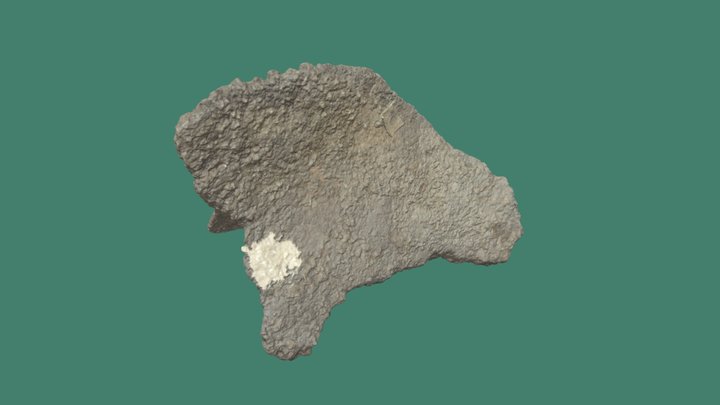
3D model
- Source
- Sketchfab
- Credit
- SchmalhausenEvolMorph
- Licence
- CC Attribution
- Commercial use
- cannot be read from the licence given — check the record
The description on this site
- Licence
- CC BY-SA 4.0
This is what the site found, which is not the same as what exists.
Keep going
What may have been alongside itPelagiceti through timeFormations of the EoceneThe world it lived on
Occurrence data from the Paleobiology Database, CC BY 4.0. Cope 1867