Basilosaurus
Basilosaurus is a genus of large, predatory, prehistoric archaeocete whale from the late Eocene, approximately 41.3 to 33.9 million years ago (mya). First described in 1834, it was the first archaeocete and prehistoric whale known to science. Fossils attributed to the type species B. cetoides were discovered in the southeastern United States. The generic name, meaning "king lizard", was given due to the initial misconception about the fossil material as that of a giant reptile. The animal was later found to be an early marine mammal, prompting attempts at renaming the creature, which failed as the rules of zoological nomenclature dictate using the original name given. The second species named in 1904, B. isis, lived in the region currently known as the Mediterranean Sea, with fossils found in North Africa and Jordan.

Tim from Washington, D.C., United States of America · CC BY-SA 2.0 · via Wikipedia/Commons. May be a photograph of a specimen, or an artist’s reconstruction — an interpretation of a skeleton, since colour and soft tissue are almost never preserved.
On record
Recorded, not inferred- Sits inside
- BasilosauridaePBDB
- Diet
- carnivorePBDB, for Cetacea
- Life habit
- aquatic, depth=surfacePBDB, for Cetacea
- Motility
- actively mobilePBDB, for Cetacea
- Environment
- marinePBDB, for Cetacea
- Length
- 20 mWikidata
Time the record covers
At most 64 million years on record.
Every occurrence read is dated to somewhere between 66 Mya and 2.58 Mya, and nothing in the dating separates them, so that window is what the record shows rather than a span.
88 occurrences of Basilosaurus on record, most of them in the Eocene. Bar height is expected occurrences, not a count: each fossil is spread across the span it is dated to, so a tall narrow bar means tight dating and a low wide one means loose.
When
88 occurrencesThese are dates about fossils, not the animal: the record can only begin after it arose and end before it died out, so either end may reach further. Shares are expected occurrences: a fossil dated to a span is counted partly in each period it straddles. More on what this infers.
Found in
17 formations
- Yazoo Formation · Jackson Group27
- Birket Qarun Formation9
- Ocala Formation · Jackson Group7
- Samlat Formation7
- Gehannam Formation4
- Qasr el-Sagha Formation2
Loading coastlines…
The named rock units Basilosaurus has been recovered from, largest first. Drawn where the rock is now, not where it formed. 19 occurrences have no formation on record, which is common for older literature.
Basilosaurus and its relatives
EoceneWhere Basilosaurus and its relatives were recorded in the Eocene.
Found in the same rock
372 taxa- Dorudon atrox12 sites
- Myliobatis9 sites
- Basilosauridae8 sites
- Pristis7 sites
- Crocodylia6 sites
- Dasyatis6 sites
- Hemipristis curvatus6 sites
- Rhizoprionodon6 sites
- Eotheroides5 sites
- Galeocerdo5 sites
- Ostrea5 sites
- Physogaleus5 sites
- Propristis schweinfurthi5 sites
- Anoxypristis4 sites
- Carcharhinus gibbesii4 sites
- Carcharias4 sites
- Chondrichthyes4 sites
- Gymnura4 sites
- Paralopias alabamensis4 sites
- Pristis lathami4 sites
- Pterosphenus schucherti4 sites
- Rhinoptera4 sites
- Rhynchobatus4 sites
- Sphyraena4 sites
The Paleobiology Database records 85 sites for Basilosaurus, and this reads all of them. The number is how many of those sites it was catalogued from too. The 24 sharing the most are listed.
This is not a list of everything alive at the time. It is only what has come out of the same ground as this animal and been written down.
Entered from
50 references- The Excavation and Preparation of Two Fossilized Whales9
- Marine Mammals (Cetacean and Sirenia) from the Eocene of Gebel Mokattam and Fayum, Egypt: Stratigraphy, Age, and Paleoenvironments6
- Hilgard, 18606
- A review of North American Basilosauridae5
- A Review of the Archaeoceti5
- New marine mammal faunas (Cetacea and Sirenia) and sea level change in the Samlat Formation, Upper Eocene, near Ad-Dakhla in southwestern Morocco4
- Cetacea4
- Digging fossil whales in Mississippi with southern hospitality2
- Basilosaurus cetoides from Crawford County, Georgia2
- Scott County Geology2
- Further notes on the mammals of the Eocene of Egypt. Part III2
- Neus zur Geologie und Paleontologie Aegyptens. II. Das Palaeogne2
Each of the 88 occurrences read was entered from one of these publications, ordered by how many each accounts for. This is not a search for papers mentioning the name. 38 further references are not listed. Entries link to doi.org where the Paleobiology Database holds an identifier, and to its own record where it does not. Relayed as the Paleobiology Database holds them, not checked against what they resolve to.
Media and terms
Media content2

Picture of Basilosaurus
- Source
- Wikipedia/Commons
- Credit
- Tim from Washington, D.C., United States of America
- Licence
- CC BY-SA 2.0
- Commercial use
- the licence allows it
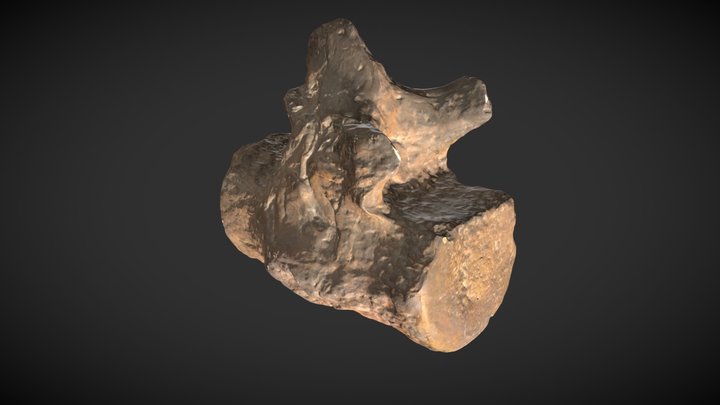
3D model
- Source
- Sketchfab
- Credit
- EDDyLab @ULiege
- Licence
- CC Attribution-NonCommercial
- Commercial use
- the licence does not allow it
Smithsonian Open Access and MorphoSource were not reached for this taxon, so this list is what the others held rather than everything there is.
The description on this site
- Licence
- CC BY-SA 4.0
This is what the site found, which is not the same as what exists.
Keep going
What may have been alongside itBasilosauridae through timeFormations of the EoceneThe world it lived on
Occurrence data from the Paleobiology Database, CC BY 4.0. Harlan 1834