Belemnitida
Belemnitida is an extinct order of squid-like cephalopods that existed from the Late Triassic to Late Cretaceous. Unlike squid, belemnites had an internal skeleton that made up the cone. The parts are, from the arms-most to the tip, the tongue-shaped pro-ostracum, the conical phragmocone, and the pointy guard. The calcitic guard is the most common belemnite remain. Belemnites, in life, are thought to have had 10 hooked arms and a pair of fins on the guard. The chitinous hooks were usually no bigger than 5 mm (0.20 in), though a belemnite could have had between 100 and 800 hooks in total, using them to stab and hold onto prey.

Ghedoghedo · CC BY-SA 3.0 · via Wikipedia/Commons. May be a photograph of a specimen, or an artist’s reconstruction — an interpretation of a skeleton, since colour and soft tissue are almost never preserved.
On record
Recorded, not inferred- Also called
- belemnitePBDB
- Sits inside
- DecabrachiaPBDB
- Diet
- carnivorePBDB, for Cephalopoda
- Life habit
- nektonicPBDB
- Motility
- fast-movingPBDB, for Cephalopoda
- Vision
- well-developedPBDB, for Cephalopoda
- Environment
- marinePBDB, for Cephalopoda
Time the record covers
At least 285 million years on record.
The record covers at least 323.4 Mya to 37.71 Mya. No occurrence read is dated outside 538.8 Mya to 33.9 Mya.
2,108 occurrences of Belemnitida on record, most of them in the Early Cretaceous. Bar height is expected occurrences, not a count: each fossil is spread across the span it is dated to, so a tall narrow bar means tight dating and a low wide one means loose.
When
2,108 occurrences- Cambrianunder 1%
- Ordovicianunder 1%
- Silurianunder 1%
- Devonianunder 1%
- Carboniferousunder 1%
- Permianunder 1%
- Early Triassicunder 1%
- Late Triassicunder 1%
- Early Jurassic22%
- Middle Jurassic9%
- Late Jurassic19%
- Early Cretaceous38%
- Late Cretaceous11%
- Eoceneunder 1%
These are dates about fossils, not the animal: the record can only begin after it arose and end before it died out, so either end may reach further. Shares are expected occurrences: a fossil dated to a span is counted partly in each period it straddles. More on what this infers.
Found in
247 formations
- Belemnite Marls Formation115
- Palnatokes Bjerg Formation · Wollaston Forland Group85
- Kap Leslie Formation66
- Marnes de Fontaneilles Formation54
- Bersek Marl Formation38
- Jurensismergel Formation36
Loading coastlines…
The named rock units Belemnitida has been recovered from, largest first. Drawn where the rock is now, not where it formed. 223 further formations hold fewer occurrences each and are not listed. 893 occurrences have no formation on record, which is common for older literature.
Belemnitida and its relatives
Early CretaceousWhere Belemnitida and its relatives were recorded in the Early Cretaceous.
Found in the same rock
1,167 taxa- Camptonectes72 sites
- Ammonoidea69 sites
- Astarte66 sites
- Isognomon61 sites
- Entolium orbiculare58 sites
- Pleuromya53 sites
- Buchia mosquensis45 sites
- Taimyrothyris44 sites
- Pinna43 sites
- Pleuromya uniformis39 sites
- Serpula39 sites
- Grammatodon38 sites
- Isocyprina34 sites
- Liostrea30 sites
- Serpula intestinalis30 sites
- Hartwellia29 sites
- Plagiostoma28 sites
- Pseudomelania26 sites
- Protocardia striatula25 sites
- Acroteuthis24 sites
- Buchia24 sites
- Orbiculoidea24 sites
- Thracia depressa24 sites
- Belemnitella americana23 sites
The Paleobiology Database records at least 1,321 sites for Belemnitida, and this reads 240 of them. The number is how many of those sites it was catalogued from too. The 24 sharing the most are listed.
This is not a list of everything alive at the time. It is only what has come out of the same ground as this animal and been written down.
Entered from
325 references- The Jurassic-Cretaceous Boundary and the Berriasian Stage in the Boreal Realm157
- The Belemnite marls of Charmouth, a series in the Lias of the Dorset Coast128
- Les Duvaliidae PAVLOW (Belemnitida) du Crétacé inférieur francais88
- The Early Cretaceous of north-east Greenland: a crossroads of belemnite migration85
- Belemnites from the Upper Pliensbachian and the Toarcian (Lower Jurassic) of Tournadous (Causses, France)76
- Genesis and environmental significance of Upper Cretaceous shell concentrations from the Cauvery Basin, southern India55
- Isotopic and faunal record of high paleotemperatures in the Kimmeridgian of Subpolar Urals48
- Integrated Lower Cretaceous biostratigraphy of the Bersek Quarry, Gerecse Mountains, Transdanubian Range. Hungary47
- Integrated isotope and biostratigraphy of a Lower Cretaceous section from the Bakony Mountains (Transdanubian Range, Hungary): A new Tethyan record of the Weissert event44
- Die Grenzziehung Unter-/Mitteljura (Toarcium/Aalenium) bei Wittnau und Fuentelsaz [Determinig the boundary between Toarcium/Aalenium near Wittnau and Fuentelsaz]39
- The Lower Jurassic Rocks of East Greenland Part 131
- La Couche à Crassum (Toarcien moyen) au Luxembourg: stratigraphie et faunes de la coupe de Dudelange-Zoufftgen29
Each of the 2,108 occurrences read was entered from one of these publications, ordered by how many each accounts for. This is not a search for papers mentioning the name. 313 further references are not listed. Entries link to doi.org where the Paleobiology Database holds an identifier, and to its own record where it does not. Relayed as the Paleobiology Database holds them, not checked against what they resolve to.
Media and terms
Media content2
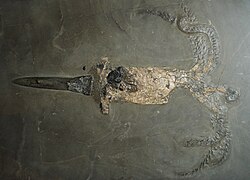
Picture of Belemnitida
- Source
- Wikipedia/Commons
- Credit
- Ghedoghedo
- Licence
- CC BY-SA 3.0
- Commercial use
- the licence allows it
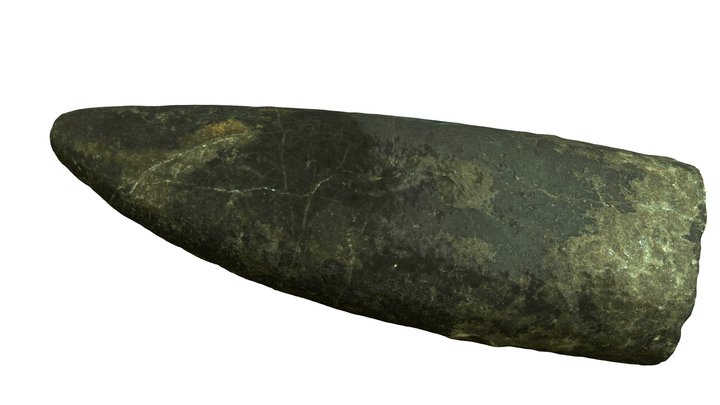
3D model
- Source
- Sketchfab
- Licence
- CC Attribution
- Commercial use
- cannot be read from the licence given — check the record
Smithsonian Open Access was not reached for this taxon, so this list is what the others held rather than everything there is.
The description on this site
- Source
- Wikipedia, “Belemnitida”
- Licence
- CC BY-SA 4.0
This is what the site found, which is not the same as what exists.
Keep going
What may have been alongside itDecabrachia through timeFormations of the Early CretaceousThe world it lived on
Occurrence data from the Paleobiology Database, CC BY 4.0. Haeckel 1866