Bellerophon (Bellerophon)
No picture of Bellerophon (Bellerophon) was found. Wikipedia, Wikidata and iDigBio were searched and had none. Smithsonian Open Access did not answer, so this is what the others held rather than everything there is. GBIF was asked, and what came back is not recorded: nothing, or a picture this site could not tie to Bellerophon (Bellerophon), or no answer at all. This entry cannot say which.
On record
Recorded, not inferred- Sits inside
- BellerophonPBDB
- Diet
- detritivorePBDB, for Bellerophon
- Life habit
- low-level epifaunalPBDB, for Bellerophon
- Motility
- slow-movingPBDB, for Bellerophon
- Vision
- limitedPBDB, for Gastropoda
- Environment
- marinePBDB, for Bellerophontida
Time the record covers
At least 128 million years on record.
The record covers at least 382.31 Mya to 254.14 Mya. No occurrence read is dated outside 387.95 Mya to 251.902 Mya.
173 occurrences of Bellerophon (Bellerophon) on record, most of them in the Permian. Bar height is expected occurrences, not a count: each fossil is spread across the span it is dated to, so a tall narrow bar means tight dating and a low wide one means loose.
When
173 occurrences- Devonian4%
- Carboniferous13%
- Permian83%
These are dates about fossils, not the animal: the record can only begin after it arose and end before it died out, so either end may reach further. Shares are expected occurrences: a fossil dated to a span is counted partly in each period it straddles. More on what this infers.
Found in
48 formations
- Chhidru Formation42
- Hueco Formation20
- Zewan Formation10
- Colina Formation · Naco Group9
- Wargal Formation8
- Road Canyon Formation6
Loading coastlines…
The named rock units Bellerophon (Bellerophon) has been recovered from, largest first. Drawn where the rock is now, not where it formed. 24 further formations hold fewer occurrences each and are not listed. 9 occurrences have no formation on record, which is common for older literature.
Bellerophon (Bellerophon) and its relatives
PermianWhere Bellerophon (Bellerophon) and its relatives were recorded in the Permian.
Found in the same rock
2,211 taxa- Bellerophon triangularis32 sites
- Euphemites indicus31 sites
- Spirigerella derbyi31 sites
- Costiferina indica25 sites
- Spirigerella praelonga25 sites
- Linoproductus lineatus23 sites
- Minodentalium herculeum23 sites
- Soleniscus avellanoides20 sites
- Athyrella hybrida19 sites
- Cleiothyridina subexpansa19 sites
- Derbyia19 sites
- Derbyia hemisphaerica19 sites
- Waagenella jonesianus17 sites
- Euphemites apertus16 sites
- Betaneospirifer moosakhailensis15 sites
- Spirigerella grandis15 sites
- Strobeus primogenius15 sites
- Marginifera (Marginifera) ornata14 sites
- Spirigerella ovoidalis14 sites
- Spirigerella praelonga carinata14 sites
- Apachella franciscana13 sites
- Bellerophon affinis13 sites
- Shwedagonia elegans13 sites
- Spirigerella derbyi acuteplicata13 sites
The Paleobiology Database records 148 sites for Bellerophon (Bellerophon), and this reads all of them. The number is how many of those sites it was catalogued from too. The 24 sharing the most are listed.
This is not a list of everything alive at the time. It is only what has come out of the same ground as this animal and been written down.
Entered from
31 references- Permian Gastropoda of the southwestern United States. 3. Bellerophontacea and Patellacea58
- Brachiopoda and Mollusca from the Productus limestones of the Salt Range46
- The Upper Permian and Lower Triassic in Kashmir, India10
- Productus Limestone Fossils, Part II9
- The British and Belgian Carboniferous Bellerophontidae6
- Invertebrate Faunas from The Blaine and The Dog Creek Formations of the Permain Leonard Series5
- Gastropods (Mollusca) from the Imo Formation (Mississippian, Chesterian) of north-central Arkansas4
- Gastropods from the Permian of Guangxi and Yunnan Provinces, South China3
- Middle Devonian gastropods from the Broken River Province, north Queensland3
- Gastropods from the Burdekin Formation, Middle Devonian, north Queensland2
- Molluscan fauna of the Toyoma Formation (Late Permian)2
- The Lower Carboniferous gastropod fauna from the Hotwells Limestone of Compton Martin, Somerset. Part I2
Each of the 173 occurrences read was entered from one of these publications, ordered by how many each accounts for. This is not a search for papers mentioning the name. 19 further references are not listed. Entries link to doi.org where the Paleobiology Database holds an identifier, and to its own record where it does not. Relayed as the Paleobiology Database holds them, not checked against what they resolve to.
Media and terms
Media content1
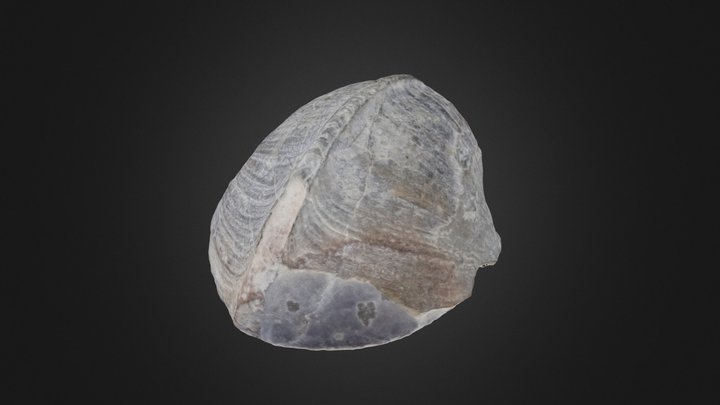
3D model
- Source
- Sketchfab
- Licence
- CC0 Public Domain
- Commercial use
- the licence allows it
No picture of Bellerophon (Bellerophon) was found. Wikipedia, Wikidata and iDigBio were searched and had none.
Smithsonian Open Access did not answer, so this is what the others held rather than everything there is.
GBIF was asked, and what came back is not recorded: nothing, or a picture this site could not tie to Bellerophon (Bellerophon), or no answer at all. This entry cannot say which.
Smithsonian Open Access and MorphoSource were not reached for this taxon, so this list is what the others held rather than everything there is.
This is what the site found, which is not the same as what exists.
Keep going
What may have been alongside itBellerophon through timeFormations of the PermianThe world it lived on
Occurrence data from the Paleobiology Database, CC BY 4.0. de Montfort 1808