Caiman yacare
The yacare caiman, also known commonly as the jacare caiman, Paraguayan caiman, piranha caiman, red caiman, and southern spectacled caiman, is a species of caiman, a crocodilian in the family Alligatoridae. The species is indigenous to Argentina, Bolivia, Brazil, and Paraguay. Brown in color and covered with dark blotches, males grow to a total length of 2–3 m and weigh around 40–50 kg (88–110 lb); while females grow to 1.4 m long and about 15–20 kg (33–44 lb). Typical habitats of this caiman include lakes, rivers, and wetlands. Its diet primarily consists of aquatic animals, such as snails, and occasionally land vertebrates. Mating occurs in the rainy season and eggs hatch in March, with young fending for themselves as soon as they hatch. The yacare caiman was hunted heavily for its skin to use for leather in the 1980s, which caused its population to decrease significantly. However, trading restrictions placed since have caused its population to increase. Its population in the Pantanal is about 10 million, and it is listed as least concern on the IUCN Red List.

Bernard DUPONT from FRANCE · CC BY-SA 2.0 · via Wikipedia/Commons. May be a photograph of a specimen, or an artist’s reconstruction — an interpretation of a skeleton, since colour and soft tissue are almost never preserved.
On record
Recorded, not inferred- Sits inside
- CaimanPBDB
- Diet
- carnivorePBDB, for Crocodylia
- Motility
- actively mobilePBDB, for Osteichthyes
- Environment
- marinePBDB, for Mesoeucrocodylia
Time the record covers
At least 5.4 million years on record.
The record covers at least 7.246 Mya to 1.8 Mya. No occurrence read is dated outside 11.63 Mya to 774 ka.
3 occurrences of Caiman yacare on record, most of them in the Miocene. The Paleobiology Database records this as a living group, and the chart stops with its fossils rather than at the present. Bar height is expected occurrences, not a count: each fossil is spread across the span it is dated to, so a tall narrow bar means tight dating and a low wide one means loose.
When
3 occurrences- Miocene63%
- Pliocene4%
- Pleistocene33%
These are dates about fossils, not the animal: the record can only begin after it arose and end before it died out, so either end may reach further. Shares are expected occurrences: a fossil dated to a span is counted partly in each period it straddles. More on what this infers.
Found in
3 formations
Loading coastlines…
The named rock units Caiman yacare has been recovered from, largest first. Drawn where the rock is now, not where it formed.
Caiman yacare and its relatives
MioceneWhere Caiman yacare and its relatives were recorded in the Miocene.
Found in the same rock
174 taxa- Crocodylia2 sites
- Adinotherium1 site
- Amphiocnus paranense1 site
- Anatochoerus1 site
- Andalgalornis1 site
- Berroia1 site
- Brachytherium cuspidatum1 site
- Brachytherium gradatum1 site
- Briaromys1 site
- Briaromys trouessartianus1 site
- Caiman australis1 site
- Caiman latirostris1 site
- Caimaninae1 site
- Camelidae1 site
- Cantracavia1 site
- Cardiatherium1 site
- Cardiatherium paranense1 site
- Cardiomys1 site
- Carlesia1 site
- Caviodon1 site
- Chapalmalania1 site
- Chasicotatus spinozai1 site
- Cheloniidae1 site
- Chironectes1 site
The Paleobiology Database records 2 sites for Caiman yacare, and this reads all of them. The number is how many of those sites it was catalogued from too. The 24 sharing the most are listed.
This is not a list of everything alive at the time. It is only what has come out of the same ground as this animal and been written down.
Entered from
3 references- A Pliocene–Pleistocene continental biota from Venezuela1
- Osteohistological study on both fossil and living Caimaninae (Crocodyliformes, Crocodylia) from South America and preliminary comments on growth physiology and ecology1
- The Alligatoroidea of Argentina: an update of its fossil record1
Each of the 3 occurrences read was entered from one of these publications, ordered by how many each accounts for. This is not a search for papers mentioning the name. Each entry links to doi.org. Relayed as the Paleobiology Database holds them, not checked against what they resolve to.
Media and terms
Media content2

Picture of Caiman yacare
- Source
- Wikipedia/Commons
- Credit
- Bernard DUPONT from FRANCE
- Licence
- CC BY-SA 2.0
- Commercial use
- the licence allows it
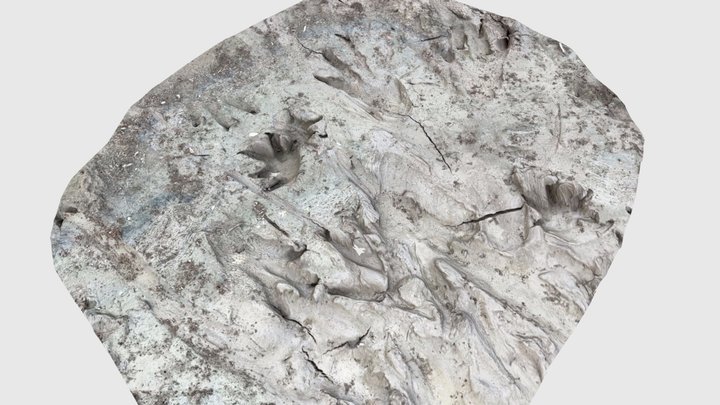
3D model
- Source
- Sketchfab
- Licence
- CC Attribution-NonCommercial-ShareAlike
- Commercial use
- the licence does not allow it
Smithsonian Open Access and MorphoSource were not reached for this taxon, so this list is what the others held rather than everything there is.
The description on this site
- Licence
- CC BY-SA 4.0
This is what the site found, which is not the same as what exists.
Keep going
What may have been alongside itCaiman through timeFormations of the MioceneThe world it lived on
Occurrence data from the Paleobiology Database, CC BY 4.0. Daudin 1802