Caranx
Caranx is a genus of tropical to subtropical marine fishes in the jack family Carangidae, commonly known as jacks, trevallies and kingfishes. They are moderate- to large-sized, deep-bodied fishes which are distinguished from other carangid genera by specific gill raker, fin ray and dentition characteristics. The genus is represented in the Pacific, Indian and Atlantic Oceans, inhabiting both inshore and offshore regions, ranging from estuaries and bays to deep reefs and offshore islands. All species are powerful predators, taking a variety of fish, crustaceans and cephalopods, while they in turn are prey to larger pelagic fishes and sharks. A number of fish in the genus have a reputation as powerful gamefish and are highly sought by anglers. They often make up high amounts of the catch in various fisheries, but are generally considered poor to fair table fishes.

Albert kok · CC BY-SA 3.0 · via Wikipedia/Commons. May be a photograph of a specimen, or an artist’s reconstruction — an interpretation of a skeleton, since colour and soft tissue are almost never preserved.
On record
Recorded, not inferred- Sits inside
- CarangidaePBDB
- Motility
- actively mobilePBDB, for Osteichthyes
Time the record covers
At least 33 million years on record.
The record covers at least 33.9 Mya to 11.7 ka. No occurrence read is dated outside 48.07 Mya to 0 Mya.
26 occurrences of Caranx on record, most of them in the Miocene. The Paleobiology Database records this as a living group. Bar height is expected occurrences, not a count: each fossil is spread across the span it is dated to, so a tall narrow bar means tight dating and a low wide one means loose.
When
26 occurrencesThese are dates about fossils, not the animal: the record can only begin after it arose and end before it died out, so either end may reach further. Shares are expected occurrences: a fossil dated to a span is counted partly in each period it straddles. More on what this infers.
Found in
9 formations
- Bermont Formation2
- Tonasa Formation2
- Kreyenhagen Formation2
- Ysidro Formation1
- Tamiami Formation1
- Tumey Formation1
Loading coastlines…
The named rock units Caranx has been recovered from, largest first. Drawn where the rock is now, not where it formed. 14 occurrences have no formation on record, which is common for older literature.
Caranx and its relatives
MioceneWhere Caranx and its relatives were recorded in the Miocene.
Found in the same rock
641 taxa- Carangidae4 sites
- Clupeidae4 sites
- Dasyatis4 sites
- Myliobatis4 sites
- Alligator mississippiensis3 sites
- Apogon3 sites
- Carcharhinus3 sites
- Chione3 sites
- Clupea3 sites
- Elops3 sites
- Equus3 sites
- Lepisosteus3 sites
- Sphyraena barracuda3 sites
- Acentrogobius2 sites
- Acentrogobius matsya2 sites
- Aetobatus narinari2 sites
- Agkistrodon piscivorous2 sites
- Albula2 sites
- Alosa elongata2 sites
- Amblyeleotris2 sites
- Amblyeleotris kireedam2 sites
- Ancistrogobius indicus2 sites
- Anguilla2 sites
- Apalone ferox2 sites
The Paleobiology Database records 18 sites for Caranx, and this reads all of them. The number is how many of those sites it was catalogued from too. The 24 sharing the most are listed.
This is not a list of everything alive at the time. It is only what has come out of the same ground as this animal and been written down.
Entered from
16 references- Late Prehistoric Lucayan occupation and subsistence on Middle Caicos Island, northern West Indies4
- Some typical Upper Eocene fish scales from California3
- New perspectives on late Tethyan Neogene biodiversity development of fishes based on Miocene (~ 17 Ma) otholiths from southwestern India2
- Messinian marine fish communities of the Mediterranean Sea2
- On a collection of marine fishes from the Miocene of South Celebes2
- Vertebrata mostly from Stratum No. 3, at Vero, Florida, together with descriptions of new species2
- Ricerche sui Pesci Fossili di Chiavòn (Strati di Sotzka -- Miocene Inferiore)2
- Fossil deep-sea snapper (Actinopterygii: Lutjanidae) from the Last Interoceanic Central American Deep Strait (LICADS)1
- Morphological description of fossils fishes from the Plio-Pleistoceno of the Pampa of Mejillones1
- Amnissos: un gisement clé pour la connaissance de l'ichthyofaune du Pliocène supérieur de Crète1
- Integrated taphonomy of an avian death assemblage in marine sediments from the late Pliocene of Florida1
- Chondrichthyes and Osteichthyes from the early Pleistocene Leisey Shell Pit local fauna, Hillsborough County, Florida1
Each of the 26 occurrences read was entered from one of these publications, ordered by how many each accounts for. This is not a search for papers mentioning the name. 4 further references are not listed. Entries link to doi.org where the Paleobiology Database holds an identifier, and to its own record where it does not. Relayed as the Paleobiology Database holds them, not checked against what they resolve to.
Media and terms
Media content3

Picture of Caranx
- Source
- Wikipedia/Commons
- Credit
- Albert kok
- Licence
- CC BY-SA 3.0
- Commercial use
- the licence allows it
CT scan
- Source
- MorphoSource
- Licence
- not stated by the source
- Commercial use
- cannot be read from the licence given — check the record
- Specimen
- Caranx hippos · UF:Fish:127945
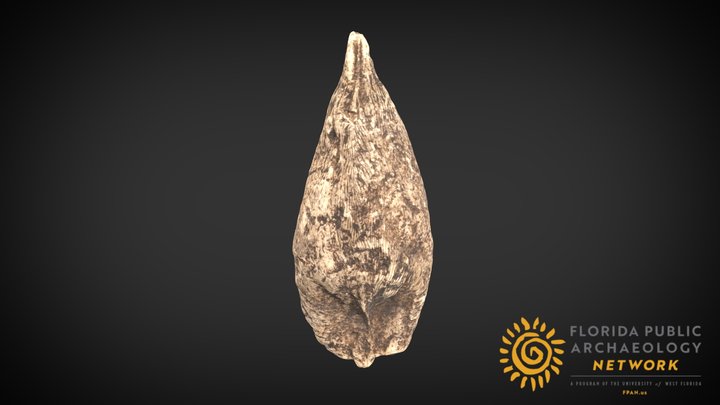
3D model
- Source
- Sketchfab
- Licence
- CC Attribution
- Commercial use
- cannot be read from the licence given — check the record
The description on this site
- Source
- Wikipedia, “Caranx”
- Licence
- CC BY-SA 4.0
This is what the site found, which is not the same as what exists.
Keep going
What may have been alongside itCarangidae through timeFormations of the MioceneThe world it lived on
Occurrence data from the Paleobiology Database, CC BY 4.0. Lacépède 1802