Carcharhinus
Carcharhinus is the type genus of the family Carcharhinidae. One of 10 genera in its family, it contains over half of the species therein. It contains 36-38 extant and eight extinct species to date, with likely more species yet to be described.

Albert kok · CC BY-SA 3.0 · via Wikipedia/Commons. May be a photograph of a specimen, or an artist’s reconstruction — an interpretation of a skeleton, since colour and soft tissue are almost never preserved.
On record
Recorded, not inferred- Sits inside
- CarcharhinidaePBDB
- Diet
- carnivorePBDB, for Carcharhiniformes
- Life habit
- nektonicPBDB, for Carcharhiniformes
- Motility
- actively mobilePBDB, for Carcharhiniformes
Time the record covers
At least 41 million years on record.
The record covers at least 41.03 Mya to 11.7 ka. No occurrence read is dated outside 56 Mya to 0 Mya.
907 occurrences of Carcharhinus on record, most of them in the Miocene. The Paleobiology Database records this as a living group. Bar height is expected occurrences, not a count: each fossil is spread across the span it is dated to, so a tall narrow bar means tight dating and a low wide one means loose.
When
907 occurrencesThese are dates about fossils, not the animal: the record can only begin after it arose and end before it died out, so either end may reach further. Shares are expected occurrences: a fossil dated to a span is counted partly in each period it straddles. More on what this infers.
Found in
211 formations
- Chucunaque Formation35
- Pirabas Formation26
- Urumaco Formation25
- Gatun Formation21
- Pisco Formation18
- Cantaure Formation18
Loading coastlines…
The named rock units Carcharhinus has been recovered from, largest first. Drawn where the rock is now, not where it formed. 187 further formations hold fewer occurrences each and are not listed. 187 occurrences have no formation on record, which is common for older literature.
Carcharhinus and its relatives
MioceneWhere Carcharhinus and its relatives were recorded in the Miocene.
Found in the same rock
3,452 taxa- Otodus megalodon97 sites
- Hemipristis serra91 sites
- Myliobatis73 sites
- Carcharodon hastalis69 sites
- Galeocerdo aduncus59 sites
- Dasyatis41 sites
- Rhinoptera35 sites
- Isurus oxyrinchus33 sites
- Carcharias cuspidatus32 sites
- Sphyrna29 sites
- Aetobatus28 sites
- Isurus27 sites
- Negaprion brevirostris27 sites
- Squatina27 sites
- Rhizoprionodon26 sites
- Carcharias taurus24 sites
- Galeocerdo24 sites
- Notorynchus primigenius23 sites
- Squalus23 sites
- Galeocerdo cuvier22 sites
- Pristis22 sites
- Carcharodon carcharias21 sites
- Carcharias acutissimus20 sites
- Isurus desori20 sites
The Paleobiology Database records 482 sites for Carcharhinus, and this reads 240 of them. Of that, one read hit the database's own return limit, so every count below is a floor rather than a total. The number is how many of those sites it was catalogued from too. The 24 sharing the most are listed.
This is not a list of everything alive at the time. It is only what has come out of the same ground as this animal and been written down.
Entered from
265 references- Late Miocene chondrichthyans from Lago Bayano, Panama: Functional diversity, environment and biogeography35
- Sharks and rays from the Mokattamian Stage (middle and late Eocene) of Egypt, including some species from the middle Eocene Midra Shale of Qatar33
- Sawfishes and other elasmobranch assemblages from the Mio-Pliocene of the south Caribbean (Urumaco sequence, northwestern Venezuela)28
- Shark and ray faunas in the Middle and Late Eocene of the Fayum Area, Egypt27
- Neogene sharks and rays from the Brazilian 'Blue Amazon'20
- Sharks and Rays (Chondrichthyes, Elasmobranchii) from the late Miocene Gatun Formation of Panama20
- A new Early Miocene (Aquitanian) Elasmobranchii assemblage from the la Guajira Peninsula, Colombia19
- Late Cenozoic elasmobranchs from the Hokuriku district, central Japan19
- Les poissons fossiles du Bas-Congo et des régions voisines17
- Carcharocles megalodon unpublished collections from Natural History Museums around the world16
- Vertébrés (crocodiliens, poissons) du Miocène marin de l'Argarve occidentale16
- First report on a diverse Neogene cartilaginous fish fauna from Borneo (Ambug Hill, Brunei Darussalam)15
Each of the 907 occurrences read was entered from one of these publications, ordered by how many each accounts for. This is not a search for papers mentioning the name. 253 further references are not listed. Entries link to doi.org where the Paleobiology Database holds an identifier, and to its own record where it does not. Relayed as the Paleobiology Database holds them, not checked against what they resolve to.
Media and terms
Media content3
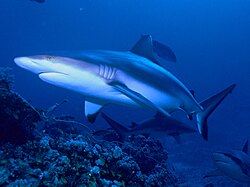
Picture of Carcharhinus
- Source
- Wikipedia/Commons
- Credit
- Albert kok
- Licence
- CC BY-SA 3.0
- Commercial use
- the licence allows it
CT scan
- Source
- MorphoSource
- Licence
- not stated by the source
- Commercial use
- cannot be read from the licence given — check the record
- Specimen
- Carcharhinus limbatus · L-VM:NanoStackG
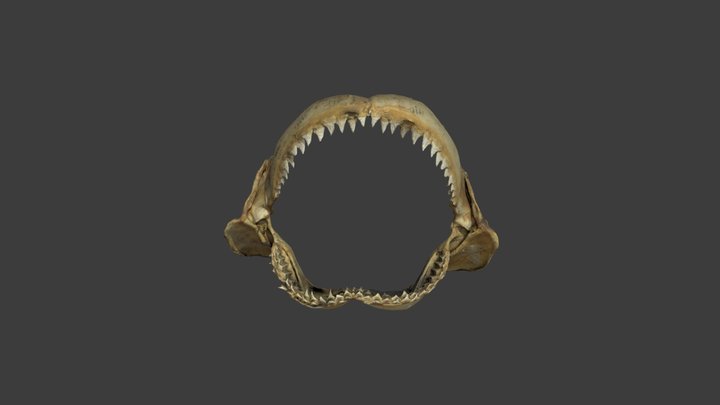
3D model
- Source
- Sketchfab
- Licence
- CC0 Public Domain
- Commercial use
- the licence allows it
Smithsonian Open Access was not reached for this taxon, so this list is what the others held rather than everything there is.
The description on this site
- Licence
- CC BY-SA 4.0
This is what the site found, which is not the same as what exists.
Keep going
What may have been alongside itCarcharhinidae through timeFormations of the MioceneThe world it lived on
Occurrence data from the Paleobiology Database, CC BY 4.0. de Blainville 1816