Cardioceras
Cardioceras is an extinct ammonite genus belonging to the family Cardioceratidae. These fast-moving nektonic carnivores lived during the Jurassic period, Oxfordian age.

Hectonichus · CC BY-SA 3.0 · via Wikipedia/Commons. May be a photograph of a specimen, or an artist’s reconstruction — an interpretation of a skeleton, since colour and soft tissue are almost never preserved.
On record
Recorded, not inferred- Sits inside
- CardioceratinaePBDB
- Diet
- carnivorePBDB, for Ammonoidea
- Life habit
- nektonicPBDB, for Ammonoidea
- Motility
- fast-movingPBDB, for Ammonoidea
- Vision
- well-developedPBDB, for Cephalopoda
- Environment
- marinePBDB, for Cephalopoda
Time the record covers
At least 4.2 million years on record.
The record covers at least 159 Mya to 154.8 Mya. No occurrence read is dated outside 165.3 Mya to 149.2 Mya.
155 occurrences of Cardioceras on record, most of them in the Late Jurassic. Bar height is expected occurrences, not a count: each fossil is spread across the span it is dated to, so a tall narrow bar means tight dating and a low wide one means loose.
When
155 occurrences- Middle Jurassicunder 1%
- Late Jurassic99%
These are dates about fossils, not the animal: the record can only begin after it arose and end before it died out, so either end may reach further. Shares are expected occurrences: a fossil dated to a span is counted partly in each period it straddles. More on what this infers.
Found in
20 formations
- Staffin Shale Formation · Great Estuarine Group22
- Agardhfjellet Formation13
- Calcaire a oolithes ferrugineuses Formation9
- Sodiemykha Formation8
- Billhook Creek Formation7
- Coralline Oolite Formation4
Loading coastlines…
The named rock units Cardioceras has been recovered from, largest first. Drawn where the rock is now, not where it formed. 61 occurrences have no formation on record, which is common for older literature.
Cardioceras and its relatives
Late JurassicWhere Cardioceras and its relatives were recorded in the Late Jurassic.
Found in the same rock
315 taxa- Nanogyra (Nanogyra) nana23 sites
- Radulopecten fibrosus19 sites
- Pleuromya uniformis18 sites
- Serpula18 sites
- Gryphaea17 sites
- Pholadomya16 sites
- Actinostreon14 sites
- Euaspidoceras14 sites
- Actinostreon gregarea13 sites
- Isognomon12 sites
- Modiolus bipartitus12 sites
- Myophorella12 sites
- Nubeculinella11 sites
- Perisphinctes11 sites
- Pleuromya alduini11 sites
- Homomya10 sites
- Buchia9 sites
- Peltoceras9 sites
- Perisphinctes (Dichotomosphinctes)8 sites
- Anisocardia7 sites
- Deltoideum (Deltoideum) delta7 sites
- Gregoryceras7 sites
- Proscaphites7 sites
- Aspidoceras6 sites
The Paleobiology Database records 79 sites for Cardioceras, and this reads all of them. The number is how many of those sites it was catalogued from too. The 24 sharing the most are listed.
This is not a list of everything alive at the time. It is only what has come out of the same ground as this animal and been written down.
Entered from
23 references- L'Oxfordien dans la moitié sud du Jura francais - etude stratigraphique34
- Unpublished data28
- The Oxford Clay of Skye, Scalpay and Eigg25
- Das Festungsprofil auf Spitzbergen11
- The Upper Jurassic of the Volga basin: ammonites biostratigraphy and correlations with standard European zonations10
- The Early Callovian Genus Сadochamoussetia (Ammonoidea, Cardioceratidae) in the Lower Reaches of the Anabar River, Northern Central Siberia8
- Mesozoic stratigraphy and Jurassic paleontology west of Harrison Lake, southwestern British Columbia7
- Zur Stratigraphie des Mittel- und unteren Oberjuras in Sengenthal bei Neumarkt /Opf. (Fränkische Alb) [On the stratigraphy of the Middle and early Upper Jurassic at Sengenthal, near Neumarkt/Opf. (Franconian Alb)]5
- Les "Marnes à theoi" de Pamproux (Deux-Sèvres, France), Sous-Zone à Antecedens (Oxfordien moyen, Zone à Plicatilis): diversité des faunes et découverte de nouvelles espèces d'ammonites [The "Theoi Marls" of Pamproux (Deux-Sèvres department, France), Antecedens Sub-zone (Middle Oxfordian, Plicatilis Zone): faunal diversity and discovery of new ammonite species]4
- Upper Jurassic stratigraphy from Dorset to Oxford; Magdalen Quarry4
- Ammonite-calibrated nautiloid occurrences from the Callovian-Oxfordian (Middle-Upper Jurassic) deposits of southern Poland3
- Les Terebratulidés de l'Oxfordien du Jura et de la bordure sud du Bassin de Paris3
Each of the 155 occurrences read was entered from one of these publications, ordered by how many each accounts for. This is not a search for papers mentioning the name. 11 further references are not listed. Entries link to doi.org where the Paleobiology Database holds an identifier, and to its own record where it does not. Relayed as the Paleobiology Database holds them, not checked against what they resolve to.
Media and terms
Media content2

Picture of Cardioceras
- Source
- Wikipedia/Commons
- Credit
- Hectonichus
- Licence
- CC BY-SA 3.0
- Commercial use
- the licence allows it
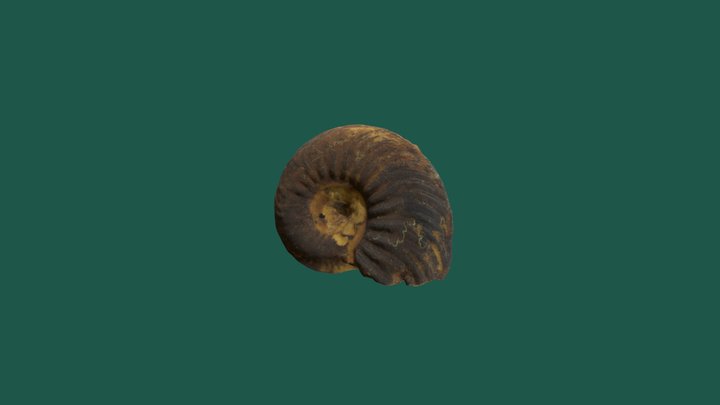
3D model
- Source
- Sketchfab
- Credit
- Shellie Luallin
- Licence
- CC Attribution
- Commercial use
- cannot be read from the licence given — check the record
Smithsonian Open Access was not reached for this taxon, so this list is what the others held rather than everything there is.
The description on this site
- Source
- Wikipedia, “Cardioceras”
- Licence
- CC BY-SA 4.0
This is what the site found, which is not the same as what exists.
Keep going
What may have been alongside itCardioceratinae through timeFormations of the Late JurassicThe world it lived on
Occurrence data from the Paleobiology Database, CC BY 4.0.