Cedrus
Cedrus is a small genus in the pine family, Pinaceae, consisting of 1-3 species of coniferous trees known in English as cedars. They are native to the mountains of the western Himalayas and the Mediterranean region at high altitudes. The trees grow tall with a cylindrical trunk and a wide leafy crown. The cones are erect; the leaves grow in tufts of 15–45 needle leaves, which can be bright green or blue-green with a waxy coat. When the cones are mature, they disintegrate to release the seeds, which are winged. Both pollen and seeds are wind-dispersed.

Yhabbouche at en.wikipedia · Public Domain · via Wikipedia/Commons. May be a photograph of a specimen, or an artist’s reconstruction — an interpretation of a skeleton, since colour and soft tissue are almost never preserved.
On record
Recorded, not inferred- Also called
- cedarPBDB
- Sits inside
- PinaceaePBDB
- Diet
- "photoautotroph"PBDB, for Streptophyta
Time the record covers
At least 165 million years on record.
The record covers at least 165.3 Mya to 11.7 ka. No occurrence read is dated outside 168.2 Mya to 0 Mya.
45 occurrences of Cedrus on record, most of them in the Pleistocene. The Paleobiology Database records this as a living group. Bar height is expected occurrences, not a count: each fossil is spread across the span it is dated to, so a tall narrow bar means tight dating and a low wide one means loose.
When
45 occurrences- Middle Jurassic2%
- Eocene2%
- Oligocene2%
- Miocene9%
- Pliocene4%
- Pleistocene64%
- Holocene16%
These are dates about fossils, not the animal: the record can only begin after it arose and end before it died out, so either end may reach further. Shares are expected occurrences: a fossil dated to a span is counted partly in each period it straddles. More on what this infers.
Found in
5 formations
- Kovachinskaya Formation1
- Moskovoretskaya Formation1
- Blue Clay Formation1
- Yebokangjiale Formation1
- Sanying Formation1
Loading coastlines…
The named rock units Cedrus has been recovered from, largest first. Drawn where the rock is now, not where it formed. 40 occurrences have no formation on record, which is common for older literature.
Cedrus and its relatives
PleistoceneWhere Cedrus and its relatives were recorded in the Pleistocene.
Found in the same rock
516 taxa- Poaceae35 sites
- Quercus35 sites
- Artemisia31 sites
- Cyperaceae26 sites
- Pinus26 sites
- Chenopodiaceae24 sites
- Ephedra24 sites
- Apiaceae23 sites
- Alnus22 sites
- Betula20 sites
- Brassicaceae20 sites
- Ulmus19 sites
- Abies18 sites
- Caryophyllaceae18 sites
- Picea18 sites
- Corylus17 sites
- Ericaceae17 sites
- Juglans17 sites
- Plantago17 sites
- Taraxacum17 sites
- Asteraceae16 sites
- Carpinus15 sites
- Rosaceae15 sites
- Salix15 sites
The Paleobiology Database records 44 sites for Cedrus, and this reads all of them. The number is how many of those sites it was catalogued from too. The 24 sharing the most are listed.
This is not a list of everything alive at the time. It is only what has come out of the same ground as this animal and been written down.
Entered from
14 references- A Catalogue of Fossil Plants from India Part 6: Cenozoic (Quaternary) Palynology and Palaeobotany18
- Site U13895
- Site U13904
- Stratigraphy of the Maikop Group and Pteropoda Beds in Northern Azerbaijan4
- Site U13863
- Site U13873
- Fossil leaves of Buxus (Buxaceae) from the Upper Pliocene of Yunnan, SW China1
- The Middle–Upper Pleistocene Fronte Section (Taranto, Italy): An exceptionally preserved marine record of the Last Interglacial1
- Site U13851
- Discovery of dinosaur remains in a Moscow suburb1
- Cesi, an early Middle Pleistocene site in the Colfiorito Basin (Umbro-Marchean Apennine), central Italy1
- A catalogue of Cenozoic megafossil plants in China1
Each of the 45 occurrences read was entered from one of these publications, ordered by how many each accounts for. This is not a search for papers mentioning the name. 2 further references are not listed. Entries link to doi.org where the Paleobiology Database holds an identifier, and to its own record where it does not. Relayed as the Paleobiology Database holds them, not checked against what they resolve to.
Media and terms
Media content3
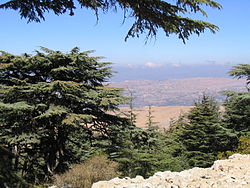
Picture of Cedrus
- Source
- Wikipedia/Commons
- Credit
- Yhabbouche at en.wikipedia
- Licence
- Public Domain
- Commercial use
- the licence allows it
CT scan
- Source
- MorphoSource
- Licence
- In Copyright
- Commercial use
- cannot be read from the licence given — check the record
- Specimen
- Cedrus atlantica · manch:polrefcol:MA_AZR_72
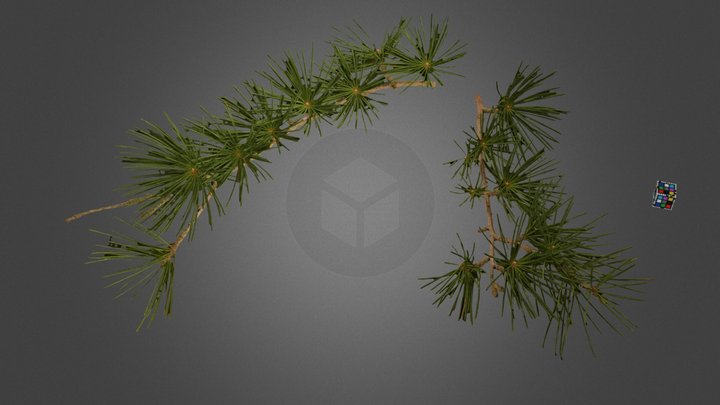
3D model
- Source
- Sketchfab
- Licence
- CC0 Public Domain
- Commercial use
- the licence allows it
Smithsonian Open Access was not reached for this taxon, so this list is what the others held rather than everything there is.
The description on this site
- Source
- Wikipedia, “Cedrus”
- Licence
- CC BY-SA 4.0
This is what the site found, which is not the same as what exists.
Keep going
What may have been alongside itPinaceae through timeFormations of the PleistoceneThe world it lived on
Occurrence data from the Paleobiology Database, CC BY 4.0. Trew 1757