Coronata
No picture of Coronata was found. Wikipedia and iDigBio were searched and had none. Wikidata has a picture filed under this name, but nothing tied it to Coronata itself, so it was not used. Smithsonian Open Access did not answer, so this is what the others held rather than everything there is. GBIF was asked, and what came back is not recorded: nothing, or a picture this site could not tie to Coronata, or no answer at all. This entry cannot say which.
On record
Recorded, not inferred- Sits inside
- CoronoideaPBDB
- Diet
- suspension feederPBDB
- Life habit
- epifaunalPBDB
- Motility
- stationaryPBDB
- Vision
- blindPBDB
- Environment
- marinePBDB, for Echinodermata
Time the record covers
At least 28 million years on record.
The record covers at least 461 Mya to 432.9 Mya. No occurrence read is dated outside 468 Mya to 422.7 Mya.
84 occurrences of Coronata on record, most of them in the Silurian. Bar height is expected occurrences, not a count: each fossil is spread across the span it is dated to, so a tall narrow bar means tight dating and a low wide one means loose.
When
84 occurrences- Ordovician40%
- Silurian60%
These are dates about fossils, not the animal: the record can only begin after it arose and end before it died out, so either end may reach further. Shares are expected occurrences: a fossil dated to a span is counted partly in each period it straddles. More on what this infers.
Found in
37 formations
- Osgood Shale Formation10
- Osgood Formation7
- Rochester Formation · Clinton Group5
- Rochester Shale Formation · Clinton Group4
- Sholeshook Formation4
- Kraluv Dvur Formation3
Loading coastlines…
The named rock units Coronata has been recovered from, largest first. Drawn where the rock is now, not where it formed. 13 further formations hold fewer occurrences each and are not listed. 1 occurrence has no formation on record, which is common for older literature.
Coronata and its relatives
SilurianWhere Coronata and its relatives were recorded in the Silurian.
Found in the same rock
1,036 taxa- Eucalyptocrinites24 sites
- Lecanocrinus22 sites
- Caryocrinites19 sites
- Favosites17 sites
- Dalmanites16 sites
- Leptaena rhomboidalis16 sites
- Atrypa15 sites
- Bryozoa15 sites
- Dimerocrinites15 sites
- Mespilocystites15 sites
- Atrypa reticularis14 sites
- Eospirifer radiatus14 sites
- Lyriocrinus14 sites
- Macrostylocrinus14 sites
- Cupulocorona gemmiformis13 sites
- Nucleospira13 sites
- Stegerhynchus13 sites
- Anastrophia12 sites
- Cornulites12 sites
- Dicoelosia12 sites
- Fardenia (Coolinia)12 sites
- Whitfieldella nitida12 sites
- Rhynchotreta americana11 sites
- Stephanocrinus11 sites
The Paleobiology Database records 63 sites for Coronata, and this reads all of them. The number is how many of those sites it was catalogued from too. The 24 sharing the most are listed.
This is not a list of everything alive at the time. It is only what has come out of the same ground as this animal and been written down.
Entered from
24 references- Caradocian-Gedinnian echinoderm associations of Central and Eastern North America32
- Coronate echinoderms from the lower Palaeozoic of Britain10
- Wenlockian fossil communities in New York State and adjacent areas: Paleontology and Paleoecology6
- The Clinton of Western and Central New York6
- The biostratigraphy of the Ordovician of Bohemia5
- Coronate echinoderms from the Ordovician of the Llanddowror area, South Wales2
- Échinodermes de l’Ordovicien supérieur (Ashgill) de Sardaigne et d’Algérie2
- Nuevos equinodermos (cistideos y blastozoos) del Ordovícico de la Cordi llera Ibérica (NE España)2
- The Silurian (Wenlockian) reef fauna of Southeastern Wisconsin2
- Sur quelques echinodermes (Cystoides et crinoides) de l' Ashgil d'Aragon (Espagne)2
- Osgood (Niagaran) bryozoans from the type area2
- A Kralodvorian (upper Katian, Upper Ordovician) benthic association from the Ferradosa Formation (central Portugal) and its significance for the redefinition and subdivision of the Kralodvorian Stage1
Each of the 84 occurrences read was entered from one of these publications, ordered by how many each accounts for. This is not a search for papers mentioning the name. 12 further references are not listed. Entries link to doi.org where the Paleobiology Database holds an identifier, and to its own record where it does not. Relayed as the Paleobiology Database holds them, not checked against what they resolve to.
Media and terms
Media content1
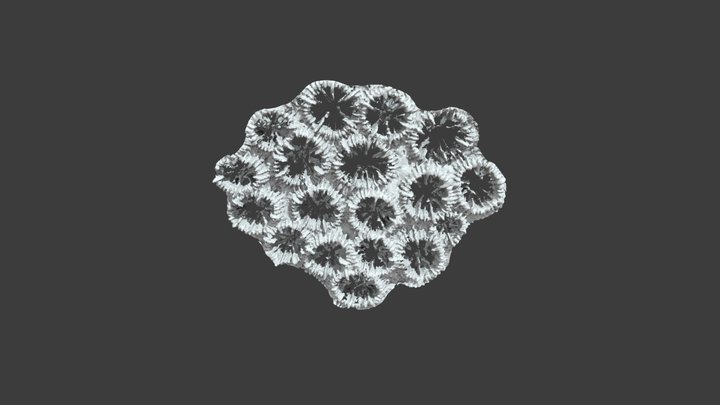
3D model
- Source
- Sketchfab
- Licence
- CC0 Public Domain
- Commercial use
- the licence allows it
No picture of Coronata was found. Wikipedia and iDigBio were searched and had none.
Wikidata has a picture filed under this name, but nothing tied it to Coronata itself, so it was not used.
Smithsonian Open Access did not answer, so this is what the others held rather than everything there is.
GBIF was asked, and what came back is not recorded: nothing, or a picture this site could not tie to Coronata, or no answer at all. This entry cannot say which.
Smithsonian Open Access and MorphoSource were not reached for this taxon, so this list is what the others held rather than everything there is.
This is what the site found, which is not the same as what exists.
Keep going
What may have been alongside itCoronoidea through timeFormations of the SilurianThe world it lived on
Occurrence data from the Paleobiology Database, CC BY 4.0. Jaekel 1918