Crocodylus affinis
"Crocodylus" affinis is an extinct species of crocodyloid from the Eocene of Wyoming. Fossils were first described from the Bridger Formation by American paleontologist Othniel Charles Marsh in 1871. Marsh described the species, along with every other species of crocodyloid in the Bridger Formation, under the genus Crocodylus. The known specimen of "Crocodylus" affinis is a skull found at Grizzly Buttes, Wyoming, measuring 13 inches in length on the upper surface. Recent phylogenetic studies of crocodyloids show that "C." affinis is not a species of Crocodylus, but a genus has not yet been erected to include the species. Other Bridger species such as Crocodylus clavis and Brachyuranochampsa zangerli have been synonymized with "C." affinis.

Smokeybjb · CC BY-SA 3.0 · via Wikipedia/Commons. May be a photograph of a specimen, or an artist’s reconstruction — an interpretation of a skeleton, since colour and soft tissue are almost never preserved.
On record
Recorded, not inferred- Sits inside
- CrocodylusPBDB
- Diet
- carnivorePBDB, for Crocodylia
- Motility
- actively mobilePBDB, for Osteichthyes
- Environment
- marinePBDB, for Mesoeucrocodylia
Time the record covers
At least 5.2 million years on record.
The record covers at least 51.1 Mya to 45.9 Mya. No occurrence read is dated outside 56 Mya to 39.7 Mya.
23 occurrences of Crocodylus affinis on record, most of them in the Eocene. Bar height is expected occurrences, not a count: each fossil is spread across the span it is dated to, so a tall narrow bar means tight dating and a low wide one means loose.
When
23 occurrences- Eocene100%
These are dates about fossils, not the animal: the record can only begin after it arose and end before it died out, so either end may reach further. Shares are expected occurrences: a fossil dated to a span is counted partly in each period it straddles. More on what this infers.
Found in
4 formations
Loading coastlines…
The named rock units Crocodylus affinis has been recovered from, largest first. Drawn where the rock is now, not where it formed.
Crocodylus affinis and its relatives
EoceneWhere Crocodylus affinis and its relatives were recorded in the Eocene.
Found in the same rock
202 taxa- Xestops vagans8 sites
- Anosteira ornata6 sites
- Echmatemys stevensoniana6 sites
- Hyrachyus6 sites
- Baptemys wyomingensis5 sites
- Viverravus minutus5 sites
- Baena arenosa4 sites
- Borealosuchus4 sites
- Boverisuchus vorax4 sites
- Notharctus robinsoni4 sites
- Omomys carteri4 sites
- Sciuravus nitidus4 sites
- Allognathosuchus3 sites
- Boavus occidentalis3 sites
- Cantius nunienus3 sites
- Echmatemys wyomingensis3 sites
- Glyptosaurus sylvestris3 sites
- Metacheiromys3 sites
- Microsyops elegans3 sites
- Palaeosyops fontinalis3 sites
- Saniwa ensidens3 sites
- Smilodectes mcgrewi3 sites
- Apalone (Platypeltis)2 sites
- Apatemys2 sites
The Paleobiology Database records 19 sites for Crocodylus affinis, and this reads all of them. The number is how many of those sites it was catalogued from too. The 24 sharing the most are listed.
This is not a list of everything alive at the time. It is only what has come out of the same ground as this animal and been written down.
Entered from
8 references- Early Eocene fossil vertebrates from the southwestern Green River Basin, Lincoln and Uinta counties, Wyoming12
- Catalogue and Review of the Type Fossil Crocodilians in the Yale Peabody Museum3
- Basin margins, biodiversity, evolutionary innovation, and the origin of new taxa2
- A communication on some new reptiles and fishes from the Cretaceous and Tertiary formations2
- Phylogenetic Relationships and Divergence Timing of Crocodylus Based on Morphology and the Fossil Record1
- A new species of Brachyuranochampsa (Crocodilia) from the Bridger Beds of Wyoming1
- Description of a skull of a Bridger crocodilian1
- Report Upon the Material Discovered in the Upper Eocene of the Uinta Basin by Earl Douglas in the Years 1908-1909, and by O. A. Peterson in 19121
Each of the 23 occurrences read was entered from one of these publications, ordered by how many each accounts for. This is not a search for papers mentioning the name. Entries link to doi.org where the Paleobiology Database holds an identifier, and to its own record where it does not. Relayed as the Paleobiology Database holds them, not checked against what they resolve to.
Media and terms
Media content3

Picture of Crocodylus affinis
- Source
- Wikipedia/Commons
- Credit
- Smokeybjb
- Licence
- CC BY-SA 3.0
- Commercial use
- the licence allows it
Laser scan
- Source
- MorphoSource
- Licence
- In Copyright
- Commercial use
- cannot be read from the licence given — check the record
- Specimen
- Crocodylus affinis · amnh:farb:1719
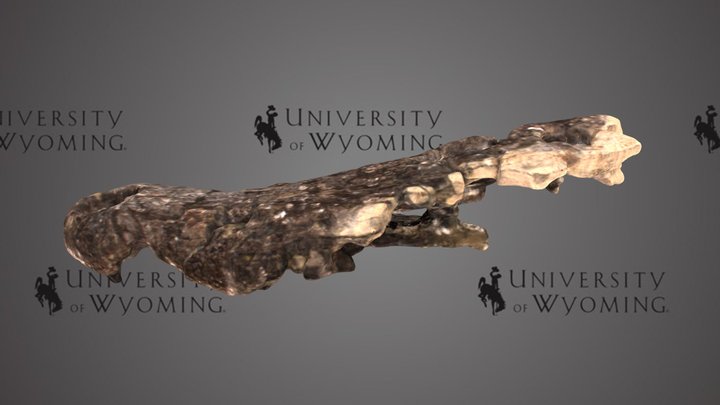
3D model
- Source
- Sketchfab
- Licence
- CC Attribution-NonCommercial
- Commercial use
- the licence does not allow it
Smithsonian Open Access was not reached for this taxon, so this list is what the others held rather than everything there is.
The description on this site
- Licence
- CC BY-SA 4.0
This is what the site found, which is not the same as what exists.
Keep going
What may have been alongside itCrocodylus through timeFormations of the EoceneThe world it lived on
Occurrence data from the Paleobiology Database, CC BY 4.0. Marsh 1871