Ctenomys magellanicus
The Magellanic tuco-tuco is a species of rodent in the family Ctenomyidae. It is found in Argentina and Chile. Its natural habitat is subtropical or tropical dry lowland grassland. It is also known as the cururo by the Selkʼnam culture of Tierra del Fuego.

reprod.Alfred Brehm 1883 · Public Domain · via Wikipedia/Commons. May be a photograph of a specimen, or an artist’s reconstruction — an interpretation of a skeleton, since colour and soft tissue are almost never preserved.
On record
Recorded, not inferred- Also called
- Magellanic tuco-tucoPBDB
- Sits inside
- CtenomysPBDB
- Diet
- herbivorePBDB, for Ctenomys
- Life habit
- fossorialPBDB, for Ctenomys
- Motility
- actively mobilePBDB, for Osteichthyes
- Environment
- terrestrialPBDB, for Eutheria
Time the record covers
At most 389 thousand years on record.
Every occurrence read is dated to somewhere between 400 ka and 11.7 ka, and nothing in the dating separates them, so that window is what the record shows rather than a span.
2 occurrences of Ctenomys magellanicus on record, most of them in the Pleistocene. The Paleobiology Database records this as a living group. Bar height is expected occurrences, not a count: each fossil is spread across the span it is dated to, so a tall narrow bar means tight dating and a low wide one means loose.
When
2 occurrences- Pleistocene100%
These are dates about fossils, not the animal: the record can only begin after it arose and end before it died out, so either end may reach further. Shares are expected occurrences: a fossil dated to a span is counted partly in each period it straddles. More on what this infers.
Found in
1 formation
Loading coastlines…
The named rock units Ctenomys magellanicus has been recovered from, largest first. Drawn where the rock is now, not where it formed. 1 occurrence has no formation on record, which is common for older literature.
Ctenomys magellanicus and its relatives
PleistoceneWhere Ctenomys magellanicus and its relatives were recorded in the Pleistocene.
Found in the same rock
54 taxa- Dusicyon avus2 sites
- Lama guanicoe2 sites
- Arctotherium1 site
- Asthenopterus minutus1 site
- Calomys callosus1 site
- Canidae1 site
- Cathartes fossilis1 site
- Chaetophractus villosus1 site
- Doedicurus clavicaudatus1 site
- Dolichotis patagonum1 site
- Equus caballus1 site
- Eulamaops1 site
- Glossotherium1 site
- Glossotherium robustum1 site
- Glyptodon1 site
- Glyptodon clavipes1 site
- Glyptodon reticulatus1 site
- Gomphotheriidae1 site
- Hemiauchenia paradoxa1 site
- Hippidion1 site
- Holochilus brasiliensis1 site
- Lagostomus maximus1 site
- Lestodon1 site
- Lontra longicaudis longicaudis1 site
The Paleobiology Database records 2 sites for Ctenomys magellanicus, and this reads all of them. The number is how many of those sites it was catalogued from too. The 24 sharing the most are listed.
This is not a list of everything alive at the time. It is only what has come out of the same ground as this animal and been written down.
Entered from
2 references- Formas Terminales de Hippidion (Mammalia, Perissodactyla) de los Yacimientos del Pleistoceno Tardio-Holoceno de la Patagonia (Argentina y Chile)1
- La Unidad Mamifero (Fauna) Lujanense. Proyeccion de la Estratigrafia Mamaliana al Cuaternario de la Region Pampeana1
Each of the 2 occurrences read was entered from one of these publications, ordered by how many each accounts for. This is not a search for papers mentioning the name. Entries link to doi.org where the Paleobiology Database holds an identifier, and to its own record where it does not. Relayed as the Paleobiology Database holds them, not checked against what they resolve to.
Media and terms
Media content3

Picture of Ctenomys magellanicus
- Source
- Wikipedia/Commons
- Credit
- reprod.Alfred Brehm 1883
- Licence
- Public Domain
- Commercial use
- the licence allows it
CT scan
- Source
- MorphoSource
- Licence
- In Copyright
- Commercial use
- cannot be read from the licence given — check the record
- Specimen
- Ctenomys sp. · MLP-Mz:9.XI.09.11
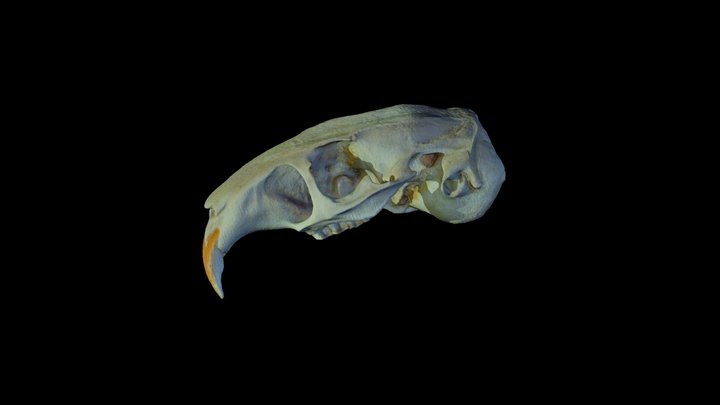
3D model
- Source
- Sketchfab
- Credit
- Fernando C. Santiago
- Licence
- CC Attribution
- Commercial use
- cannot be read from the licence given — check the record
Smithsonian Open Access was not reached for this taxon, so this list is what the others held rather than everything there is.
The description on this site
- Licence
- CC BY-SA 4.0
This is what the site found, which is not the same as what exists.
Keep going
What may have been alongside itCtenomys through timeFormations of the PleistoceneThe world it lived on
Occurrence data from the Paleobiology Database, CC BY 4.0. Bennett 1836