Diatomyidae
Diatomyidae is a family of hystricomorph rodents. It is represented by a single living species, Laonastes aenigmamus, native to Laos in Southeast Asia. Fossil species are known from the Oligocene and Miocene of Asia and eastern Europe.

Jean-Pierre Hugot · CC BY 2.5 · via Wikipedia/Commons. May be a photograph of a specimen, or an artist’s reconstruction — an interpretation of a skeleton, since colour and soft tissue are almost never preserved.
On record
Recorded, not inferred- Sits inside
- CtenodactylomorphiPBDB
- Diet
- herbivorePBDB, for Rodentia
- Life habit
- ground dwellingPBDB, for Rodentia
- Motility
- actively mobilePBDB, for Osteichthyes
- Environment
- terrestrialPBDB, for Eutheria
Time the record covers
At least 15 million years on record.
The record covers at least 27.3 Mya to 11.63 Mya. No occurrence read is dated outside 33.9 Mya to 5.333 Mya.
40 occurrences of Diatomyidae on record, most of them in the Oligocene. The Paleobiology Database records this as a living group, and the chart stops with its fossils rather than at the present. Bar height is expected occurrences, not a count: each fossil is spread across the span it is dated to, so a tall narrow bar means tight dating and a low wide one means loose.
When
40 occurrencesThese are dates about fossils, not the animal: the record can only begin after it arose and end before it died out, so either end may reach further. Shares are expected occurrences: a fossil dated to a span is counted partly in each period it straddles. More on what this infers.
Found in
7 formations
- Chitarwata Formation15
- Lower Manchar Formation6
- Kargil Formation · Ladakh Molasse Group4
- Xiacaowan Formation2
- Vihowa Formation2
- Shanwang Formation1
Loading coastlines…
The named rock units Diatomyidae has been recovered from, largest first. Drawn where the rock is now, not where it formed. 9 occurrences have no formation on record, which is common for older literature.
Diatomyidae and its relatives
OligoceneWhere Diatomyidae and its relatives were recorded in the Oligocene.
Found in the same rock
285 taxa- Copemys10 sites
- Sayimys10 sites
- Diatomys9 sites
- Prokanisamys9 sites
- Sciuridae8 sites
- Spanocricetodon8 sites
- Artiodactyla7 sites
- Mammalia7 sites
- Erinaceidae6 sites
- Fallomus razae6 sites
- Myocricetodon6 sites
- Chiroptera5 sites
- Heterocricetodon serbicus5 sites
- Inopinatia balkanica5 sites
- Paracricetodon stojanovici5 sites
- Primus cheemai5 sites
- Cricetidae4 sites
- Diatomys shantungensis4 sites
- Downsimys4 sites
- Galerix4 sites
- Galerix wesselsae4 sites
- Heosminthus primiveris4 sites
- Kanisamys benjavuni4 sites
- Peratherium4 sites
The Paleobiology Database records 29 sites for Diatomyidae, and this reads all of them. The number is how many of those sites it was catalogued from too. The 24 sharing the most are listed.
This is not a list of everything alive at the time. It is only what has come out of the same ground as this animal and been written down.
Entered from
16 references- Origin and Evolution of the Diatomyidae, with Clues to Paleoecology from the Fossil Record7
- Miocene rodent evolution and migration. Muroidea from Pakistan, Turkey and Northern Africa6
- Will Downs and the Zinda Pir Dome5
- New diatomyid and baluchimyine rodents from the Oligocene of Pakistan (Bugti Hills, Balochistan): systematic and paleobiogeographic implications4
- Pappocricetodontinae (Rodentia, Muridae) from the Paleogene of south-east Serbia3
- Ctenodactyloid rodent assemblage from Kargil Formation, Ladakh Molasse Group2
- Rodents from the Oligo-Miocene Kargil Formation, Ladakh, India: Biochronologic and palaeobiogeographic implications2
- First fossil marsupial from South Asia2
- The Aragonian vertebrate fauna of Xiacaowan, Jiangsu2
- Rodent faunas from the Paleogene of south-east Serbia1
- On a new diatomyid (Rodentia, Mammalia) from the Paleogene of south-east Serbia, the first record of the family in Europe1
- An unusual diatomyid rodent from an infrequently sampled late Miocene interval in the Siwaliks of Pakistan1
Each of the 40 occurrences read was entered from one of these publications, ordered by how many each accounts for. This is not a search for papers mentioning the name. 4 further references are not listed. Entries link to doi.org where the Paleobiology Database holds an identifier, and to its own record where it does not. Relayed as the Paleobiology Database holds them, not checked against what they resolve to.
Media and terms
Media content1
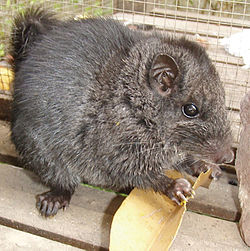
Picture of Diatomyidae
- Source
- Wikipedia/Commons
- Credit
- Jean-Pierre Hugot
- Licence
- CC BY 2.5
- Commercial use
- the licence allows it
No 3D scan of Diatomyidae was found in Sketchfab.
Smithsonian Open Access and MorphoSource were not reached for this taxon, so this list is what the others held rather than everything there is.
The description on this site
- Source
- Wikipedia, “Diatomyidae”
- Licence
- CC BY-SA 4.0
This is what the site found, which is not the same as what exists.
Keep going
What may have been alongside itCtenodactylomorphi through timeFormations of the OligoceneThe world it lived on
Occurrence data from the Paleobiology Database, CC BY 4.0. Mein and Ginsburg 1997