Dichocrinus

via iDigBio · CC0 · via iDigBio. May be a photograph of a specimen, or an artist’s reconstruction — an interpretation of a skeleton, since colour and soft tissue are almost never preserved.
On record
Recorded, not inferred- Sits inside
- DichocrininaePBDB
- Diet
- suspension feederPBDB, for Monobathrida
- Life habit
- upper-level epifaunalPBDB, for Monobathrida
- Motility
- stationary, attachedPBDB, for Monobathrida
- Vision
- blindPBDB, for Crinoidea
- Environment
- marinePBDB, for Echinodermata
Time the record covers
At least 86 million years on record.
The record covers at least 353.7 Mya to 266.9 Mya. No occurrence read is dated outside 358.86 Mya to 264.28 Mya.
86 occurrences of Dichocrinus on record, most of them in the Carboniferous. Bar height is expected occurrences, not a count: each fossil is spread across the span it is dated to, so a tall narrow bar means tight dating and a low wide one means loose.
When
86 occurrences- Carboniferous95%
- Permian5%
These are dates about fossils, not the animal: the record can only begin after it arose and end before it died out, so either end may reach further. Shares are expected occurrences: a fossil dated to a span is counted partly in each period it straddles. More on what this infers.
Found in
16 formations
- Bangor Limestone Formation34
- Salem Limestone Formation9
- Muldraugh Formation9
- Edwardsville Formation8
- Borden Formation8
- Lake Valley Formation5
Loading coastlines…
The named rock units Dichocrinus has been recovered from, largest first. Drawn where the rock is now, not where it formed.
Dichocrinus and its relatives
CarboniferousWhere Dichocrinus and its relatives were recorded in the Carboniferous.
Found in the same rock
651 taxa- Fistulipora51 sites
- Fenestella50 sites
- Cleiothyridina41 sites
- Echinoidea41 sites
- Eumetria41 sites
- Camptocrinus37 sites
- Orthotetes36 sites
- Composita35 sites
- Pentremites35 sites
- Platycrinites35 sites
- Reticulariina35 sites
- Tabulipora33 sites
- Anthracospirifer leidyi32 sites
- Archimedes31 sites
- Polypora31 sites
- Torynifer31 sites
- Aphelacrinus sp.30 sites
- Rhabdomeson30 sites
- Paladin29 sites
- Phanocrinus29 sites
- Productida28 sites
- Ramulocrinus27 sites
- Rhombopora25 sites
- Cornulites24 sites
The Paleobiology Database records 82 sites for Dichocrinus, and this reads all of them. The number is how many of those sites it was catalogued from too. The 24 sharing the most are listed.
This is not a list of everything alive at the time. It is only what has come out of the same ground as this animal and been written down.
Entered from
19 references- The Paleontology and Paleoecology of the Lower Bangor Limestone (Chesterian, Mississippian)in northwestern Alabama34
- Facies Faunas of the Salem Limestone (Mississippian) in Southern Indiana and Central Kentucky9
- Paleontology and paleoecology of the Crawfordsville fossil site (Upper Osagian: Indiana)9
- Camerate crinoids from the Nunn Member (Tournaisian, Osagean) of the Lower Mississippian Lake Valley Formation, New Mexico5
- Community Organization, Paleontology, and Sedimentology of the Lower Mississippian Borden Delta Platform (Edwardsville Formation, Southern Indiana)5
- Crinoids from the Muldraugh Member of the Borden Formation in north-central Kentucky (Echinodermata, Lower Mississippian)3
- Fossil communities of the Borden (Mississippi) delta in Indiana and northern Kentucky3
- Paleontology and Paleoecology of the Basal New Providence Shale (Osagian: Mississippian) at Paris Landing, Tennessee3
- Crinoids from the Nada Member of the Borden Formation (Lower Mississippian) in eastern Kentucky2
- A bootstrap analysis for comparative taphonomy applied to Early Mississippian (Kinderhookian) crinoids from the Wassonville Cycle of Iowa2
- Two new camerate crinoid species from the Permian of eastern Australia2
- Mississippian crinoid fauna from the Banff Formation, Sunwapta Pass, Alberta2
Each of the 86 occurrences read was entered from one of these publications, ordered by how many each accounts for. This is not a search for papers mentioning the name. 7 further references are not listed. Entries link to doi.org where the Paleobiology Database holds an identifier, and to its own record where it does not. Relayed as the Paleobiology Database holds them, not checked against what they resolve to.
Media and terms
Media content2
Picture of Dichocrinus
- Source
- iDigBio
- Credit
- via iDigBio
- Licence
- CC0
- Commercial use
- the licence allows it
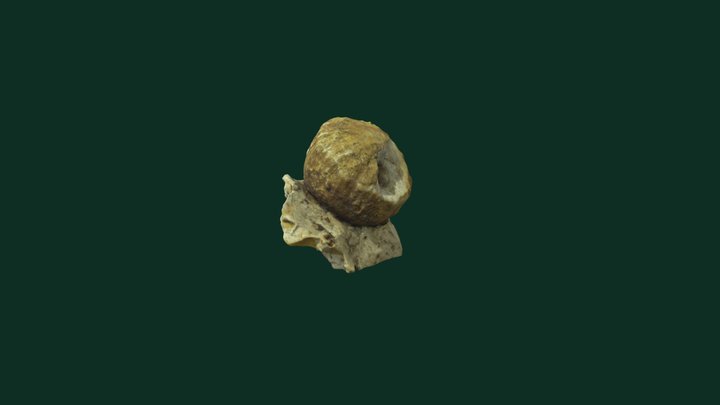
3D model
- Source
- Sketchfab
- Credit
- Shellie Luallin
- Licence
- CC Attribution
- Commercial use
- cannot be read from the licence given — check the record
This is what the site found, which is not the same as what exists.
Keep going
Everything alive alongside itDichocrininae through timeFormations of the CarboniferousThe world it lived on
Occurrence data from the Paleobiology Database, CC BY 4.0. Munster 1839