Dicroidium

Taylor, Edith; Taylor, Thomas; Cuneo, Ruben; Daghlian, Charles; Puerta, Pablo; Buchanan, David · CC BY 4.0 · via GBIF. May be a photograph of a specimen, or an artist’s reconstruction — an interpretation of a skeleton, since colour and soft tissue are almost never preserved.
On record
Recorded, not inferred- Sits inside
- CorystospermaceaePBDB
- Diet
- "photoautotroph"PBDB, for Streptophyta
Time the record covers
At least 92 million years on record.
The record covers at least 254.14 Mya to 161.5 Mya. No occurrence read is dated outside 298.9 Mya to 143.1 Mya.
190 occurrences of Dicroidium on record, most of them in the Late Triassic. Bar height is expected occurrences, not a count: each fossil is spread across the span it is dated to, so a tall narrow bar means tight dating and a low wide one means loose.
When
190 occurrencesThese are dates about fossils, not the animal: the record can only begin after it arose and end before it died out, so either end may reach further. Shares are expected occurrences: a fossil dated to a span is counted partly in each period it straddles. More on what this infers.
Found in
29 formations
- Molteno Formation · Stormberg Group46
- Paso Flores Formation12
- Santa Maria Formation9
- Molteno Formation · Stormberg Group8
- Potrerillos Formation7
- Cacheuta Formation7
Loading coastlines…
The named rock units Dicroidium has been recovered from, largest first. Drawn where the rock is now, not where it formed. 5 further formations hold fewer occurrences each and are not listed. 43 occurrences have no formation on record, which is common for older literature.
Dicroidium and its relatives
Late TriassicWhere Dicroidium and its relatives were recorded in the Late Triassic.
Found in the same rock
590 taxa- Gymnospermopsida49 sites
- Taeniopteris42 sites
- Heidiphyllum41 sites
- Pteridophyta38 sites
- Sphenobaiera38 sites
- Lepidopteris35 sites
- Equisetum32 sites
- Pteridopsida32 sites
- Pteruchus30 sites
- Yabeiella30 sites
- Fanerotheca26 sites
- Pseudoctenis25 sites
- Umkomasia25 sites
- Stachyopitys24 sites
- Ginkgoites22 sites
- Kannaskopifolia sp.21 sites
- Cladophlebis18 sites
- Fraxinopsis18 sites
- Peltaspermum18 sites
- Rissikia18 sites
- Dordrechtites sp.17 sites
- Muscites17 sites
- Telemachus16 sites
- Marchantites15 sites
The Paleobiology Database records 111 sites for Dicroidium, and this reads all of them. The number is how many of those sites it was catalogued from too. The 24 sharing the most are listed.
This is not a list of everything alive at the time. It is only what has come out of the same ground as this animal and been written down.
Entered from
43 references- Table 35 Molteno vegetative genera, phytosociological table50
- El Triasico del Cerro Cacheuta, Mendoza (Argentina). Parte 1: Geologia, contenido paleofloristico y cronoestratigrafia11
- A note on the fossil megafloras of the Nymboida and Red Cliff Coal Measures, Southern Clarence-Moreton Basin, NSW10
- Gondwana Floras of India and Antarctica - a Survey and Reappraisal9
- Estudio sedimentologico y paleofloristico de la Formacion Paso Flores (Triasico Superior) en el sector occidental del Macizo Norpatagonico, Argentina9
- A Catalogue of Indian Fossil Plants9
- A tafoflora Triassica da Formacao Santa Maria, Bacia do Parana, Brasil e sua importancia bioestratigrafica8
- The Middle Triassic flora from Benolong, near Dubbo, central-western New South Wales8
- Triassic plant megafossils from the Tiki Formation, South Rewa Gondwana Basin, India6
- A Catalogue of Fossil Plants from India Part 2: Palaeozoic and Mesozoic Megafossils5
- Provincialism in Gondwana floras5
- A Late Permian flora with Dicroidium from the Dead Sea region, Jordan4
Each of the 190 occurrences read was entered from one of these publications, ordered by how many each accounts for. This is not a search for papers mentioning the name. 31 further references are not listed. Entries link to doi.org where the Paleobiology Database holds an identifier, and to its own record where it does not. Relayed as the Paleobiology Database holds them, not checked against what they resolve to.
Media and terms
Media content2
Picture of Dicroidium
- Source
- GBIF
- Credit
- Taylor, Edith; Taylor, Thomas; Cuneo, Ruben; Daghlian, Charles; Puerta, Pablo; Buchanan, David
- Licence
- CC BY 4.0
- Commercial use
- the licence allows it
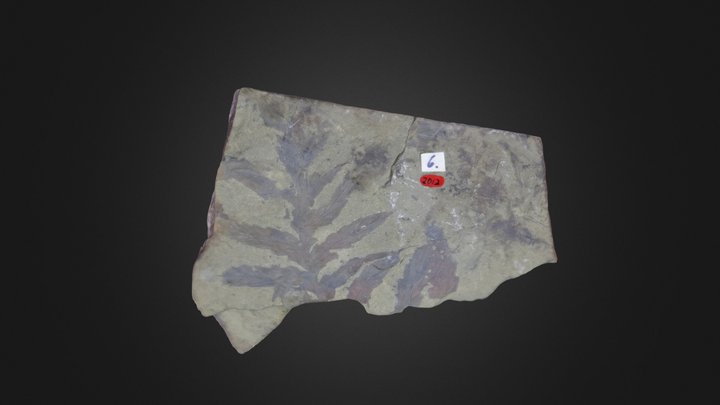
3D model
- Source
- Sketchfab
- Licence
- CC0 Public Domain
- Commercial use
- the licence allows it
This is what the site found, which is not the same as what exists.
Keep going
What may have been alongside itCorystospermaceae through timeFormations of the Late TriassicThe world it lived on
Occurrence data from the Paleobiology Database, CC BY 4.0. Gothan 1912