Echinosphaerites
Searched as Echinosphaerites quarendus. The Paleobiology Database treats Echinosphaerites as the accepted name.
Echinosphaerites is a genus of rhombiferan cystoid echinoderms that lived in the Early to Middle Ordovician of North America and Europe.

Wilson44691 at English Wikipedia · Public Domain · via Wikipedia/Commons. May be a photograph of a specimen, or an artist’s reconstruction — an interpretation of a skeleton, since colour and soft tissue are almost never preserved.
On record
Recorded, not inferred- Sits inside
- EchinosphaeritidaePBDB
- Diet
- suspension feederPBDB, for Rhombifera
- Life habit
- intermediate-level epifaunalPBDB, for Rhombifera
- Motility
- stationary, attachedPBDB, for Rhombifera
- Vision
- blindPBDB, for Rhombifera
- Environment
- marinePBDB, for Echinodermata
Time the record covers
At most 4.9 million years on record.
Every occurrence read is dated to somewhere between 450.1 Mya and 445.2 Mya, and nothing in the dating separates them, so that window is what the record shows rather than a span.
2 occurrences of Echinosphaerites on record, most of them in the Ordovician. Bar height is expected occurrences, not a count: each fossil is spread across the span it is dated to, so a tall narrow bar means tight dating and a low wide one means loose.
When
2 occurrences- Ordovician100%
These are dates about fossils, not the animal: the record can only begin after it arose and end before it died out, so either end may reach further. Shares are expected occurrences: a fossil dated to a span is counted partly in each period it straddles. More on what this infers.
Found in
1 formation
Loading coastlines…
The named rock units Echinosphaerites has been recovered from, largest first. Drawn where the rock is now, not where it formed.
Echinosphaerites and its relatives
OrdovicianWhere Echinosphaerites and its relatives were recorded in the Ordovician.
Found in the same rock
969 taxa- Chasmatopora15 sites
- Nicolella15 sites
- Rhinidictya15 sites
- Sowerbyella15 sites
- Dactylogonia obsoleta14 sites
- Dactylogonia palustris14 sites
- Dinorthis interstriata14 sites
- Dinorthis transversa14 sites
- Eospongia14 sites
- Girvanella14 sites
- Graptodictya14 sites
- Mimella globosa14 sites
- Multicostella platys14 sites
- Oepikina minnesotensis14 sites
- Paleocrinus cf. striatus14 sites
- Paurorthis14 sites
- Phaenopora14 sites
- Rhipidomena tennesseensis14 sites
- Solenopora14 sites
- Sowerbyella (Sowerbyella) aequistriatus14 sites
- Tetradium14 sites
- Valcourea14 sites
- Asaphus13 sites
- Glyptorthis bellarugosa13 sites
The Paleobiology Database records 95 sites for Echinosphaerites, and this reads all of them. The number is how many of those sites it was catalogued from too. The 24 sharing the most are listed.
This is not a list of everything alive at the time. It is only what has come out of the same ground as this animal and been written down.
Entered from
1 referenceEach of the 2 occurrences read was entered from one of these publications, ordered by how many each accounts for. This is not a search for papers mentioning the name. Each entry links to the Paleobiology Database's own record for the work.
Media and terms
Media content2

Picture of Echinosphaerites
- Source
- Wikipedia/Commons
- Credit
- Wilson44691 at English Wikipedia
- Licence
- Public Domain
- Commercial use
- the licence allows it
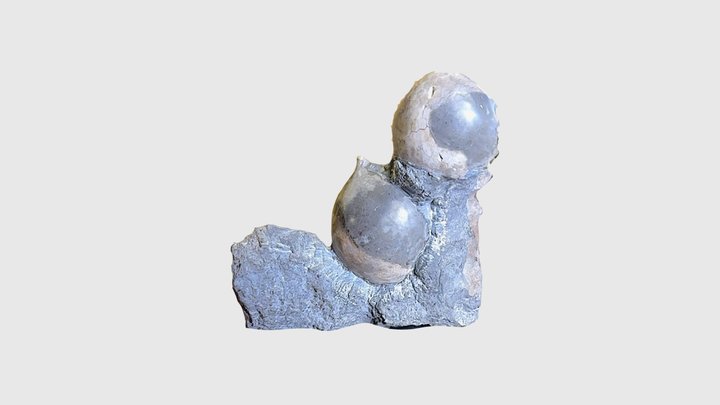
3D model
- Source
- Sketchfab
- Credit
- Adrian Gyllingberg
- Licence
- CC Attribution-NonCommercial-ShareAlike
- Commercial use
- the licence does not allow it
Smithsonian Open Access and MorphoSource were not reached for this taxon, so this list is what the others held rather than everything there is.
The description on this site
- Licence
- CC BY-SA 4.0
This is what the site found, which is not the same as what exists.
Keep going
What may have been alongside itEchinosphaeritidae through timeFormations of the OrdovicianThe world it lived on
Occurrence data from the Paleobiology Database, CC BY 4.0. Wahlenberg 1818