Eoptolamnidae
Pseudoscapanorhynchidae is a family of extinct mackerel sharks that lived during the Cretaceous and potentially the Paleogene. It currently includes Cretodus, Eoptolamna, Leptostyrax, Protolamna, Pseudoscapanorhynchus, and possibly Lilamna.

Ghedoghedo · CC BY-SA 3.0 · via Wikipedia/Commons. May be a photograph of a specimen, or an artist’s reconstruction — an interpretation of a skeleton, since colour and soft tissue are almost never preserved.
On record
Recorded, not inferred- Sits inside
- LamniformesPBDB
- Diet
- carnivorePBDB, for Lamniformes
- Life habit
- nektonicPBDB, for Lamniformes
- Motility
- actively mobilePBDB, for Lamniformes
Time the record covers
At least 73 million years on record.
The record covers at least 121.4 Mya to 48.07 Mya. No occurrence read is dated outside 125.77 Mya to 37.71 Mya.
64 occurrences of Eoptolamnidae on record, most of them in the Late Cretaceous. Bar height is expected occurrences, not a count: each fossil is spread across the span it is dated to, so a tall narrow bar means tight dating and a low wide one means loose.
When
64 occurrencesThese are dates about fossils, not the animal: the record can only begin after it arose and end before it died out, so either end may reach further. Shares are expected occurrences: a fossil dated to a span is counted partly in each period it straddles. More on what this infers.
Found in
28 formations
- Newhaven Chalk Formation5
- Labguva Formation4
- Paluxy Formation · Trinity Group3
- Jiesia Formation3
- Mancos Shale Formation2
- Hiraiga Formation · Miyako Group2
Loading coastlines…
The named rock units Eoptolamnidae has been recovered from, largest first. Drawn where the rock is now, not where it formed. 4 further formations hold fewer occurrences each and are not listed. 21 occurrences have no formation on record, which is common for older literature.
Eoptolamnidae and its relatives
Late CretaceousWhere Eoptolamnidae and its relatives were recorded in the Late Cretaceous.
Found in the same rock
438 taxa- Leptostyrax macrorhiza33 sites
- Eostriatolamia striatula14 sites
- Squalicorax kaupi14 sites
- Anomotodon hermani13 sites
- Carcharias adneti13 sites
- Eoptolamna supracretacea13 sites
- Leptostyrax13 sites
- Nanocorax microserratodon13 sites
- Scapanorhynchus raphiodon13 sites
- Archaeolamna kopingensis12 sites
- Chiloscyllium frequens12 sites
- Cretalamna appendiculata12 sites
- Rhinobatos12 sites
- Squatina (Cretascyllium) cranei11 sites
- Squatirhina lonzeensis11 sites
- Squatina (Cretascyllium) hassei10 sites
- Cretaplatyrhinoidis ornatus9 sites
- Pseudocorax laevis9 sites
- Pseudohypolophus mcnultyi9 sites
- Heterodontus canaliculatus8 sites
- Squalicorax primaevus8 sites
- Cretodus semiplicatus7 sites
- Hispidaspis gigas7 sites
- Paraorthacodus recurvus7 sites
The Paleobiology Database records 64 sites for Eoptolamnidae, and this reads all of them. The number is how many of those sites it was catalogued from too. The 24 sharing the most are listed.
This is not a list of everything alive at the time. It is only what has come out of the same ground as this animal and been written down.
Entered from
30 references- Sharks (Elasmobranchii: Euselachii) from the Late Cretaceous of France and the UK13
- On the fossil fishes of the Lithuanian Chalk. I. Selachii9
- Les Elasmobranches de l'Albien inferieur et moyen (Cretace inferieur) de la Marne et de la Haute-Marne (France)7
- Early Cretaceous (Comanchean) vertebrates of central Texas4
- Microvertebrates from the Lower Greensand Group (Lower Cretaceous) of Clophill, Bedfordshire, UK, and Nutfield, Surrey, UK2
- Additions aux faunes de sélaciens du Crétacé du Texas (Albien supérieur-Campanien)2
- Albian and Cenomanian selachian assemblages from north-east England2
- Les sélaciens des terrains néocrétacés and paléocènes de Belgique and des contrées limitrophes. Eléments d'une biostratigraphie intercontinentale2
- Cretaceous fossil elasmobranchs from Japan2
- First Early Cretaceous sharks from India1
- New Cretaceous crabs (Crustacea, Brachyura) from Moscow Oblast and Dagestan (Russia): patterns in phylogeny and morphospace of the oldest eubrachyurans (Dorippoidea)1
- Selachians from the Upper Cretaceous (Santonian) Hosta Tongue of the Point Lookout Sandstone, central New Mexico1
Each of the 64 occurrences read was entered from one of these publications, ordered by how many each accounts for. This is not a search for papers mentioning the name. 18 further references are not listed. Entries link to doi.org where the Paleobiology Database holds an identifier, and to its own record where it does not. Relayed as the Paleobiology Database holds them, not checked against what they resolve to.
Media and terms
Media content1
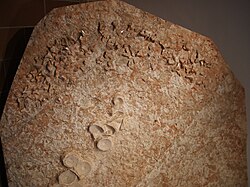
Picture of Eoptolamnidae
- Source
- Wikipedia/Commons
- Credit
- Ghedoghedo
- Licence
- CC BY-SA 3.0
- Commercial use
- the licence allows it
No 3D scan of Eoptolamnidae was found in MorphoSource and Sketchfab.
Smithsonian Open Access was not reached for this taxon, so this list is what the others held rather than everything there is.
The description on this site
- Licence
- CC BY-SA 4.0
This is what the site found, which is not the same as what exists.
Keep going
What may have been alongside itLamniformes through timeFormations of the Late CretaceousThe world it lived on
Occurrence data from the Paleobiology Database, CC BY 4.0. Kriwet et al. 2008