Fern indet.
No picture of Fern indet. was found. Wikidata was searched and had none. iDigBio and GBIF were not searched: the Paleobiology Database does not place Fern indet. firmly enough to tell it from something else bearing the same name, and a search on the name alone returns whichever of them was photographed. Wikipedia and Smithsonian Open Access did not answer, so this is what the others held rather than everything there is.
Time the record covers
At least 63 million years on record.
The record covers at least 66 Mya to 2.58 Mya. No occurrence read is dated outside 143.1 Mya to 0 Mya.
63 occurrences of Fern indet. on record, most of them in the Miocene. Bar height is expected occurrences, not a count: each fossil is spread across the span it is dated to, so a tall narrow bar means tight dating and a low wide one means loose.
When
63 occurrences- Early Cretaceousunder 1%
- Late Cretaceousunder 1%
- Eocene2%
- Oligocene21%
- Miocene63%
- Pliocene12%
- Pleistocene2%
These are dates about fossils, not the animal: the record can only begin after it arose and end before it died out, so either end may reach further. Shares are expected occurrences: a fossil dated to a span is counted partly in each period it straddles. More on what this infers.
Found in
8 formations
- Culebra Formation17
- San Sebastian Formation · Rio Guatemala Group13
- Cucaracha Formation8
- Gatun Formation7
- La Boca Formation7
- Iguincha Formation · Nabon Group5
Loading coastlines…
The named rock units Fern indet. has been recovered from, largest first. Drawn where the rock is now, not where it formed. 4 occurrences have no formation on record, which is common for older literature.
Fern indet. and its relatives
MioceneWhere Fern indet. and its relatives were recorded in the Miocene.
Found in the same rock
120 taxa- Plantae43 sites
- <Fern>41 sites
- Rhizophora39 sites
- Cyathea27 sites
- Arecaceae20 sites
- Pteris18 sites
- Alchornea17 sites
- Manicaria17 sites
- Selaginella17 sites
- Malvaceae14 sites
- Engelhardia13 sites
- Ilex13 sites
- Polypodiaceae13 sites
- Tetrorchidium sp.13 sites
- cf. Antrophyum sp.12 sites
- Lycopodium12 sites
- Synechanthus sp.12 sites
- Cryosophila sp.11 sites
- Pelliciera9 sites
- Crudia sp.8 sites
- Malpighiaceae7 sites
- Myrtaceae7 sites
- Poaceae7 sites
- Catostemma sp.6 sites
The Paleobiology Database records 45 sites for Fern indet., and this reads all of them. The number is how many of those sites it was catalogued from too. The 24 sharing the most are listed.
This is not a list of everything alive at the time. It is only what has come out of the same ground as this animal and been written down.
Entered from
9 references- Studies in Neotropical Paleobotany. V. The Lower Miocene Communities of Panama - The Culebra Formation.17
- Studies in neotropical paleobotany. I. The Oligocene communities of Puerto Rico13
- Studies in Neotropical Paleobotany. X. The Pliocene communities of Panama - Composistion, numerical representations, and paleocommunity paleoenvironmental reconstructions.8
- Studies in Neotropical Paleobotany. VI. The Lower Miocene Communities of Panama - The Cucaracha Formation.8
- Studies in neotropical paleobotany. VII. The Lower Miocene communities of Panama - the La Boca Formation7
- Middle to late Miocene environments of southern Ecuador: temperature, elevation and fossil plants of the Nabon Basin.6
- Studies in neotropical paleobotany. XV. A Mio-Pliocene palynoflora from the eastern cordillera, Bolivia: Implications for the uplift history of the Central Andes.2
- Studies in neotropical paleobotany. XIV. A palynoflora from the Middle Eocene Saramaguacan Formation of Cuba1
- A review of the fossil flora of the West Indies, with descriptions of new species1
Each of the 63 occurrences read was entered from one of these publications, ordered by how many each accounts for. This is not a search for papers mentioning the name. Entries link to doi.org where the Paleobiology Database holds an identifier, and to its own record where it does not. Relayed as the Paleobiology Database holds them, not checked against what they resolve to.
Media and terms
Media content1
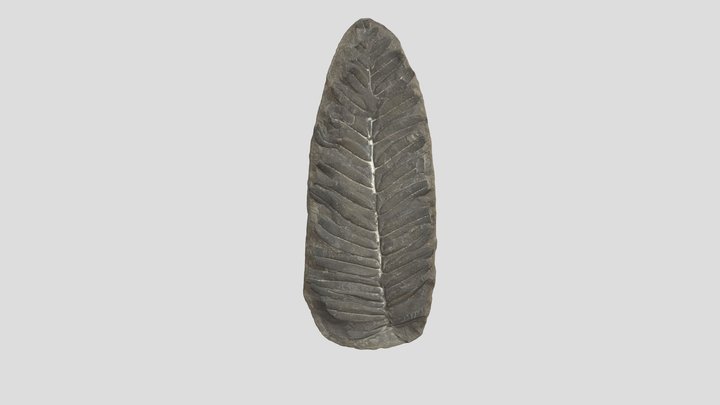
3D model
- Source
- Sketchfab
- Credit
- UIPaleoRepository
- Licence
- CC Attribution
- Commercial use
- cannot be read from the licence given — check the record
No picture of Fern indet. was found. Wikidata was searched and had none.
iDigBio and GBIF were not searched: the Paleobiology Database does not place Fern indet. firmly enough to tell it from something else bearing the same name, and a search on the name alone returns whichever of them was photographed.
Wikipedia and Smithsonian Open Access did not answer, so this is what the others held rather than everything there is.
Smithsonian Open Access was not reached for this taxon, so this list is what the others held rather than everything there is.
This is what the site found, which is not the same as what exists.
Keep going
What may have been alongside itFormations of the MioceneThe world it lived on
Occurrence data from the Paleobiology Database, CC BY 4.0.