Forficula
Forficula is a genus of earwigs in the family Forficulidae; it was first described in 1758 by Swedish biologist Carl Linnaeus in the 10th edition of Systema Naturae. The name Forficula is Latin for earwig, formerly small pinchers. The genus spans all continents except Antarctica and is native to Afro-Eurasia, primarily Europe. The best known species is Forficula auricularia and is a common household pest.

ArtMechanic · CC BY-SA 3.0 · via Wikipedia/Commons. May be a photograph of a specimen, or an artist’s reconstruction — an interpretation of a skeleton, since colour and soft tissue are almost never preserved.
On record
Recorded, not inferred- Sits inside
- ForficulinaePBDB
- Motility
- actively mobilePBDB, for Arthropoda
- Environment
- terrestrialPBDB, for Insecta
Time the record covers
At least 46 million years on record.
The record covers at least 48.07 Mya to 1.8 Mya. No occurrence read is dated outside 56 Mya to 129 ka.
20 occurrences of Forficula on record, most of them in the Eocene. The Paleobiology Database records this as a living group, and the chart stops with its fossils rather than at the present. Bar height is expected occurrences, not a count: each fossil is spread across the span it is dated to, so a tall narrow bar means tight dating and a low wide one means loose.
When
20 occurrences- Eocene65%
- Oligocene20%
- Miocene10%
- Pleistocene5%
These are dates about fossils, not the animal: the record can only begin after it arose and end before it died out, so either end may reach further. Shares are expected occurrences: a fossil dated to a span is counted partly in each period it straddles. More on what this infers.
Found in
7 formations
- Ølst Formation4
- Niveau du gypse d'Aix Formation2
- Upper Freshwater-Molasse Formation2
- Eifel Formation1
- Castle Eden Fissure-Fill Formation1
- Fur Formation1
Loading coastlines…
The named rock units Forficula has been recovered from, largest first. Drawn where the rock is now, not where it formed. 8 occurrences have no formation on record, which is common for older literature.
Forficula and its relatives
EoceneWhere Forficula and its relatives were recorded in the Eocene.
Found in the same rock
912 taxa- Curculionidae3 sites
- Acrididae2 sites
- Amphientomum paradoxum2 sites
- Aphanus pulchellus2 sites
- Apidae2 sites
- Apis2 sites
- Bibio2 sites
- Bibio celasensis2 sites
- Bibio curtisi2 sites
- Bibio curtisii2 sites
- Bibio spectabilis2 sites
- Bibionidae2 sites
- Cydnopsis pygmaea2 sites
- Dicranomyia (Dicranomyia) lobata2 sites
- Diptera2 sites
- Dolichoderus balticus2 sites
- Entimini2 sites
- Epipsocus avus2 sites
- Exoprosopa romani2 sites
- Formica sepulta2 sites
- Gryllidae2 sites
- Heterogaster pumilio2 sites
- Holocentropus affinis2 sites
- Mastotermes2 sites
The Paleobiology Database records 16 sites for Forficula, and this reads all of them. The number is how many of those sites it was catalogued from too. The 24 sharing the most are listed.
This is not a list of everything alive at the time. It is only what has come out of the same ground as this animal and been written down.
Entered from
8 references- Insekten aus der Fur-Formation von Dänemark (Moler, ob. Paleozän/unt. Eozän ?) 2. Dermaptera6
- Dermaptera (earwigs) preserved in amber, from Prussia5
- Réflexion paléo-entomologique sur la systématique des Dermaptères. Quatre nouveaux forficules fossiles de l'Oligocène de Provence (France)3
- Heer, 18642
- The earwigs (Dermaptera: Forficulidae) from the middle Eocene Eckfeld maar, Germany1
- Les insectes fossiles des terrains oligocènes de France1
- Quelques insectes du Pliocène supérieur du Comté de Durham1
- Prodromo di un'entomologia fossile del M. Bolca1
Each of the 20 occurrences read was entered from one of these publications, ordered by how many each accounts for. This is not a search for papers mentioning the name. Entries link to doi.org where the Paleobiology Database holds an identifier, and to its own record where it does not. Relayed as the Paleobiology Database holds them, not checked against what they resolve to.
Media and terms
Media content2
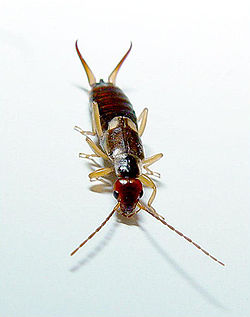
Picture of Forficula
- Source
- Wikipedia/Commons
- Credit
- ArtMechanic
- Licence
- CC BY-SA 3.0
- Commercial use
- the licence allows it
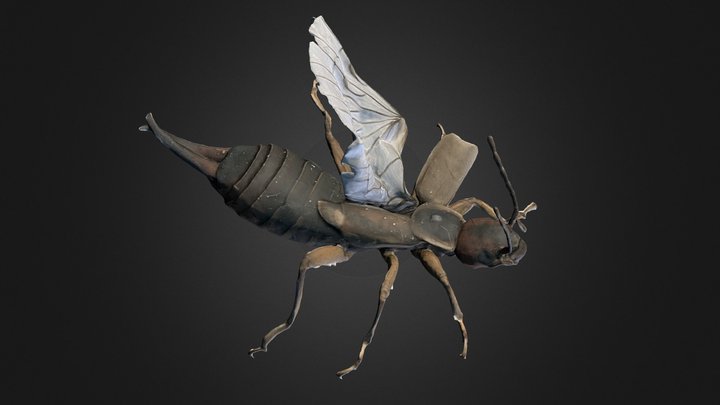
3D model
- Source
- Sketchfab
- Licence
- CC Attribution
- Commercial use
- cannot be read from the licence given — check the record
Smithsonian Open Access and MorphoSource were not reached for this taxon, so this list is what the others held rather than everything there is.
The description on this site
- Source
- Wikipedia, “Forficula”
- Licence
- CC BY-SA 4.0
This is what the site found, which is not the same as what exists.
Keep going
What may have been alongside itForficulinae through timeFormations of the EoceneThe world it lived on
Occurrence data from the Paleobiology Database, CC BY 4.0. Linnaeus 1758