Formica
Searched as Formica pinguis oeningensis. The Paleobiology Database treats Formica as the accepted name.
Formica is a genus of ants of the subfamily Formicinae, including species commonly known as wood ants, mound ants, thatching ants, and field ants. Formica is the type genus of the Formicidae, and of the subfamily Formicinae. The type species of genus Formica is the European red wood ant Formica rufa. Ants of this genus tend to be between 4 and 8 mm long.

Richard Bartz, Munich Makro Freak · CC BY-SA 2.5 · via Wikipedia/Commons. May be a photograph of a specimen, or an artist’s reconstruction — an interpretation of a skeleton, since colour and soft tissue are almost never preserved.
On record
Recorded, not inferred- Sits inside
- FormiciniPBDB
- Motility
- actively mobilePBDB, for Arthropoda
- Environment
- terrestrialPBDB, for Insecta
Time the record covers
At most 1.2 million years on record.
Every occurrence read is dated to somewhere between 12.8 Mya and 11.63 Mya, and nothing in the dating separates them, so that window is what the record shows rather than a span.
3 occurrences of Formica on record, most of them in the Miocene. The Paleobiology Database records this as a living group, and the chart stops with its fossils rather than at the present. Bar height is expected occurrences, not a count: each fossil is spread across the span it is dated to, so a tall narrow bar means tight dating and a low wide one means loose.
When
3 occurrences- Miocene100%
These are dates about fossils, not the animal: the record can only begin after it arose and end before it died out, so either end may reach further. Shares are expected occurrences: a fossil dated to a span is counted partly in each period it straddles. More on what this infers.
Found in
1 formation
Loading coastlines…
The named rock units Formica has been recovered from, largest first. Drawn where the rock is now, not where it formed.
Formica and its relatives
MioceneWhere Formica and its relatives were recorded in the Miocene.
Found in the same rock
3,447 taxa- Ctenobethylus goepperti22 sites
- Prenolepis henschei21 sites
- Lasius schiefferdeckeri20 sites
- Yantaromyrmex geinitzi18 sites
- Gesomyrmex hoernesi16 sites
- Dolichoderus tertiarius12 sites
- Nylanderia pygmaea12 sites
- Tetraponera simplex12 sites
- Eocamponotus mengei10 sites
- Pachycondyla succinea10 sites
- Plagiolepis klinsmanni10 sites
- Plagiolepis kuenowi9 sites
- Tetraponera ocellata9 sites
- Acrididae8 sites
- Curculionidae8 sites
- Dolichoderus balticus8 sites
- Gnamptogenys europaea8 sites
- Bradoponera meieri7 sites
- Plectrocnemia lata7 sites
- Wormaldia aequalis7 sites
- Yantaromyrmex constrictus7 sites
- Aphaenogaster mayri6 sites
- Brachycera6 sites
- Cataglyphoides constricta6 sites
The Paleobiology Database records 79 sites for Formica, and this reads all of them. Of that, one read hit the database's own return limit, so every count below is a floor rather than a total. The number is how many of those sites it was catalogued from too. The 24 sharing the most are listed.
This is not a list of everything alive at the time. It is only what has come out of the same ground as this animal and been written down.
Entered from
1 referenceEach of the 3 occurrences read was entered from one of these publications, ordered by how many each accounts for. This is not a search for papers mentioning the name. Each entry links to the Paleobiology Database's own record for the work.
Media and terms
Media content2

Picture of Formica
- Source
- Wikipedia/Commons
- Credit
- Richard Bartz, Munich Makro Freak
- Licence
- CC BY-SA 2.5
- Commercial use
- the licence allows it
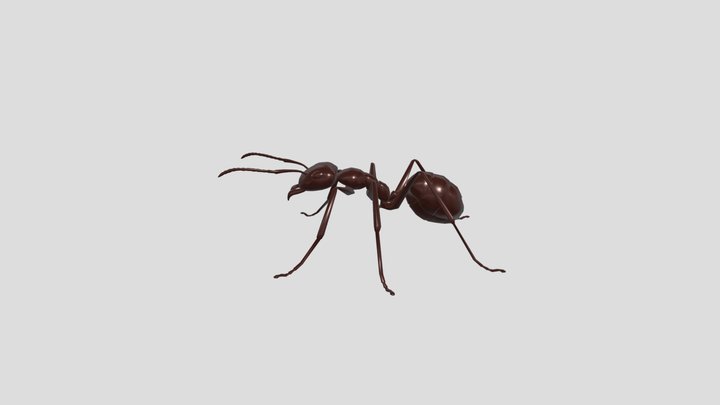
3D model
- Source
- Sketchfab
- Credit
- prof.minaudo
- Licence
- CC Attribution
- Commercial use
- cannot be read from the licence given — check the record
Smithsonian Open Access and MorphoSource were not reached for this taxon, so this list is what the others held rather than everything there is.
The description on this site
- Source
- Wikipedia, “Formica”
- Licence
- CC BY-SA 4.0
This is what the site found, which is not the same as what exists.
Keep going
What may have been alongside itFormicini through timeFormations of the MioceneThe world it lived on
Occurrence data from the Paleobiology Database, CC BY 4.0. Linnaeus 1758