Gastropoda indet.
No picture of Gastropoda indet. was found. Wikipedia and Wikidata were searched and had none. iDigBio and GBIF were not searched: the Paleobiology Database does not place Gastropoda indet. firmly enough to tell it from something else bearing the same name, and a search on the name alone returns whichever of them was photographed. Smithsonian Open Access did not answer, so this is what the others held rather than everything there is.
Time the record covers
At least 515 million years on record.
The record covers at least 516 Mya to 11.7 ka. No occurrence read is dated outside 538.8 Mya to 0 Mya.
3,410 occurrences of Gastropoda indet. on record, most of them in the Devonian. Bar height is expected occurrences, not a count: each fossil is spread across the span it is dated to, so a tall narrow bar means tight dating and a low wide one means loose.
When
3,410 occurrences- Cambrianunder 1%
- Ordovician9%
- Silurian7%
- Devonian10%
- Carboniferous8%
- Permian5%
- Early Triassic3%
- Middle Triassic2%
- Late Triassic6%
- Early Jurassic7%
- Middle Jurassic5%
- Late Jurassic4%
- Early Cretaceous6%
- Late Cretaceous10%
- Paleocene3%
- Eocene5%
- Oligoceneunder 1%
- Miocene4%
- Pliocene1%
- Pleistocene3%
- Holoceneunder 1%
These are dates about fossils, not the animal: the record can only begin after it arose and end before it died out, so either end may reach further. Shares are expected occurrences: a fossil dated to a span is counted partly in each period it straddles. More on what this infers.
Found in
1055 formations
- Luning Formation81
- Carmel Formation60
- Jagüel Formation · Malargüe Group52
- Graham Formation · Cisco Group51
- Martinsburg Formation43
- Lefipán Formation41
Loading coastlines…
The named rock units Gastropoda indet. has been recovered from, largest first. Drawn where the rock is now, not where it formed. 1,031 further formations hold fewer occurrences each and are not listed. 745 occurrences have no formation on record, which is common for older literature.
Gastropoda indet. and its relatives
DevonianWhere Gastropoda indet. and its relatives were recorded in the Devonian.
Found in the same rock
1,987 taxa- Bivalvia76 sites
- Crinoidea65 sites
- Bryozoa53 sites
- Cadulus45 sites
- Turritella42 sites
- Brachiopoda38 sites
- Eburneopecten scintillatus38 sites
- Hipponix37 sites
- Anthozoa36 sites
- Naticidae36 sites
- Calyptraea (Trochita) aperta35 sites
- Nuculana35 sites
- Retusa galba32 sites
- Tellinidae30 sites
- Athleta petrosa28 sites
- Crurithyris28 sites
- Barbatia (Plagiarca) rhomboidella27 sites
- Nucula27 sites
- Rhombopora27 sites
- Bullata semen26 sites
- Cubitostrea sellaeformis26 sites
- Myrtaea (Myrtaea) curta26 sites
- Endopachys maclurii24 sites
- Ficus24 sites
The Paleobiology Database records at least 1,929 sites for Gastropoda indet., and this reads 240 of them. The number is how many of those sites it was catalogued from too. The 24 sharing the most are listed.
This is not a list of everything alive at the time. It is only what has come out of the same ground as this animal and been written down.
Entered from
1,203 references- Molluscs at the K/Pg boundary in Argentina: Extinction and recovery patterns. unpublished Ph.D. thesis113
- Paleozoic Gastropod, Rostroconch, Helcionelloid and Tergomyan Database (2006 - 2023)74
- Community structure, paleoecology, and depositional environments within the Upper Triassic Luning Formation of Nevada72
- Marine Jurassic Pelecypods From Central and Southern Utah69
- Paleoecology and taphonomy of faunal assemblages in gray "core" (offshore) shales in Midcontinent Pennsylvanian cyclothems45
- Early Jurassic Bivalvia of western Canada. Part I. Subclasses Palaeotaxodonta, Pteriomorpha, and Isofilibranchia39
- Faunal stability and environmental change in the middle Eocene Gulf Coastal Plain (PhD Thesis, Harvard University)37
- Taxonomy and Paleoecology of the Bivalves from the Finis Shale (Pennsylvanian) of Texas35
- Gradient ecology of a biotic invasion: biofacies of the type Cincinnatian Series (Upper Ordovician), Cincinnati, Ohio region, USA33
- Unpublished data31
- Early Jurassic Bivalvia of Argentina: Part 1, Stratigraphical introduction and superfamilies Nuculanacea, Arcacea, Mytilacea and Pinnacea30
- Rapid biotic rebound during the late Griesbachian indicates heterogeneous recovery patterns after the Permian-Triassic mass extinction28
Each of the 3,410 occurrences read was entered from one of these publications, ordered by how many each accounts for. This is not a search for papers mentioning the name. 1,191 further references are not listed. Entries link to doi.org where the Paleobiology Database holds an identifier, and to its own record where it does not. Relayed as the Paleobiology Database holds them, not checked against what they resolve to.
Media and terms
Media content1
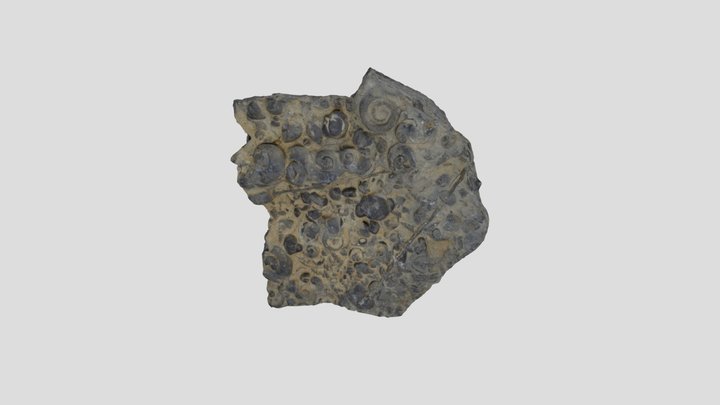
3D model
- Source
- Sketchfab
- Licence
- CC Attribution-NonCommercial
- Commercial use
- the licence does not allow it
No picture of Gastropoda indet. was found. Wikipedia and Wikidata were searched and had none.
iDigBio and GBIF were not searched: the Paleobiology Database does not place Gastropoda indet. firmly enough to tell it from something else bearing the same name, and a search on the name alone returns whichever of them was photographed.
Smithsonian Open Access did not answer, so this is what the others held rather than everything there is.
Smithsonian Open Access was not reached for this taxon, so this list is what the others held rather than everything there is.
This is what the site found, which is not the same as what exists.
Keep going
What may have been alongside itFormations of the DevonianThe world it lived on
Occurrence data from the Paleobiology Database, CC BY 4.0.