Glossus (Glossus)
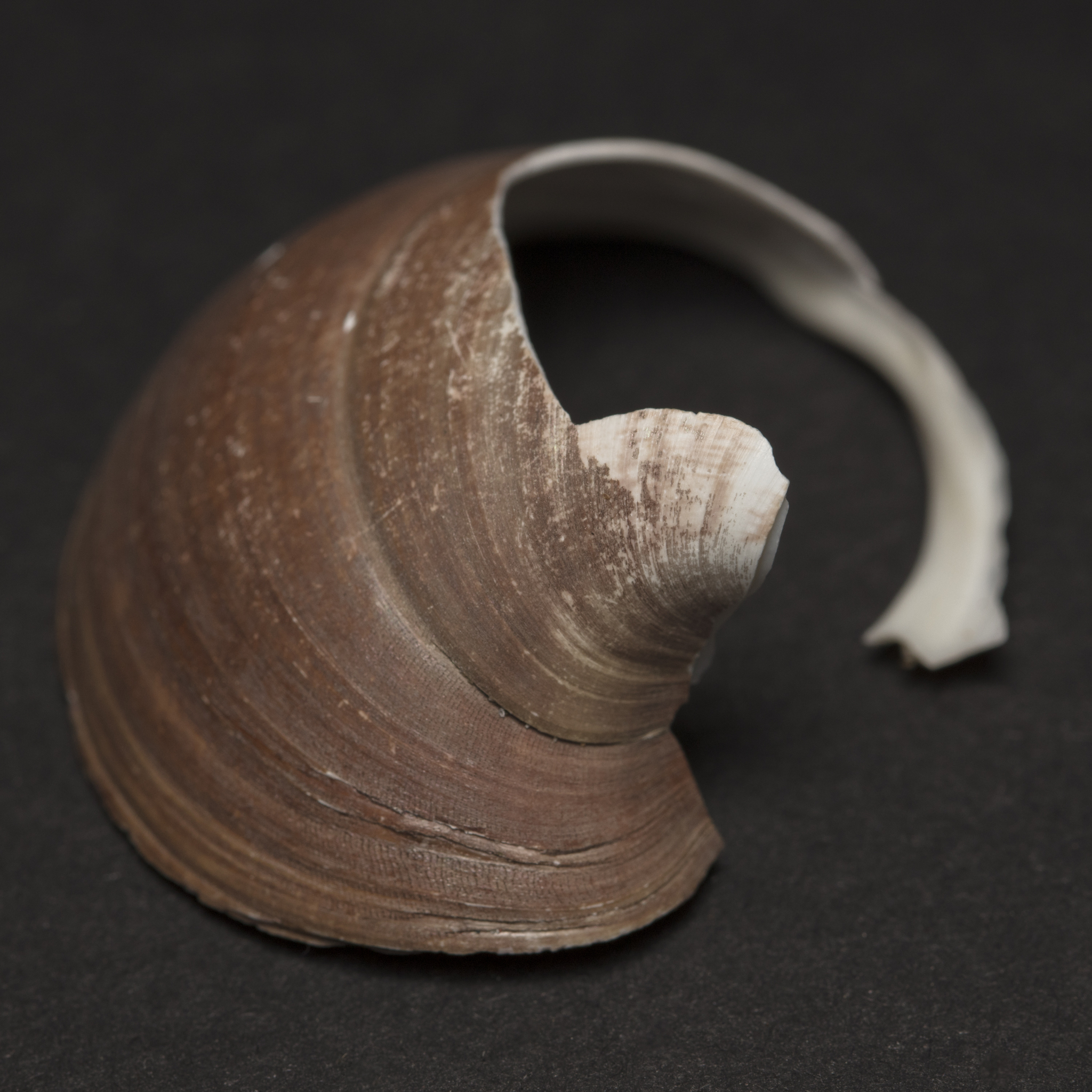
Tim Johnson · CC BY 4.0 · via GBIF. May be a photograph of a specimen, or an artist’s reconstruction — an interpretation of a skeleton, since colour and soft tissue are almost never preserved.
Time the record covers
At least 12 million years on record.
The record covers at least 15.98 Mya to 3.6 Mya. No occurrence read is dated outside 23.04 Mya to 2.58 Mya.
42 occurrences of Glossus (Glossus) on record, most of them in the Miocene. Bar height is expected occurrences, not a count: each fossil is spread across the span it is dated to, so a tall narrow bar means tight dating and a low wide one means loose.
When
42 occurrencesThese are dates about fossils, not the animal: the record can only begin after it arose and end before it died out, so either end may reach further. Shares are expected occurrences: a fossil dated to a span is counted partly in each period it straddles. More on what this infers.
Found in
6 formations
- Lillo Formation2
- Kattendijk Formation2
- Breda Formation2
- Pinczow Formation1
- Gram Formation1
- Werder Formation1
Loading coastlines…
The named rock units Glossus (Glossus) has been recovered from, largest first. Drawn where the rock is now, not where it formed. 33 occurrences have no formation on record, which is common for older literature.
Glossus (Glossus) and its relatives
MioceneWhere Glossus (Glossus) and its relatives were recorded in the Miocene.
Found in the same rock
821 taxa- Venus (Ventricoloidea) multilamella33 sites
- Varicorbula gibba32 sites
- Limopsis29 sites
- Limopsis (Limopsis) aurita29 sites
- Ringicula buccinea29 sites
- Scapharca (Scapharca) diluvii29 sites
- Astarte (Astarte) radiata28 sites
- Lentigodentalium28 sites
- Spiroplectammina carinata28 sites
- Turritella28 sites
- Yoldiella28 sites
- Elphidium27 sites
- Gemmula (Gemmula)27 sites
- Gouldia (Gouldia) minima27 sites
- Reussirella27 sites
- Saccella westendorpi27 sites
- Bittium spina26 sites
- Cibicides lobatulus26 sites
- Fusiturris26 sites
- Lenticulina (Lenticulina)26 sites
- Pyrgolampros26 sites
- Babylonella25 sites
- Dentalina konincki25 sites
- Globulina gibba25 sites
The Paleobiology Database records 37 sites for Glossus (Glossus), and this reads all of them. Of that, one read hit the database's own return limit, so every count below is a floor rather than a total. The number is how many of those sites it was catalogued from too. The 24 sharing the most are listed.
This is not a list of everything alive at the time. It is only what has come out of the same ground as this animal and been written down.
Entered from
10 references- Die Fauna des marinen Miozäns von Kevelaer (Niederrhein). Band 2 Bivalvia, Scaphopoda, Cephalopoda, Bryozoa, Annelida, Brachiopoda28
- The Neogene Bivalvia (Heterodonta and Anomalodesmata) and Scaphopoda from Kallo and Doel (Oost Vlaanderen, Belgium)4
- The mollusc fauna of the Stemerdink Bed (Miocene, Reinbekian) from outcrops in the Slinge brook at Winterswijk-Brinkheurne (The Netherlands, province of Gelderland)2
- Lithofazielle Entwicklung und Molluskenfauna des oberen Badeniens (Miozän M4d) in dem Gebiet Bratislava-Devinska Nova Ves [Lithofacies and mollusc fauna of the Upper Badenian in the Bratislava-Devinska Nova Ves area]2
- Die molluskenfauna (Hermmorium, Untermiozän) aus der Kiesgrube kirnke bei Werder (Nordwest-Niedersachsen)1
- The Marine Gram Formation at Gram, Denmark: Late Miocene Geology and Palaeontology1
- The bivalvia (Mollusca) from the Upper Miocene of the Sais Basin (Southern Rifian Corridor, Morocco). Palaeobiogeography and paleoecology1
- Bivalve Molluscs from the Badenian of Northwestern Bulgaria1
- Middle Miocene bivalve faunas from the carbonate deposits of Poland (Central Paratethys)1
- La fauna tortoniana del T. Stirone (limite Parmense-Piacentino)1
Each of the 42 occurrences read was entered from one of these publications, ordered by how many each accounts for. This is not a search for papers mentioning the name. Entries link to doi.org where the Paleobiology Database holds an identifier, and to its own record where it does not. Relayed as the Paleobiology Database holds them, not checked against what they resolve to.
Media and terms
Media content1
Picture of Glossus (Glossus)
- Source
- GBIF
- Credit
- Tim Johnson
- Licence
- CC BY 4.0
- Commercial use
- the licence allows it
No 3D scan was found. Smithsonian Open Access, MorphoSource and Sketchfab were all searched.
This is what the site found, which is not the same as what exists.
Keep going
What may have been alongside itFormations of the MioceneThe world it lived on
Occurrence data from the Paleobiology Database, CC BY 4.0.