Hemicardium

Not Hemicardium. This is Unio tumidus Philipsson, 1788, a relative.
-919270953 · CC BY 4.0 · via GBIF. May be a photograph of a specimen, or an artist’s reconstruction — an interpretation of a skeleton, since colour and soft tissue are almost never preserved.
On record
Recorded, not inferred- Sits inside
- CardiidaePBDB
- Diet
- suspension feederPBDB, for Cardiidae
- Life habit
- infaunalPBDB, for Cardiidae
- Motility
- facultatively mobilePBDB, for Cardiidae
- Vision
- blindPBDB, for Bivalvia
Time the record covers
At least 428 million years on record.
The record covers at least 430.6 Mya to 2.58 Mya. No occurrence read is dated outside 432.9 Mya to 11.7 ka.
11 occurrences of Hemicardium on record, most of them in the Pliocene. The Paleobiology Database records this as a living group. Bar height is expected occurrences, not a count: each fossil is spread across the span it is dated to, so a tall narrow bar means tight dating and a low wide one means loose.
When
11 occurrences- Silurian18%
- Eocene9%
- Pliocene41%
- Pleistocene31%
These are dates about fossils, not the animal: the record can only begin after it arose and end before it died out, so either end may reach further. Shares are expected occurrences: a fossil dated to a span is counted partly in each period it straddles. More on what this infers.
Found in
6 formations
- Togopi Formation3
- Talar Formation2
- Motol Formation1
- Chatti Mudstone Formation1
- Ormara & Jiwani Formation1
- Orizzonte di Roncà Formation1
Loading coastlines…
The named rock units Hemicardium has been recovered from, largest first. Drawn where the rock is now, not where it formed. 2 occurrences have no formation on record, which is common for older literature.
Hemicardium and its relatives
PlioceneWhere Hemicardium and its relatives were recorded in the Pliocene.
Found in the same rock
206 taxa- Natica5 sites
- Anadara4 sites
- Anadara (Anadara) antiquata4 sites
- Anadara (Cunearca) ferruginea4 sites
- Architectonica4 sites
- Cardium4 sites
- Chlamys4 sites
- Clementia (Clementia) papyracea4 sites
- Conus4 sites
- Dosinia4 sites
- Gyrineum4 sites
- Mactrinula4 sites
- Nucula4 sites
- Nuculana4 sites
- Paphia4 sites
- Raeta4 sites
- Solecurtus4 sites
- Solen4 sites
- Tellinidae4 sites
- Timoclea4 sites
- Tonna4 sites
- Turridae4 sites
- Turritella4 sites
- Amiantis3 sites
The Paleobiology Database records 8 sites for Hemicardium, and this reads all of them. The number is how many of those sites it was catalogued from too. The 24 sharing the most are listed.
This is not a list of everything alive at the time. It is only what has come out of the same ground as this animal and been written down.
Entered from
6 references- Neogene and Quaternary Mollusca from the Makran Coast, Pakistan4
- Preliminary notes on fossil records of East Malaysia and Brunei3
- Bivalvia communities of Bohemian type from the Silurian and Lower Devonian carbonate facies1
- Silurian field excursions: Prague Basin (Barrandian), Bohemia1
- Molluschi delle spiagge emerse del Mar Rosso e dell'Oceano Indiano, parte II (Lamellibranchi) [Mollusks from raised beaches bordering the Red Sea and the Indian Ocean, part II (bivalves)]1
- Nuove aggiunte alla fauna Eocena del Veneto1
Each of the 11 occurrences read was entered from one of these publications, ordered by how many each accounts for. This is not a search for papers mentioning the name. Each entry links to the Paleobiology Database's own record for the work.
Media and terms
Media content3
Picture of Unio tumidus Philipsson, 1788
- Source
- GBIF
- Credit
- -919270953
- Licence
- CC BY 4.0
- Commercial use
- the licence allows it
CT scan
- Source
- MorphoSource
- Credit
- MCZ Malacology
- Licence
- In Copyright
- Commercial use
- cannot be read from the licence given — check the record
- Specimen
- Corculum hemicardium · MCZ:Mala:192739
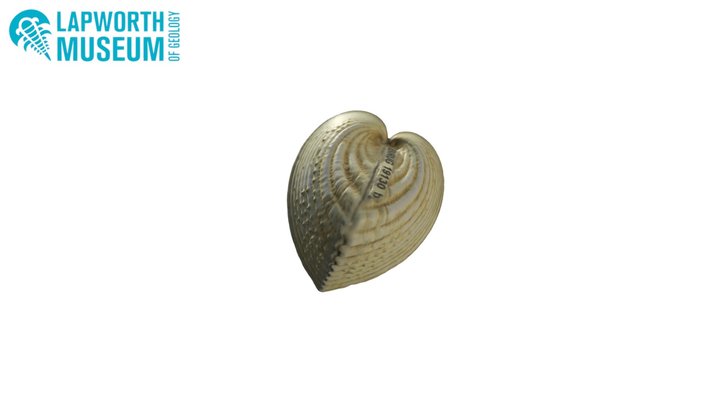
3D model
- Source
- Sketchfab
- Licence
- CC Attribution-NonCommercial
- Commercial use
- the licence does not allow it
Smithsonian Open Access was not reached for this taxon, so this list is what the others held rather than everything there is.
This is what the site found, which is not the same as what exists.
Keep going
What may have been alongside itCardiidae through timeFormations of the PlioceneThe world it lived on
Occurrence data from the Paleobiology Database, CC BY 4.0. (Schweigger 1820)