Holmia
Holmia is a genus of a well known group of extinct arthropods, the trilobites, that lived during the Lower Cambrian (Atdabanian) in what are now Scandinavia, Poland and Morocco.

Johan Kiaer (1916) · Public Domain · via Wikipedia/Commons. May be a photograph of a specimen, or an artist’s reconstruction — an interpretation of a skeleton, since colour and soft tissue are almost never preserved.
On record
Recorded, not inferred- Sits inside
- HolmiidaePBDB
- Diet
- deposit feederPBDB, for Redlichiida
- Life habit
- low-level epifaunalPBDB, for Redlichiida
- Motility
- fast-movingPBDB, for Redlichiida
- Vision
- well-developedPBDB, for Holmiidae
- Environment
- marinePBDB, for Trilobita
Time the record covers
At least 3.9 million years on record.
The record covers at least 516 Mya to 512.1 Mya. No occurrence read is dated outside 538.8 Mya to 506.5 Mya.
13 occurrences of Holmia on record, most of them in the Cambrian. Bar height is expected occurrences, not a count: each fossil is spread across the span it is dated to, so a tall narrow bar means tight dating and a low wide one means loose.
When
13 occurrences- Cambrian100%
These are dates about fossils, not the animal: the record can only begin after it arose and end before it died out, so either end may reach further. Shares are expected occurrences: a fossil dated to a span is counted partly in each period it straddles. More on what this infers.
Found in
9 formations
- Ringstrand Formation4
- Ocieseki Sandstone Formation2
- Issafen Formation1
- Gislov Formation1
- Bråstad Shale Formation1
- Holmia Shale Formation1
Loading coastlines…
The named rock units Holmia has been recovered from, largest first. Drawn where the rock is now, not where it formed.
Holmia and its relatives
CambrianWhere Holmia and its relatives were recorded in the Cambrian.
Found in the same rock
58 taxa- Ellipsocephalus4 sites
- Kjerulfia lata4 sites
- Kjerulfia3 sites
- Strenuaeva primaeva3 sites
- Ellipsostrenua linnarssoni2 sites
- Ellipsostrenua sularpensis2 sites
- Runcinodiscus index2 sites
- Schmidtiellus2 sites
- Torellella laevigata2 sites
- Volborthella tenuis2 sites
- Acrothele bellapunctata1 site
- Andalusiana cornuta1 site
- Andalusiana telesto1 site
- Atops1 site
- Bondonella1 site
- Bondonella typica1 site
- Brachiopoda1 site
- Calodiscus lobatus1 site
- Conocoryphidae1 site
- Cruziana1 site
- Cuneoaxiella grandis1 site
- Davidonia puppis1 site
- Ellipsocephalus gripi1 site
- Gastropoda1 site
The Paleobiology Database records 11 sites for Holmia, and this reads all of them. The number is how many of those sites it was catalogued from too. The 24 sharing the most are listed.
This is not a list of everything alive at the time. It is only what has come out of the same ground as this animal and been written down.
Entered from
10 references- The shelly fauna and biostratigraphy of the lower Cambrian (provisional series 2, stage 4) Evjevik Member, Ringstrand Formation in the Mjøsa area, Norway2
- Olenellid trilobites from the uppermost Lower Cambrian Evjevik Limestone at Tømten in Ringsaker, Norway2
- The Lower Cambrian Holmia fauna at Tomten in Norway2
- Ellipsocephalid trilobites from Cambrian Series 2 and Stage 41
- Redescription of Holmia inusitata (Trilobita) from the Lower Cambrian of Scandinavia1
- Neltneriidae and Holmiidae (Trilobita) from Morocco and the problem of Early Cambrian intercontinental correlation1
- A trilobite with North American affinity in the Lower Cambrian of Poland1
- Uppermost lower Cambrian biostratigraphy in Scania, Sweden1
- Jednostki litostratygraficzne kambru i gornego prekambru Gor Swietokrzyskich [Cambrian and Upper Precambrian lithostratigraphic units in the Holy Cross Mountains]1
- Medial Lower Cambrian trilobites from the Mackenzie mountains northwestern Canada1
Each of the 13 occurrences read was entered from one of these publications, ordered by how many each accounts for. This is not a search for papers mentioning the name. Entries link to doi.org where the Paleobiology Database holds an identifier, and to its own record where it does not. Relayed as the Paleobiology Database holds them, not checked against what they resolve to.
Media and terms
Media content2

Picture of Holmia
- Source
- Wikipedia/Commons
- Credit
- Johan Kiaer (1916)
- Licence
- Public Domain
- Commercial use
- the licence allows it
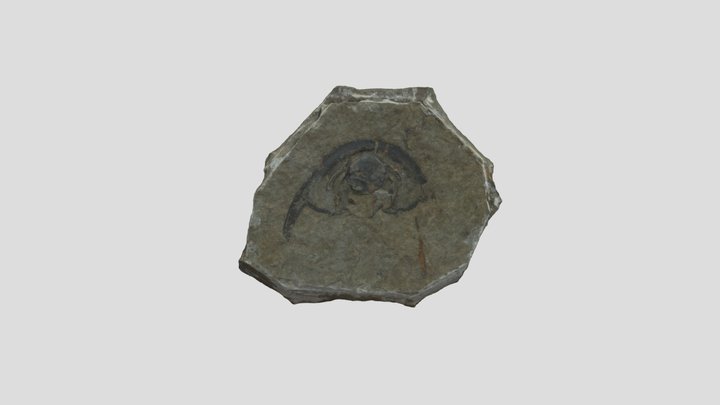
3D model
- Source
- Sketchfab
- Licence
- CC Attribution-NonCommercial
- Commercial use
- the licence does not allow it
The description on this site
- Licence
- CC BY-SA 4.0
This is what the site found, which is not the same as what exists.
Keep going
What may have been alongside itHolmiidae through timeFormations of the CambrianThe world it lived on
Occurrence data from the Paleobiology Database, CC BY 4.0. (Matthew 1890)