Homogalax
Homogalax is an extinct genus of tapir-like odd-toed ungulate. It was described on the basis of several fossil finds from the northwest of the United States, whereby the majority of the remains come from the state of Wyoming. The finds date to the Lower Eocene between 56 and 48 million years ago. In general, Homogalax was very small, only reaching the weight of today's peccaries, with a maximum of 15 kg. Phylogenetic analysis suggests the genus to be a basal member of the clade that includes today's rhinoceros and tapirs. In contrast to these, Homogalax was adapted to fast locomotion.

Bloopityboop · CC BY-SA 4.0 · via Wikipedia/Commons. May be a photograph of a specimen, or an artist’s reconstruction — an interpretation of a skeleton, since colour and soft tissue are almost never preserved.
On record
Recorded, not inferred- Sits inside
- TapiromorphaPBDB
- Diet
- browserPBDB, for Tapiromorpha
- Life habit
- ground dwellingPBDB, for Tapiromorpha
- Motility
- actively mobilePBDB, for Osteichthyes
- Environment
- terrestrialPBDB, for Eutheria
Time the record covers
At most 19 million years on record.
Every occurrence read is dated to somewhere between 56 Mya and 37.71 Mya, and nothing in the dating separates them, so that window is what the record shows rather than a span.
172 occurrences of Homogalax on record, most of them in the Eocene. Bar height is expected occurrences, not a count: each fossil is spread across the span it is dated to, so a tall narrow bar means tight dating and a low wide one means loose.
When
172 occurrences- Eocene100%
These are dates about fossils, not the animal: the record can only begin after it arose and end before it died out, so either end may reach further. Shares are expected occurrences: a fossil dated to a span is counted partly in each period it straddles. More on what this infers.
Found in
12 formations
- Willwood Formation143
- Wind River Formation7
- DeBeque Formation6
- Wasatch Formation3
- Wutu Formation3
- Indian Meadows Formation2
Loading coastlines…
The named rock units Homogalax has been recovered from, largest first. Drawn where the rock is now, not where it formed.
Homogalax and its relatives
EoceneWhere Homogalax and its relatives were recorded in the Eocene.
Found in the same rock
510 taxa- Diacodexis metsiacus82 sites
- Esthonyx bisulcatus72 sites
- Arenahippus pernix70 sites
- Arenahippus aemulor58 sites
- Didymictis protenus52 sites
- Phenacodus intermedius49 sites
- Allognathosuchus47 sites
- Viverravus acutus46 sites
- Cantius mckennai42 sites
- Haplomylus speirianus41 sites
- Hyopsodus loomisi41 sites
- Haplomylus scottianus39 sites
- Phenacodus vortmani35 sites
- Rodentia35 sites
- Cantius abditus34 sites
- Coryphodon eocaenus34 sites
- Crocodylia34 sites
- Tetonius matthewi34 sites
- Bunophorus etsagicus33 sites
- Ectocion osbornianus33 sites
- Coryphodon radians32 sites
- Testudines31 sites
- Arfia opisthotoma30 sites
- Paramys copei30 sites
The Paleobiology Database records 168 sites for Homogalax, and this reads all of them. The number is how many of those sites it was catalogued from too. The 24 sharing the most are listed.
This is not a list of everything alive at the time. It is only what has come out of the same ground as this animal and been written down.
Entered from
17 references- Stratigraphy and mammalian paleontology of the McCullough Peaks, northern Bighorn Basin, Wyoming: Implications for biochronology, basin development, and community reorganization across the Paleocene-Eocene boundary111
- Systematics and Evolution of Early Eocene Perissodactyla (Mammalia) in the Clarks Fork Basin, Wyoming31
- Early Eocene Mammalian Fauna of the Piceance Creek Basin. Northwestern Colorado6
- Geology and mammalian paleontology of the Wind River Formation, Laramie Basin, southeastern Wyoming4
- Laramide tectonics and deposition, Washakie Range and northwestern Wind River Basin, Wyoming4
- Early Eocene (Wasatchian) rodent assemblages from the Washakie Basin, Wyoming2
- Fossil Mammals from the Early Eocene Wutu Formation of Shandong Province2
- Distribution and stratigraphic correlation of upper Paleocene and lower Eocene fossil mammal and plant localities of the Fort Union, Willwood, and Tatman formations, southern Bighorn Basin, Wyoming2
- Fossil mammals of the early Wasatchian Powder River local fauna, Eocene of northeast2
- Part 7. Fossil Mammals from the Early Eocene Fisher/Sullivan Site1
- A peculiar minute Glires (Mammalia) from the early Eocene of Mongolia1
- The earliest rodents (Rodentia, Ctenodactyloidea) of Central Asia1
Each of the 172 occurrences read was entered from one of these publications, ordered by how many each accounts for. This is not a search for papers mentioning the name. 5 further references are not listed. Entries link to doi.org where the Paleobiology Database holds an identifier, and to its own record where it does not. Relayed as the Paleobiology Database holds them, not checked against what they resolve to.
Media and terms
Media content2

Picture of Homogalax
- Source
- Wikipedia/Commons
- Credit
- Bloopityboop
- Licence
- CC BY-SA 4.0
- Commercial use
- the licence allows it
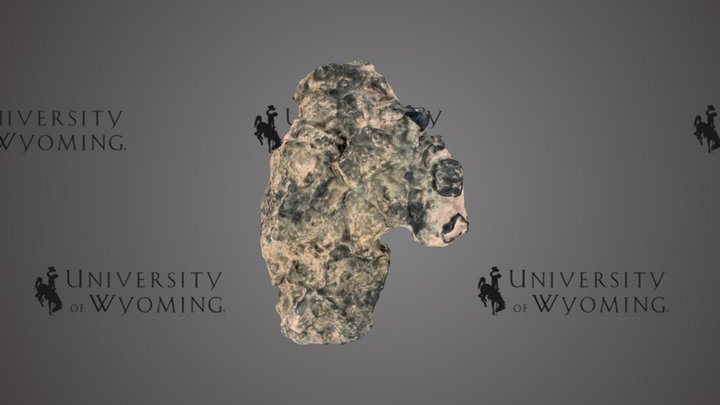
3D model
- Source
- Sketchfab
- Licence
- CC Attribution-NonCommercial
- Commercial use
- the licence does not allow it
The description on this site
- Source
- Wikipedia, “Homogalax”
- Licence
- CC BY-SA 4.0
This is what the site found, which is not the same as what exists.
Keep going
What may have been alongside itTapiromorpha through timeFormations of the EoceneThe world it lived on
Occurrence data from the Paleobiology Database, CC BY 4.0. Hay 1899