Nautilidae
A nautilus is any of the various species within the cephalopod family Nautilidae. This is the sole extant family of the superfamily Nautilaceae, suborder Nautilina, order Nautilida, and subclass Nautiloidea.

Manuae · CC BY-SA 3.0 · via Wikipedia/Commons. May be a photograph of a specimen, or an artist’s reconstruction — an interpretation of a skeleton, since colour and soft tissue are almost never preserved.
On record
Recorded, not inferred- Sits inside
- NautiloideaPBDB
- Diet
- carnivorePBDB
- Life habit
- nektonicPBDB
- Motility
- actively mobilePBDB
- Vision
- well-developedPBDB, for Cephalopoda
- Environment
- marinePBDB, for Cephalopoda
Time the record covers
At least 303 million years on record.
The record covers at least 303.7 Mya to 11.7 ka. No occurrence read is dated outside 306 Mya to 0 Mya.
1,082 occurrences of Nautilidae on record, most of them in the Late Cretaceous. The Paleobiology Database records this as a living group. Bar height is expected occurrences, not a count: each fossil is spread across the span it is dated to, so a tall narrow bar means tight dating and a low wide one means loose.
When
1,082 occurrences- Carboniferousunder 1%
- Permianunder 1%
- Early Triassicunder 1%
- Middle Triassic1%
- Late Triassicunder 1%
- Early Jurassic3%
- Middle Jurassic3%
- Late Jurassicunder 1%
- Early Cretaceous24%
- Late Cretaceous44%
- Paleocene5%
- Eocene11%
- Oligoceneunder 1%
- Miocene3%
- Plioceneunder 1%
- Pleistoceneunder 1%
- Holocene3%
These are dates about fossils, not the animal: the record can only begin after it arose and end before it died out, so either end may reach further. Shares are expected occurrences: a fossil dated to a span is counted partly in each period it straddles. More on what this infers.
Found in
232 formations
- Prairie Bluff Formation · Selma Group51
- London Clay Formation20
- Corsicana Marl Formation13
- Castle Hayne Formation · Claiborne Group11
- Providence Formation10
- Nacatoch Sand Formation9
Loading coastlines…
The named rock units Nautilidae has been recovered from, largest first. Drawn where the rock is now, not where it formed. 208 further formations hold fewer occurrences each and are not listed. 490 occurrences have no formation on record, which is common for older literature.
Nautilidae and its relatives
Late CretaceousWhere Nautilidae and its relatives were recorded in the Late Cretaceous.
Found in the same rock
2,558 taxa- Turritella74 sites
- Exogyra (Exogyra) costata69 sites
- Serpula65 sites
- Eutrephoceras dekayi61 sites
- Cardium58 sites
- Crassatella vadosa58 sites
- Bryozoa57 sites
- Nuculana55 sites
- Anomia argentaria54 sites
- Veniella conradi54 sites
- Idonearca capax52 sites
- Turritella vertebroides52 sites
- Cliona50 sites
- Bellifusus49 sites
- Ostrea49 sites
- Crenella serica46 sites
- Pycnodonte vesicularis45 sites
- Turritella trilira45 sites
- Anchura44 sites
- Gryphaeostrea vomer44 sites
- Gyrodes petrosus44 sites
- Baculites42 sites
- Drilluta42 sites
- Arca40 sites
The Paleobiology Database records 930 sites for Nautilidae, and this reads 240 of them. Of that, one read hit the database's own return limit, so every count below is a floor rather than a total. The number is how many of those sites it was catalogued from too. The 24 sharing the most are listed.
This is not a list of everything alive at the time. It is only what has come out of the same ground as this animal and been written down.
Entered from
260 references- Melovye Nautiloidei174
- Upper Cretaceous (Maestrichtian) Mollusca from the Haustator bilira Assemblage Zone in the East Gulf Coastal Plain53
- Jura Vaudois et Neuchatelois32
- Die Nautiliden der oberen Kreide (Cenoman-Campan) von Süd- und Westrand des Münsterländer Beckens26
- Nautilus pompilius drifts on the west coast of Thailand26
- Zur systematik jungmesozoischer Nautiliden besonderer Berücksichtigung der iberischen Nautilinae d'Orb20
- A new genus of nautiloid in the Toarcian of the Iberian peninsula (Spain and Portugal)19
- Upper Cretaceous (Maestrichtian) larger invertebrate Fossils from the Haustator bilira Assemblage Zone in the west gulf Coastal Plain18
- Personal Opinions17
- Late Cretaceous nautilids from northern Cantabria, Spain17
- The stratigraphical palaeontology of the Lower Greensand17
- Upper Cretaceous (Maestrichtian) larger invertebrates from the Haustator bilira Assemblage Zone in the Atlantic Coastal Plain with further data for the East Gulf16
Each of the 1,082 occurrences read was entered from one of these publications, ordered by how many each accounts for. This is not a search for papers mentioning the name. 248 further references are not listed. Entries link to doi.org where the Paleobiology Database holds an identifier, and to its own record where it does not. Relayed as the Paleobiology Database holds them, not checked against what they resolve to.
Media and terms
Media content2

Picture of Nautilidae
- Source
- Wikipedia/Commons
- Credit
- Manuae
- Licence
- CC BY-SA 3.0
- Commercial use
- the licence allows it
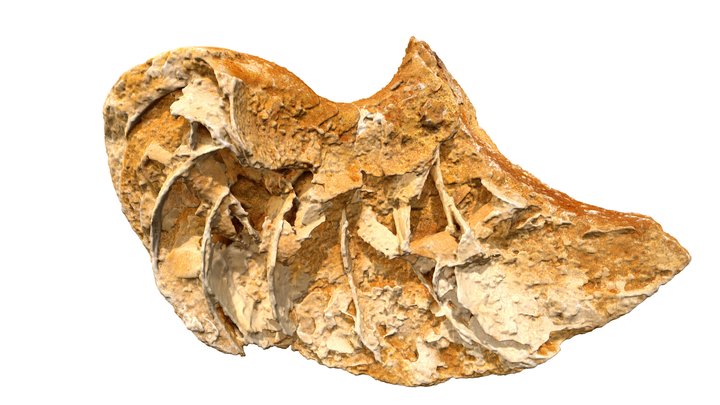
3D model
- Source
- Sketchfab
- Licence
- CC Attribution
- Commercial use
- cannot be read from the licence given — check the record
Smithsonian Open Access and MorphoSource were not reached for this taxon, so this list is what the others held rather than everything there is.
The description on this site
- Source
- Wikipedia, “Nautilus”
- Licence
- CC BY-SA 4.0
This is what the site found, which is not the same as what exists.
Keep going
What may have been alongside itNautiloidea through timeFormations of the Late CretaceousThe world it lived on
Occurrence data from the Paleobiology Database, CC BY 4.0. de Blainville 1825