Nautiloidea
Nautiloids are a group of cephalopods (Mollusca) which originated in the Late Cambrian and are represented today by the living Nautilus and Allonautilus. Fossil nautiloids are diverse and species rich, with over 2,500 recorded species. They flourished during the early Paleozoic era, when they constituted the main predatory animals. Early in their evolution, nautiloids developed an extraordinary diversity of shell shapes, including coiled morphologies and giant straight-shelled forms (orthocones). No orthoconic and only a handful of coiled species, the nautiluses, survive to the present day.

J. Baecker · Public Domain · via Wikipedia/Commons. May be a photograph of a specimen, or an artist’s reconstruction — an interpretation of a skeleton, since colour and soft tissue are almost never preserved.
On record
Recorded, not inferred- Sits inside
- NautilidaPBDB
- Diet
- carnivorePBDB, for Nautilida
- Life habit
- nektobenthicPBDB, for Nautilida
- Motility
- actively mobilePBDB, for Nautilida
- Vision
- well-developedPBDB, for Cephalopoda
- Environment
- marinePBDB, for Cephalopoda
Time the record covers
At least 477 million years on record.
The record covers at least 477.1 Mya to 11.7 ka. No occurrence read is dated outside 488.9 Mya to 0 Mya.
2,958 occurrences of Nautiloidea on record, most of them in the Late Cretaceous. The Paleobiology Database records this as a living group. Bar height is expected occurrences, not a count: each fossil is spread across the span it is dated to, so a tall narrow bar means tight dating and a low wide one means loose.
When
2,958 occurrences- Cambrianunder 1%
- Ordovician4%
- Silurian4%
- Devonian4%
- Carboniferous3%
- Permianunder 1%
- Early Triassicunder 1%
- Middle Triassicunder 1%
- Late Triassicunder 1%
- Early Jurassic7%
- Middle Jurassic8%
- Late Jurassic5%
- Early Cretaceous13%
- Late Cretaceous17%
- Paleocene8%
- Eocene15%
- Oligocene2%
- Miocene7%
- Plioceneunder 1%
- Pleistoceneunder 1%
- Holoceneunder 1%
These are dates about fossils, not the animal: the record can only begin after it arose and end before it died out, so either end may reach further. Shares are expected occurrences: a fossil dated to a span is counted partly in each period it straddles. More on what this infers.
Found in
686 formations
- Prairie Bluff Formation · Selma Group51
- London Clay Formation47
- Dhruma Formation · Shaqra Group34
- Clayton Formation · Midway Group27
- Jurensismergel Formation23
- Pietra Leccese Formation21
Loading coastlines…
The named rock units Nautiloidea has been recovered from, largest first. Drawn where the rock is now, not where it formed. 662 further formations hold fewer occurrences each and are not listed. 1,131 occurrences have no formation on record, which is common for older literature.
Nautiloidea and its relatives
Late CretaceousWhere Nautiloidea and its relatives were recorded in the Late Cretaceous.
Found in the same rock
2,097 taxa- Exogyra (Exogyra) costata75 sites
- Turritella73 sites
- Eutrephoceras dekayi64 sites
- Bryozoa63 sites
- Serpula63 sites
- Anomia argentaria59 sites
- Crassatella vadosa58 sites
- Idonearca capax56 sites
- Veniella conradi53 sites
- Turritella vertebroides52 sites
- Cardium51 sites
- Crenella serica51 sites
- Cliona50 sites
- Cubitostrea tecticosta47 sites
- Pycnodonte vesicularis47 sites
- Vertebrata47 sites
- Nuculana46 sites
- Turritella trilira45 sites
- Bellifusus43 sites
- Drilluta43 sites
- Gryphaeostrea vomer42 sites
- Gyrodes petrosus42 sites
- Neogastropoda42 sites
- Anchura40 sites
The Paleobiology Database records at least 1,713 sites for Nautiloidea, and this reads 240 of them. Of that, one read hit the database's own return limit, so every count below is a floor rather than a total. The number is how many of those sites it was catalogued from too. The 24 sharing the most are listed.
This is not a list of everything alive at the time. It is only what has come out of the same ground as this animal and been written down.
Entered from
700 references- Melovye Nautiloidei212
- Rulleau, 200877
- Die Nautilen des weissen Jura75
- Tertiary nautiloids of the Americas57
- Upper Cretaceous (Maestrichtian) Mollusca from the Haustator bilira Assemblage Zone in the East Gulf Coastal Plain53
- Revision of the Early Cretaceous genera Heminautilus Spath, 1927, and Josanautilus Martínez & Grauges, 2006 (Nautilida, Cenoceratidae)49
- Le Jurassique D`Arabie Centrale49
- Gradient ecology of a biotic invasion: biofacies of the type Cincinnatian Series (Upper Ordovician), Cincinnati, Ohio region, USA39
- Stratigraphie und Palaeontologie des oolithischen Eisenerzlagers von Herznach und seiner Umgebung37
- Eocene Nautiloids of British Somaliland33
- Jura Vaudois et Neuchatelois33
- A monograph of the Eocene Mollusca, or descriptions of shells from the older Tertiaries of England. Part I. Cephalopoda31
Each of the 2,958 occurrences read was entered from one of these publications, ordered by how many each accounts for. This is not a search for papers mentioning the name. 688 further references are not listed. Entries link to doi.org where the Paleobiology Database holds an identifier, and to its own record where it does not. Relayed as the Paleobiology Database holds them, not checked against what they resolve to.
Media and terms
Media content3

Picture of Nautiloidea
- Source
- Wikipedia/Commons
- Credit
- J. Baecker
- Licence
- Public Domain
- Commercial use
- the licence allows it
Photogrammetry
- Source
- MorphoSource
- Licence
- not stated by the source
- Commercial use
- cannot be read from the licence given — check the record
- Specimen
- nautiloidea indet. · MST:PALEO:MST-SP-1179
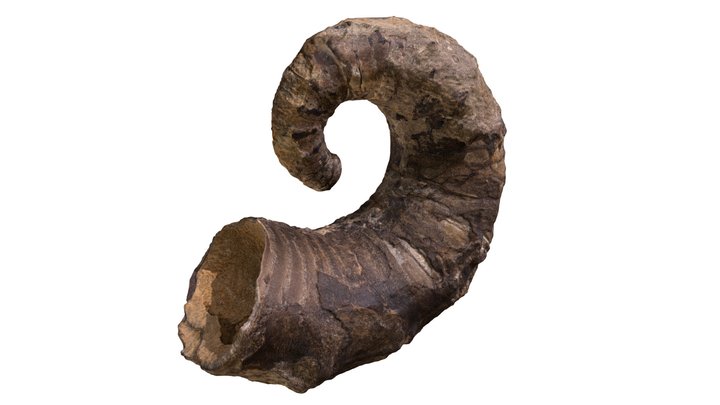
3D model
- Source
- Sketchfab
- Licence
- CC Attribution
- Commercial use
- cannot be read from the licence given — check the record
The description on this site
- Source
- Wikipedia, “Nautiloid”
- Licence
- CC BY-SA 4.0
This is what the site found, which is not the same as what exists.
Keep going
What may have been alongside itNautilida through timeFormations of the Late CretaceousThe world it lived on
Occurrence data from the Paleobiology Database, CC BY 4.0. de Blainville 1825