Orthoceras
Orthoceras, from Ancient Greek ὀρθός (orthós), meaning "straight", and κέρας (kéras), meaning "horn", is a genus of extinct nautiloid cephalopod restricted to Middle Ordovician-aged marine limestones of the Baltic States and Sweden. This genus is sometimes called Orthoceratites and misspelled as Orthocera, Orthocerus, or Orthoceros.

Nobu Tamura ( http://spinops.blogspot.com ) · CC BY 3.0 · via Wikipedia/Commons. May be a photograph of a specimen, or an artist’s reconstruction — an interpretation of a skeleton, since colour and soft tissue are almost never preserved.
On record
Recorded, not inferred- Sits inside
- OrthoceratidaePBDB
- Diet
- carnivorePBDB, for Orthocerida
- Life habit
- nektonicPBDB, for Orthocerida
- Motility
- actively mobilePBDB, for Orthocerida
- Vision
- well-developedPBDB, for Cephalopoda
- Environment
- marinePBDB, for Orthocerida
Time the record covers
At least 254 million years on record.
The record covers at least 481.7 Mya to 227.3 Mya. No occurrence read is dated outside 483.4 Mya to 205.7 Mya.
570 occurrences of Orthoceras on record, most of them in the Ordovician. Bar height is expected occurrences, not a count: each fossil is spread across the span it is dated to, so a tall narrow bar means tight dating and a low wide one means loose.
When
570 occurrences- Ordovician34%
- Silurian20%
- Devonian26%
- Carboniferous6%
- Permian7%
- Early Triassic2%
- Middle Triassic2%
- Late Triassic2%
These are dates about fossils, not the animal: the record can only begin after it arose and end before it died out, so either end may reach further. Shares are expected occurrences: a fossil dated to a span is counted partly in each period it straddles. More on what this infers.
Found in
194 formations
- Skaneateles Formation25
- Geneseo Formation · Genesee Group19
- Gydo Formation · Bokkeveld Group15
- Overton Formation12
- Moscow Formation · Hamilton Group12
- Witten Limestone Formation10
Loading coastlines…
The named rock units Orthoceras has been recovered from, largest first. Drawn where the rock is now, not where it formed. 170 further formations hold fewer occurrences each and are not listed. 152 occurrences have no formation on record, which is common for older literature.
Orthoceras and its relatives
OrdovicianWhere Orthoceras and its relatives were recorded in the Ordovician.
Found in the same rock
1,974 taxa- Michelinoceras35 sites
- Lophospira32 sites
- Leperditia31 sites
- Anazyga recurvirostra30 sites
- Crinoidea30 sites
- Lingula30 sites
- Nuculites28 sites
- Favosites26 sites
- Bryozoa24 sites
- Calymene24 sites
- Craniops23 sites
- Rhipidomella23 sites
- Ambocoelia22 sites
- Batostoma22 sites
- Homotrypa22 sites
- Orbiculoidea22 sites
- Camarotoechia21 sites
- Sowerbyella21 sites
- Chonetoidea20 sites
- Gastropoda19 sites
- Palaeoneilo19 sites
- Eridotrypa18 sites
- Hebertella18 sites
- Zoophycos18 sites
The Paleobiology Database records 502 sites for Orthoceras, and this reads 240 of them. The number is how many of those sites it was catalogued from too. The 24 sharing the most are listed.
This is not a list of everything alive at the time. It is only what has come out of the same ground as this animal and been written down.
Entered from
184 references- Zonation of the Middle and Upper Ordovician strata in northwestern Georgia40
- Redefinition, Stratigraphy and Depostional Environments of the Mottville Member (Hamilton Group) in Central and Eastern New York25
- Correlation of the African Silurian rocks23
- Work with Thayer collections, Yale Peabody Accession 7112, published, in part, "New perspectives on transitions between ecological-evolutionary subunits in the "type interval" for coordinated stasis", James J Zambito IV, Carlton E Brett, Gordon C Baird, Sarah E Kolbe, Arnold I Miller; Paleobiology16
- Preliminary catalogue and report on the biostratigraphy and palaeogeographic distribution of the Bokkeveld fauna16
- Stratigraphy of the Lower Middle Ordovician of Tazewell County, Virginia15
- Biostratigraphy of the Middle and Late Ordovician cephalopods of the Upper Mississippi Valley area14
- La Fauna dei Calcari Con Fusulina della Valle del Fiume Sosio nella Provincia di Palermo, Fasc 2. Nautiloidea e Gastropoda14
- Geologie der Umgebung von Sarajevo13
- Faunas from the Upper Silurian (Upper Ludlovian) in the Ludlow-Much Wenlock District, England12
- The classification and distribution of the Hamilton and Chemung series of central and eastern New York12
- Silurian Reefs of Gotland11
Each of the 570 occurrences read was entered from one of these publications, ordered by how many each accounts for. This is not a search for papers mentioning the name. 172 further references are not listed. Entries link to doi.org where the Paleobiology Database holds an identifier, and to its own record where it does not. Relayed as the Paleobiology Database holds them, not checked against what they resolve to.
Media and terms
Media content3

Picture of Orthoceras
- Source
- Wikipedia/Commons
- Credit
- Nobu Tamura ( http://spinops.blogspot.com )
- Licence
- CC BY 3.0
- Commercial use
- the licence allows it
Structured light scan
- Source
- MorphoSource
- Licence
- not stated by the source
- Commercial use
- cannot be read from the licence given — check the record
- Specimen
- Orthoceras sp. · PSAL:ARCH:1400
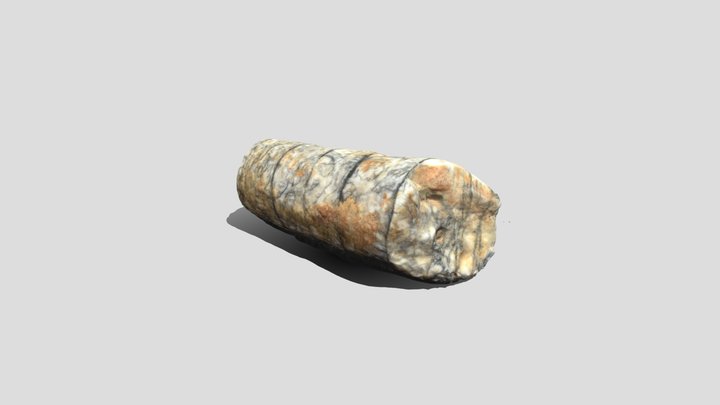
3D model
- Source
- Sketchfab
- Credit
- digimuseum
- Licence
- CC Attribution
- Commercial use
- cannot be read from the licence given — check the record
This entry was cached before the site began recording what Smithsonian Open Access did, so a search that failed cannot be told from one that found nothing.
The description on this site
- Source
- Wikipedia, “Orthoceras”
- Licence
- CC BY-SA 4.0
This is what the site found, which is not the same as what exists.
Keep going
What may have been alongside itOrthoceratidae through timeFormations of the OrdovicianThe world it lived on
Occurrence data from the Paleobiology Database, CC BY 4.0. Breynius 1832