Otus
Scops owls are typical owls in family Strigidae belonging to the genus Otus and are restricted to the Old World. Otus is the largest genus of owls with 59 species. Scops owls are coloured in various brownish hues, sometimes with a lighter underside and face, which helps to camouflage them against the bark of trees. Some are polymorphic, occurring in a greyish- and a reddish-brown morph. They are compact in size and shape. Female scops owls are usually larger than males.

Antonio De Lorenzo -> Kufoleto and Marina Ventayol (original version) Dysmorodrepanis (cropped version) · CC BY 3.0 · via Wikipedia/Commons. May be a photograph of a specimen, or an artist’s reconstruction — an interpretation of a skeleton, since colour and soft tissue are almost never preserved.
On record
Recorded, not inferred- Also called
- scops owlPBDB
- Sits inside
- StrigidaePBDB
- Diet
- carnivore, insectivorePBDB, for Strigidae
- Life habit
- volantPBDB, for Strigidae
- Motility
- actively mobilePBDB, for Theropoda
- Vision
- well-developedPBDB, for Strigiformes
- Environment
- terrestrialPBDB, for Strigidae
Time the record covers
At least 15 million years on record.
The record covers at least 15.98 Mya to 11.7 ka. No occurrence read is dated outside 20.45 Mya to 0 Mya.
38 occurrences of Otus on record, most of them in the Pleistocene. The Paleobiology Database records this as a living group. Bar height is expected occurrences, not a count: each fossil is spread across the span it is dated to, so a tall narrow bar means tight dating and a low wide one means loose.
When
38 occurrences- Miocene3%
- Pleistocene57%
- Holocene40%
These are dates about fossils, not the animal: the record can only begin after it arose and end before it died out, so either end may reach further. Shares are expected occurrences: a fossil dated to a span is counted partly in each period it straddles. More on what this infers.
Otus and its relatives
PleistoceneWhere Otus and its relatives were recorded in the Pleistocene.
Found in the same rock
686 taxa- Tyto alba9 sites
- Columba oenas6 sites
- Corvus monedula6 sites
- Pyrrhocorax graculus6 sites
- Scolopax rusticola6 sites
- Buteo buteo5 sites
- Columba5 sites
- Columba livia5 sites
- Corvus5 sites
- Erithacus rubecula5 sites
- Falco eleonorae5 sites
- Fulica newtonii5 sites
- Turdus5 sites
- Turnix nigricollis5 sites
- Accipiter gentilis4 sites
- Accipiter nisus4 sites
- Aegolius funereus4 sites
- Alopochen kervazoi4 sites
- Apus melba4 sites
- Aquila chrysaetos4 sites
- Ardenna pacifica4 sites
- Athene cretensis4 sites
- Bufo4 sites
- Chloris chloris4 sites
The Paleobiology Database records 38 sites for Otus, and this reads all of them. The number is how many of those sites it was catalogued from too. The 24 sharing the most are listed.
This is not a list of everything alive at the time. It is only what has come out of the same ground as this animal and been written down.
Entered from
28 references- The Quaternary avifauna of Crete, Greece5
- Mascarenotus nov. gen. (Aves, Strigiformes), genre endémique éteint des Mascareignes et M. grucheti n. sp., espèce éteinte de La Réunion4
- A new species of extinct fossil scops owl (Aves: Strigiformes: Strigidae: Otus) from the Archipelago of Madeira (North Atlantic Ocean)3
- A synopsis of the pre-human avifauna of the Mascarene Islands2
- Birds around the Minatogawa Man: the Late Pleistocene avian fossil assemblage of the Minatogawa Fissure, southern part of Okinawa Island, Central Ryukyu Islands, Japan1
- New Neanderthal remains from Mani peninsula, Southern Greece: The Kalamakia Middle Paleolithic cave site1
- Late Pleistocene-Holocene non-passerine avifauna of Liang Bua (Flores, Indonesia)1
- A new species of extinct scops owl (Aves: Strigiformes: Strigidae: Otus) from São Miguel Island (Azores Archipelago, North Atlantic Ocean)1
- Mid-Holocene vertebrate bone Concentration-Lagerstätte on oceanic island Mauritius provides a window into the ecosystem of the dodo (Raphus cucullatus)1
- New findings at Andrahomana Cave, southeastern Madagascar1
- Reinterpretation of the late Pleistocene Ingarano cave deposit based on the fossil bird associations (Apulia, south-eastern Italy)1
- New records of fossil birds of prey from the Miocene of Kenya1
Each of the 38 occurrences read was entered from one of these publications, ordered by how many each accounts for. This is not a search for papers mentioning the name. 16 further references are not listed. Entries link to doi.org where the Paleobiology Database holds an identifier, and to its own record where it does not. Relayed as the Paleobiology Database holds them, not checked against what they resolve to.
Media and terms
Media content3

Picture of Otus
- Source
- Wikipedia/Commons
- Credit
- Antonio De Lorenzo -> Kufoleto and Marina Ventayol (original version) Dysmorodrepanis (cropped version)
- Licence
- CC BY 3.0
- Commercial use
- the licence allows it
CT scan
- Source
- MorphoSource
- Licence
- In Copyright
- Commercial use
- cannot be read from the licence given — check the record
- Specimen
- Asio otus · FMNH:Birds:504051
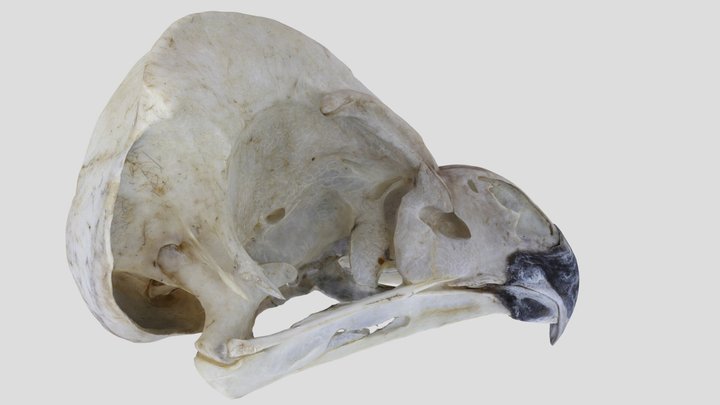
3D model
- Source
- Sketchfab
- Licence
- CC Attribution
- Commercial use
- cannot be read from the licence given — check the record
Smithsonian Open Access was not reached for this taxon, so this list is what the others held rather than everything there is.
The description on this site
- Source
- Wikipedia, “Scops owl”
- Licence
- CC BY-SA 4.0
This is what the site found, which is not the same as what exists.
Keep going
What may have been alongside itStrigidae through timeFormations of the PleistoceneThe world it lived on
Occurrence data from the Paleobiology Database, CC BY 4.0. Pennant 1769