Pandion
Pandion is a genus of fish-eating bird of prey, known as ospreys, the only genus of the family Pandionidae. The genus Pandion is named for the mythical Greek figure of the same name. Some taxonomic arrangements place it alongside the hawks and eagles in the family Accipitridae — which itself can be regarded as making up the bulk of the order Accipitriformes — or else allied with the Falconidae into Falconiformes. The Sibley-Ahlquist taxonomy has placed it together with the other diurnal raptors in a greatly enlarged Ciconiiformes, but this results in an unnatural paraphyletic classification.

RoySmith · CC BY-SA 4.0 · via Wikipedia/Commons. May be a photograph of a specimen, or an artist’s reconstruction — an interpretation of a skeleton, since colour and soft tissue are almost never preserved.
On record
Recorded, not inferred- Also called
- ospreyPBDB
- Sits inside
- PandionidaePBDB
- Diet
- carnivorePBDB, for Coelurosauria
- Life habit
- ground dwelling, solitaryPBDB, for Theropoda
- Motility
- actively mobilePBDB, for Theropoda
- Environment
- terrestrialPBDB, for Theropoda
Time the record covers
At least 27 million years on record.
The record covers at least 27.3 Mya to 11.7 ka. No occurrence read is dated outside 33.9 Mya to 0 Mya.
17 occurrences of Pandion on record, most of them in the Pleistocene. The Paleobiology Database records this as a living group. Bar height is expected occurrences, not a count: each fossil is spread across the span it is dated to, so a tall narrow bar means tight dating and a low wide one means loose.
When
17 occurrences- Oligocene6%
- Miocene18%
- Pliocene6%
- Pleistocene41%
- Holocene29%
These are dates about fossils, not the animal: the record can only begin after it arose and end before it died out, so either end may reach further. Shares are expected occurrences: a fossil dated to a span is counted partly in each period it straddles. More on what this infers.
Found in
7 formations
- Gabal Silsila Formation1
- Gebel Silsila-YCS Formation1
- Yorktown Formation · Chesapeake Group1
- Jebel Qatrani Formation1
- Alachua Formation1
- Adu Asa Formation1
Loading coastlines…
The named rock units Pandion has been recovered from, largest first. Drawn where the rock is now, not where it formed. 10 occurrences have no formation on record, which is common for older literature.
Pandion and its relatives
PleistoceneWhere Pandion and its relatives were recorded in the Pleistocene.
Found in the same rock
983 taxa- Anas acuta5 sites
- Anas platyrhynchos5 sites
- Eudocimus albus5 sites
- Passeriformes5 sites
- Buteo jamaicensis4 sites
- Coragyps atratus4 sites
- Podilymbus podiceps4 sites
- Tyto alba4 sites
- Accipitridae3 sites
- Anhinga anhinga3 sites
- Anolis carolinensis3 sites
- Ardea alba3 sites
- Ardea cinerea3 sites
- Ardea herodias3 sites
- Aythya affinis3 sites
- Butorides virescens3 sites
- Carcharodon hastalis3 sites
- Ciconia maltha3 sites
- Columbidae3 sites
- Corvus ossifragus3 sites
- Ectopistes migratorius3 sites
- Fulica americana3 sites
- Gallinula chloropus3 sites
- Hemipristis serra3 sites
The Paleobiology Database records 17 sites for Pandion, and this reads all of them. The number is how many of those sites it was catalogued from too. The 24 sharing the most are listed.
This is not a list of everything alive at the time. It is only what has come out of the same ground as this animal and been written down.
Entered from
15 references- Faunal extinction and human habitation in New Caledonia: initial results and implications of new research at the Pindai Caves2
- Exceptionally well preserved late Quaternary plant and vertebrate fossils from a blue hole on Abaco, The Bahamas2
- Fossil birds from the Late Miocene of Chad and Ethiopia and zooge- ographical implications1
- Prehistoric exploitation of birds on the Pacific coast of Chiapas, Mexico1
- Miocene and Pliocene birds from the Lee Creek Mine, North Carolina1
- Avian community, climate, and sea-level changes in the Plio-Pleistocene of the Florida Peninsula1
- Biostratigraphy of amphibians, reptiles, birds and mammals in Corsica and the role of man in the Holocene faunal turnover1
- Fossil Birds from the Oligocene Jebel Qatrani Formation, Fayum Province, Egypt1
- Pandion lovensis, a new species of osprey from the late Miocene of Florida1
- A new osprey from the Miocene of California (Falconiformes: Pandionidae)1
- Relationships of the Late Pleistocene Vertebrate Fauna from Kom Ombo, Upper Egypt1
- Kom Ombo: Preliminary Report on the Fauna of Late Paleolithic Sites in Upper Egypt1
Each of the 17 occurrences read was entered from one of these publications, ordered by how many each accounts for. This is not a search for papers mentioning the name. 3 further references are not listed. Entries link to doi.org where the Paleobiology Database holds an identifier, and to its own record where it does not. Relayed as the Paleobiology Database holds them, not checked against what they resolve to.
Media and terms
Media content3
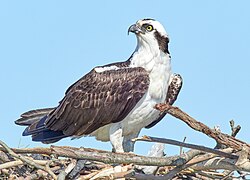
Picture of Pandion
- Source
- Wikipedia/Commons
- Credit
- RoySmith
- Licence
- CC BY-SA 4.0
- Commercial use
- the licence allows it
CT scan
- Source
- MorphoSource
- Licence
- not stated by the source
- Commercial use
- cannot be read from the licence given — check the record
- Specimen
- Pandion haliaetus · SAMA:Ornithology:B31786
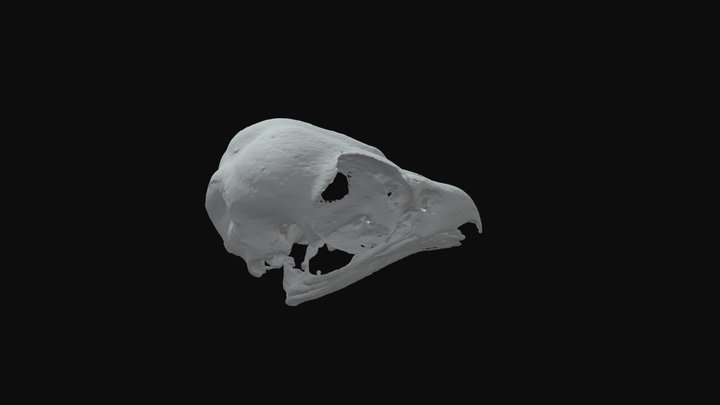
3D model
- Source
- Sketchfab
- Licence
- CC Attribution
- Commercial use
- cannot be read from the licence given — check the record
Smithsonian Open Access was not reached for this taxon, so this list is what the others held rather than everything there is.
The description on this site
- Licence
- CC BY-SA 4.0
This is what the site found, which is not the same as what exists.
Keep going
What may have been alongside itPandionidae through timeFormations of the PleistoceneThe world it lived on
Occurrence data from the Paleobiology Database, CC BY 4.0. Savigny 1809