Parapuzosia
Parapuzosia is an extinct genus of desmoceratid ammonites from the Cenomanian to the Campanian of Africa, Europe, and North America. They are typically very large ammonites, reaching diameters of 60 cm (2.0 ft) or more, with the largest species measuring around 2 m (6.6 ft). It possesses a moderately involute shell with flat or slightly rounded sides. Distinct primary and secondary ribbing can be observed in the inner whorls.

Gunnar Ries · CC BY-SA 3.0 · via Wikipedia/Commons. May be a photograph of a specimen, or an artist’s reconstruction — an interpretation of a skeleton, since colour and soft tissue are almost never preserved.
On record
Recorded, not inferred- Sits inside
- PuzosiinaePBDB
- Diet
- carnivorePBDB, for Ammonoidea
- Life habit
- nektonicPBDB, for Ammonoidea
- Motility
- fast-movingPBDB, for Ammonoidea
- Vision
- well-developedPBDB, for Cephalopoda
- Environment
- marinePBDB, for Cephalopoda
Time the record covers
At least 10 million years on record.
The record covers at least 93.9 Mya to 83.6 Mya. No occurrence read is dated outside 100.5 Mya to 72.2 Mya.
49 occurrences of Parapuzosia on record, most of them in the Late Cretaceous. Bar height is expected occurrences, not a count: each fossil is spread across the span it is dated to, so a tall narrow bar means tight dating and a low wide one means loose.
When
49 occurrences- Late Cretaceous100%
These are dates about fossils, not the animal: the record can only begin after it arose and end before it died out, so either end may reach further. Shares are expected occurrences: a fossil dated to a span is counted partly in each period it straddles. More on what this infers.
Found in
23 formations
- Budden Canyon Formation · Pacheco Group3
- Sant Corneli Formation2
- Cotinguiba Formation2
- Dülmener Schichten Formation2
- Austin Chalk Formation2
- Venado Formation1
Loading coastlines…
The named rock units Parapuzosia has been recovered from, largest first. Drawn where the rock is now, not where it formed. 20 occurrences have no formation on record, which is common for older literature.
Parapuzosia and its relatives
Late CretaceousWhere Parapuzosia and its relatives were recorded in the Late Cretaceous.
Found in the same rock
302 taxa- Stomohamites7 sites
- Schloenbachia6 sites
- Acanthoceras5 sites
- Eupachydiscus isculensis4 sites
- Scaphites equalis4 sites
- Schloenbachia varians4 sites
- Texanites4 sites
- Turrilites costatus4 sites
- Acompsoceras3 sites
- Acompsoceras sarthense3 sites
- Baculites3 sites
- Calycoceras3 sites
- Cardiaster3 sites
- Forbesiceras3 sites
- Gauthiericeras margae3 sites
- Puzosia (Austiniceras) giganteum3 sites
- Scaphites3 sites
- Scaphites obliquus3 sites
- Schloenbachia varians subtuberculata3 sites
- Sciponoceras3 sites
- Turrilites scheuchzerianus3 sites
- Acanthoceras jukesbrownei2 sites
- Acanthoceras rhotomagense2 sites
- Anisoceras2 sites
The Paleobiology Database records 45 sites for Parapuzosia, and this reads all of them. The number is how many of those sites it was catalogued from too. The 24 sharing the most are listed.
This is not a list of everything alive at the time. It is only what has come out of the same ground as this animal and been written down.
Entered from
25 references- Upper Cretaceous of the Pacific Coast8
- Ammonite faunas, biostratigraphy, and sequence stratigraphy of the Coniacian-Santonian of the Corbières (NE Pyrénées)7
- Les ammonites néocrétacées des chaînes subalpines méridionales3
- Coniacian-Maastrichtian of the Tremp Area (South Central Pyrenees)3
- Faunes d’ammonites et biostratigraphie compareé du Cénomanien du nord-ouest de la France (Normandie) et du sud de l’Angleterre3
- Parapuzosia (Parapuzosia) seppenradensis (Landois) und die Ammonitenfauna der Dülmener Schichten, unteres Unter-Campan, Westfalen2
- The Cenomanian-Coniacian of Sergipe Basin, Brazil2
- The correlation of the lower chalk of south-east England2
- Correlation of the Cretaceous formations of the Greater Antilles, Central America, and Mexico2
- Ammonites of enormous size from the Texas Cretaceous2
- Kreide-Fossilien in Sachsen, Teil 1, 7. Ammoniten1
- Enoploclytia tepeyacensis n. sp. (Crustacea, Decapoda, Erymidae) from the Cretaceous (Campanian) of Coahuila, NE Mexico1
Each of the 49 occurrences read was entered from one of these publications, ordered by how many each accounts for. This is not a search for papers mentioning the name. 13 further references are not listed. Entries link to doi.org where the Paleobiology Database holds an identifier, and to its own record where it does not. Relayed as the Paleobiology Database holds them, not checked against what they resolve to.
Media and terms
Media content2

Picture of Parapuzosia
- Source
- Wikipedia/Commons
- Credit
- Gunnar Ries
- Licence
- CC BY-SA 3.0
- Commercial use
- the licence allows it
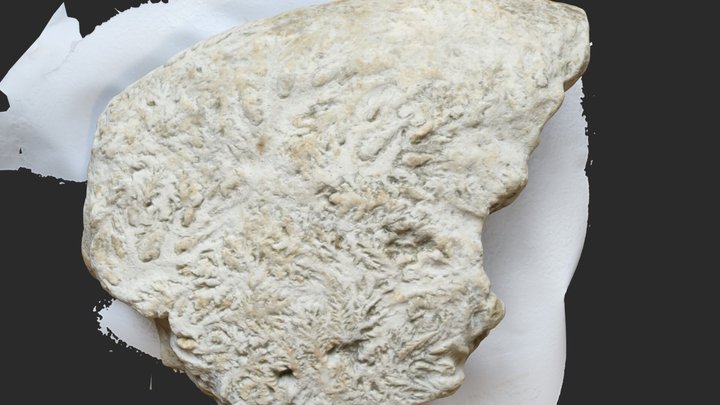
3D model
- Source
- Sketchfab
- Credit
- Dimitris Nikkeev
- Licence
- CC Attribution
- Commercial use
- cannot be read from the licence given — check the record
The description on this site
- Source
- Wikipedia, “Parapuzosia”
- Licence
- CC BY-SA 4.0
This is what the site found, which is not the same as what exists.
Keep going
What may have been alongside itPuzosiinae through timeFormations of the Late CretaceousThe world it lived on
Occurrence data from the Paleobiology Database, CC BY 4.0. (Nowak 1913)